Soon, Kenyans will have an opportunity to weigh in on the Religious Organisations Bill, 2024. Decisions made after this public participation period could permanently reshape the role of religious institutions in Kenya’s civic life.
While there has been much anxiety surrounding the Bill, much of it has been focused on fears, within the religious sector, that the Bill will give the government unprecedented powers to regulate faith institutions. These concerns are valid. But there is a much less discussed - and arguably more dangerous - consequence of the Bill: The threat posed by Clause 62 to the health of Kenya’s democracy.
Kenya’s democratic journey owes much to church leaders who refused to separate faith from civic responsibility. In the 1980s and 1990s, figures like Anglican Bishop John Henry Okullu, David Gitari, Alexander Kipsang Muge, Timothy Njoya, and Ndingi Mwana a’Nzeki used the pulpit to challenge authoritarianism, defend human rights, and press for multiparty democracy at great personal cost.
Today, this civic engagement has expanded to include active participation from both the pulpit and the pew, particularly through church-led forums where contenders for elective office interact directly with the electorate.
This role first came into focus during the 2013 General Election, when a coalition of churches and faith-based institutions, in partnership with Daystar University, hosted presidential and vice-presidential debates at All Saints’ Cathedral in Nairobi. Since then, faith-based institutions have remained central to our democratic life, hosting additional forums during the 2017 and 2022 election cycles. These platforms allowed voters to engage directly with candidates for gubernatorial, parliamentary, and other elective offices. Through such initiatives, religious institutions have consistently acted as an important bridge between the electorate and aspiring civic leaders.
Yet this role now faces a serious threat from Clause 62 of the Bill, which prohibits religious institutions from engaging in what it vaguely describes as “political activity.”
It states: “A religious institution shall not engage in any political activity in order to gain political power or organise debate to support any political party or political candidate.”
On paper, this sounds like a reasonable attempt to reduce partisan political involvement by religious institutions. But its wording is so broad that it risks criminalising even nonpartisan civic education activities facilitated by religious organisations.
Would providing meeting space for a civic event, for example, count as political activity? Facilitating a voter registration drive in a church compound? Allowing politicians to attend a prayer conference? Clause 62 does not say. But it does introduce harsh criminal penalties for the undefined “activity” including fines of up to Sh500,000 or six months in jail.
In a country like Kenya where government-led civic education remains weak, churches and faith-based groups ought to be viewed as key allies in filling this crippling gap. Granted, legitimate concerns have been raised after a number of clergy openly endorsed candidates in 2022 and politicians aggressively courted religious platforms. But the answer is not to silence religious institutions, but to clearly define boundaries. Clause 62 does not do so, and is a classic case of throwing out the baby with the bathwater. Instead of advancing democracy, it risks weakening it.
Research by the Pew Research Center shows that in sub‑Saharan Africa, including Kenya, strong majorities across religious communities support democracy, and religiously active people participate more in civic life than those who are not.
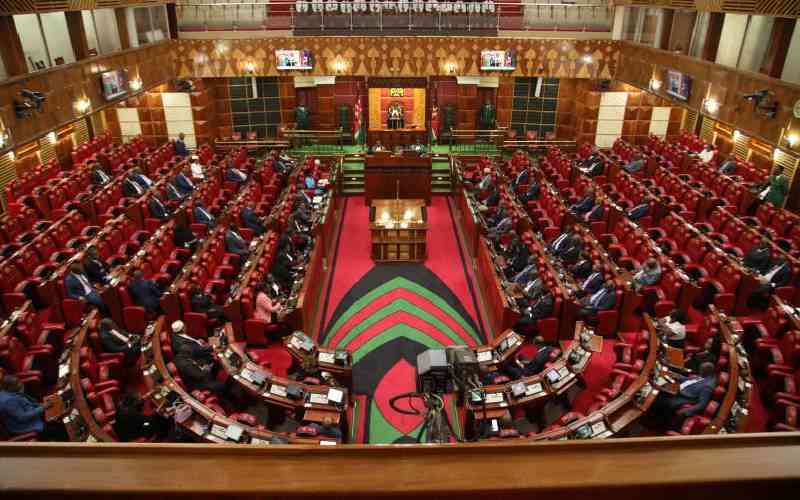
Parliament should therefore either delete Clause 62 or substantially amend it to clearly define “political activity,” protecting nonpartisan forums and educational civic initiatives while targeting genuine abuses with precise language.
With public participation on the Bill happening this week, religious leaders, adherents and all concerned citizens have a small but crucial window to weigh in. Kenya’s democracy is still young and growing. It needs informed citizens and scrutiny of leaders. If enacted as written, Clause 62 could curtail the role of the Church and other religious institutions as vital platforms for civic engagement - at exactly the moment our democracy needs them most.