×
App Icon
The Standard e-Paper
Join Thousands of Readers
★★★★ - on Play Store
Download Now

Africa cannot achieve peace without women

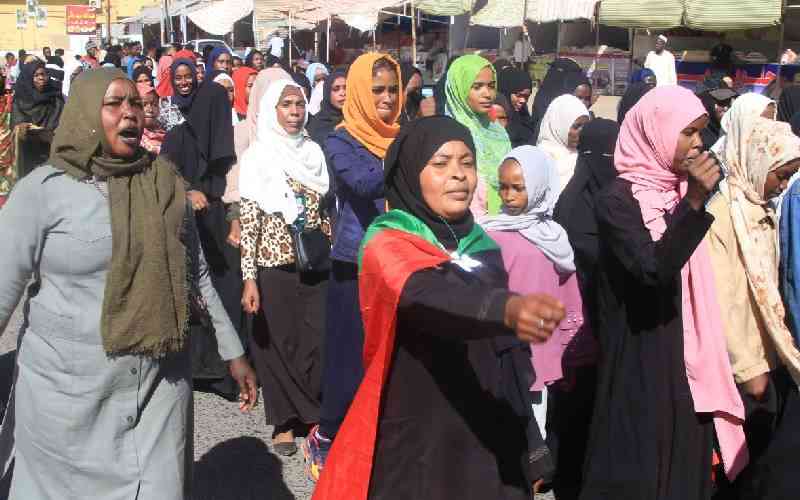
Residents during a rally in support of the Sudanese regular army in their battle against the paramilitary Rapid Support Forces (RSF) in Omdurman, Khartoum, on December 13, 2025. [AFP]

This year marks 25 years since the United Nations Security Council adopted Resolution 1325 on October 31, 2000. The resolution launched the Women, Peace and Security agenda and recognided that women are essential to preventing conflict, sustaining peace, and rebuilding societies in post-conflict contexts.

Yet, women remain largely absent from peace negotiations, excluded from political decision-making, and chronically underfunded in conflict zones, even though research shows that including women strengthens peace agreements and increases their likelihood of lasting.

The situation in Sudan illustrates this clearly. Since fighting erupted in April 2023, millions have been displaced. Women and girls have borne the brunt of sexual and gender-based violence, hunger, and the collapse of basic services. Local and international advocacy has grown, but much of it remains under-resourced. Organisations such as the Nala Feminist Collective have established initiatives like the Nalafem Sudan Taskforce to support women-led advocacy for inclusive ceasefires, humanitarian access, and meaningful participation in peace processes. These efforts show women on the ground are not passive victims. They are active agents shaping peace, often with little recognition or support.


Across Africa, women are leading local peacebuilding efforts in communities where state institutions have collapsed. In Mali and Niger, women’s involvement in conflict prevention rose from 5 to 25 per cent between 2020 and 2022. This contributed to resolving over 100 disputes concerning natural resources. Yet in formal peace negotiations, women remain underrepresented. In 2024, women made up only 7 per cent of negotiators and 14 per cent of mediators in global peace processes. Many talks included no women at all. When women are present, they are often relegated to symbolic roles.

The human costs of this exclusion are severe. Africa accounts for 40 per cent of the world’s armed conflicts, with 50 active conflicts displacing 35 million people. Women and girls are disproportionately affected. Funding for women-led peace initiatives remains woefully inadequate. Only 0.4 per cent of bilateral aid to conflict-affected countries reaches women-led organisations, far below the UN recommended minimum of one percent. Meanwhile, global military spending reached 2.7 trillion dollars in 2024. This highlights a stark mismatch between resources devoted to war versus peace.

But African women peacebuilders are not waiting. In October 2025, multigenerational women leaders from ten conflict-affected countries, including Kenya, Sudan, South Sudan, Nigeria, and Eritrea, gathered in Nairobi for the Nalafem Women, Peace, and Security Forum.

The forum marked 25 years of Resolution 1325 and brought together voices from grassroots initiatives, civil society, and regional organisations. Their call to action was clear. Peace processes must center the experiences of women. They must include young, displaced, and refugee women in decision-making, dismantle war economies that fuel violence, and link justice with economic transformation.

Women’s leadership is crucial in transitional and post-conflict processes. In South Sudan, women peacebuilders have shaped peace agendas at local and national levels. In Côte d’Ivoire, local women’s mediator platforms de-escalated inter-community conflicts and ensured women were formally recognised as guarantors of agreements. In Yemen, women negotiated for civilian access to water. These examples show peace is durable when women are not just consulted but actively shaping outcomes.

The evidence is clear. peace without women is fragile, and justice without feminism is incomplete.

If Africa is to break cycles of conflict and build lasting security, women cannot remain at the margins. They must be at the centre of negotiations, reconstruction, and governance. Only by empowering women to lead can the continent achieve the durable, inclusive peace.

-Writer comments on topical issues