×

The Standard e-Paper
Home To Bold Columnists
 The Standard Group Plc is a
multi-media organization with investments in media platforms spanning newspaper
print operations, television, radio broadcasting, digital and online services. The
Standard Group is recognized as a leading multi-media house in Kenya with a key
influence in matters of national and international interest.
The Standard Group Plc is a
multi-media organization with investments in media platforms spanning newspaper
print operations, television, radio broadcasting, digital and online services. The
Standard Group is recognized as a leading multi-media house in Kenya with a key
influence in matters of national and international interest.
On August 6 and 9, 1945, at the height of World War II, the United States dropped nuclear atomic bombs on Hiroshima and Nagasaki, respectively-two Japanese cities-killing between 150,000 and 246,000 people, and devastating lives beyond wartime confrontation. The event marked the end of World War II (1939-1945), with the Japanese government's signing of an instrument of surrender on September 2, 1945.
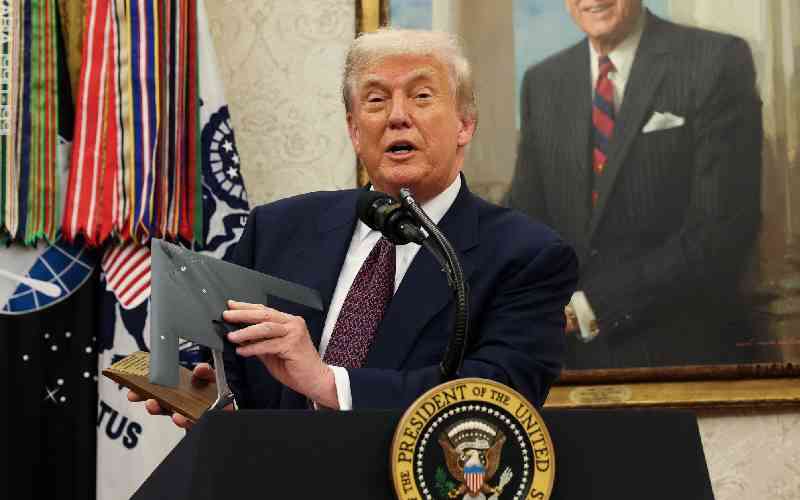
Yet the world seems to not have learnt any lessons at all. In the past few days, for instance, US President Donald Trump and former Russian President Dmitry Medvedev have exchanged words of bellicosity over tariffs and the war in Ukraine, potentially pushing the world to the brink of yet another conflict. The Trump-Medvedev rhetorical flare-up harks back to the Cold War-era Cuban Missile Crisis of October 1962, a period during which the United States and the Soviet Union-under the leaderships of President John F Kennedy and Premier Nikita Khrushchev, respectively-sparred in a dangerous, months-long test of wills.
Subscribe to our newsletter and stay updated on the latest developments and special offers!

 Prefer the Standard on Google







 join
join