×
App Icon
The Standard e-Paper
Home To Bold Columnists
★★★★ - on Play Store
Download Now

Kindiki convenes meeting over drought situation


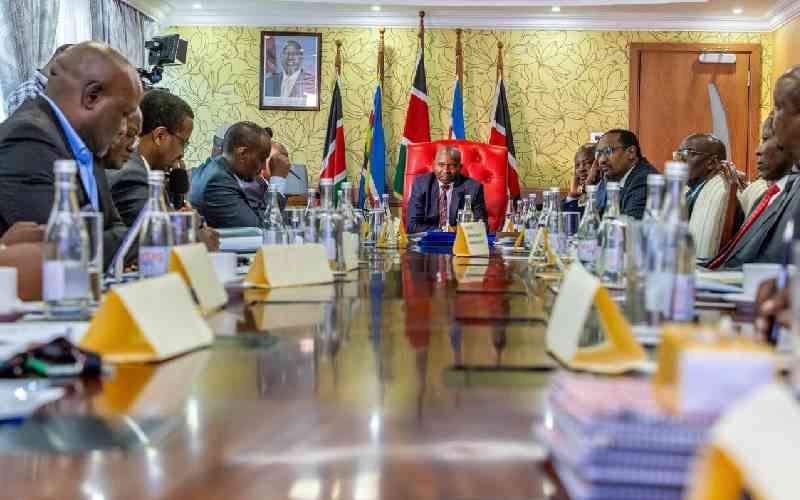
Deputy President Kithure Kindiki chaired a high-level consultative meeting on the drought situation across the country. [DPCS]

The government is adopting a whole-of-society approach aimed at mitigating the effects of the prevailing drought situation across the country.

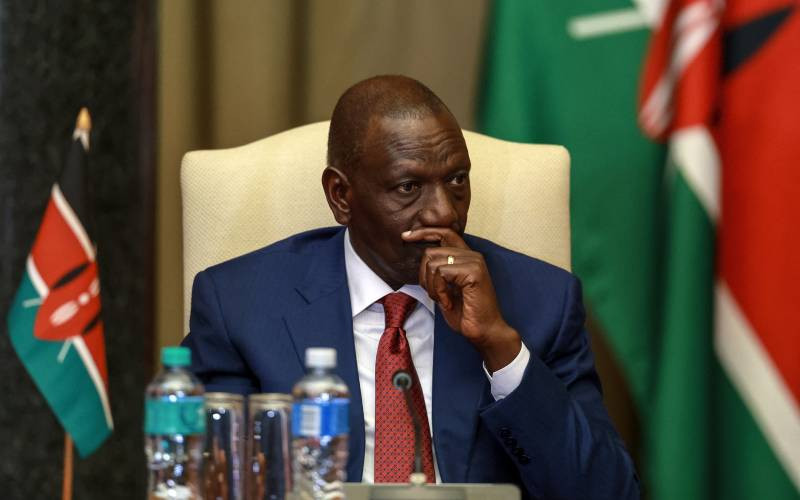
Deputy President Kithure Kindiki said the approach aims at broadening consultations to ensure coordination across national and county governments, development partners and the private sector.


Speaking at Harambee House Annexe after chairing a high-level consultative meeting, Kindiki said poor rainfall performance had heightened food and nutritional risks in several parts of the country, particularly in arid and semi-arid regions that rely heavily on seasonal rains for livelihoods.

Kindiki said the government has stepped up preparedness and response measures to cushion an estimated 2.1 million Kenyans across 32 counties following the underperformance of the October to December short rains.

According to him, assessments by the Kenya Meteorological Department show that the affected counties will require sustained human and livestock food, nutritional and health interventions for at least the next six months, until harvests from the March to May long rains are nearly ready.

“The Kenya Meteorological Department predicts that the 32 counties will require human and livestock food, nutritional and health interventions for the next six months by which time the harvest from the March to May long rains will be almost ready,” he said.

The meeting brought together Cabinet and Principal Secretaries, Chief Executive Officers and Heads of relevant Ministries, Departments and Agencies, alongside representatives of the Council of Governors.

The DP said deliberations focused on determining the scale, scope and cost of interventions required to mitigate the impact of the emerging drought.

Discussions also centred on the extent and cost of the interventions required to provide human and livestock food and non-food support to mitigate the effects of the prevailing drought situation.

A follow-up meeting bringing together development partners, non-governmental humanitarian institutions and private sector players is scheduled for tomorrow, after which the government will announce a comprehensive national roadmap.

Separately, a Cabinet dispatch distributed on Monday outlined the government’s longer-term strategy to strengthen food security and climate resilience.

Beyond immediate relief measures, it said the government will undertake large-scale modern irrigation through the construction of 50 mega dams, 200 mini-dams and more than 1,000 micro-dams, bringing an additional 2.5 million acres under production.

“These investments will reinforce food and water security, support agro-industrialisation and uplift rural livelihoods,” the dispatch said.