Please enable JavaScript to view advertisements.
×
App Icon
The Standard e-Paper
Stay Informed, Even Offline
★★★★ - on Play Store
Download App

2.1 million Kenyans in 32 counties are in danger after failed rains (LIST)

Vocalize Pre-Player Loader

Audio By Vocalize

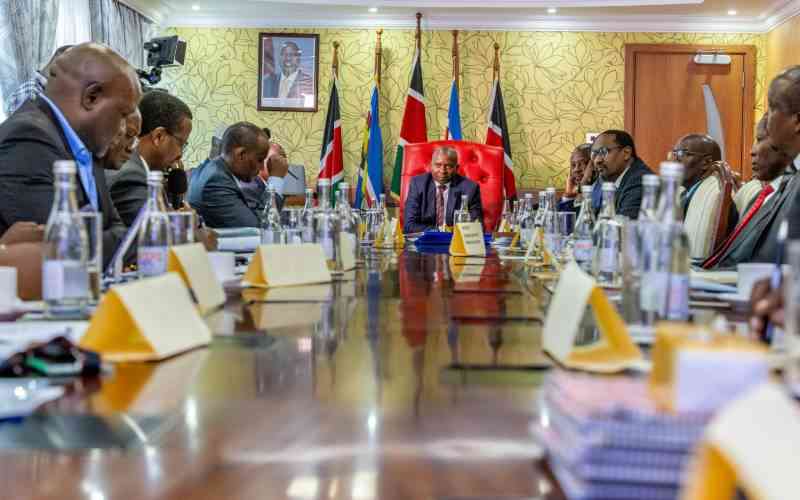
Deputy President Kithure Kindiki leads a stakeholder meeting on the drought situation at his Harambee House Annex office on December 15, 2025. [DPCS]

2.1 million Kenyans living in 32 counties risk facing food and nutritional insufficiency after the October-November-December (OND) short rains performed dismally, the Kenya Met Department has warned.

To mitigate the dire impacts of the unfavourable climatic conditions, the weatherman has recommended a sufficient supply of human and livestock food to last six months until March 2026, when the March-April-May (MAM) long rains are expected.

Additionally, the government was urged to budget for nutritional and health needs for the affected areas.

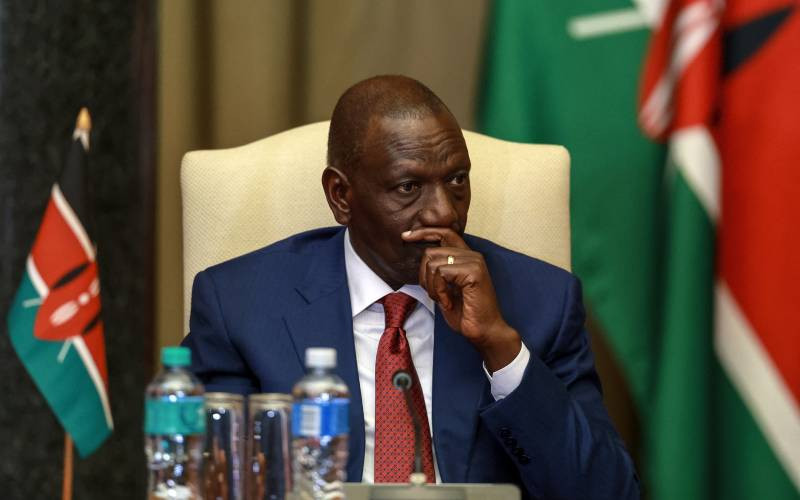
On Monday, December 15, Deputy President Kithure Kindiki led a meeting at his Harambee House Annex office to put together the government's response strategy.

Council of Governors Chairperson Ahmed Abdullahi, Agriculture Cabinet Secretary Mutah Kagwe, and several senior government officials from relevant ministries attended the meeting.

According to Kindiki, the government will involve different actors, including the private sector, to mobilise humanitarian assistance, including food and non-food items.

"A follow-up meeting incorporating representatives of development partners and non-governmental humanitarian institutions, as well as the private sector, will be held tomorrow, after which the Government will announce a comprehensive roadmap for mitigating the drought situation," he said.

The areas in most danger include:

1. Mandera

Mandera North, Mandera South, Lafey, Ashabito, Banissa, Mandera East, and Mandera West

2. Wajir

Wajir East, Tarbaj, Wajir West, and Wajir South

3. Marsabit

North Horr, Laisamis, Saku, and Moyale

4. Garissa

Dulis, Dadaab, Balambala, and Lagdera

5. Kilifi

Ganze, Kilifi South & Kaloleni

6. Kajiado

Kajiado West & Kajiado Central

7. Tana River

Garsen, Galole, and Bura

8. Samburu

Samburu East and Samburu North

9. Isiolo

Isiolo North and Isiolo South

10. Turkana

Turkana East, Turkana South & Loima

11. Tharaka Nithi

Tharaka North, Tharaka South, Chiakariga, Igamba Ng'ombe, and Maara

12. Kitui

Mwingi West, Mwinqi North, Kitui East, and Kitui South

13. Makueni

Kibwezi East, Kibwezi West, Kilome, Mbooni, and Makueni

14. Kwale

Kinango and Lungalunga

15. Laikipia

Laikipia North and Laikipia East

16. Meru

Igembe North, Igembe Central, Buuri, Tigania West, and Tigania East

17. Embu (Mbeere)

Mbeere North and Mbeere South

18. Lamu

Lamu West & Lamu East

19. Taita Taveta

Voi, Mwatate, and Taveta

20. Nyeri

Kieni East and Kieni West

21. Baringo

Tiaty West, East, Baringo North, and Baringo South

22. Narok

Narok South, East, and Transmara

23. West Pokot

Pokoto North, Pokot Central, and West Pokot

24. Elgeyo Marakwet

Marakwet East, and Marakwet West

25. Nakuru

Rongai and Gilgil

26. Kiambu

Thika, Juja, Ruiru, Limuru, Kikuyu, and Kabete

27. Machakos

Masinqa,Mwala,Kola, and Mavoko

28. Siaya

Yimbo West

29. Homabay

Kabuoch North

30. Kirinyaga

Kirinyaga East and Kirinyaga West

31. Murang'a

Murang'a South

32. Migori

North Sakwa

Support Independent Journalism

Stand With Bold Journalism.
Stand With The Standard.

Journalism can't be free because the truth demands investment. At The Standard, we invest time, courage and skills to bring you accurate, factual and impactful stories. Subscribe today and stand with us in the pursuit of credible journalism.

Pay via
M - PESA
VISA
Airtel Money
Secure Payment Kenya's most trusted newsroom since 1902

Follow The Standard on Google News