×
App Icon
The Standard e-Paper
Home To Bold Columnists
★★★★ - on Play Store
Download Now

EACC recovers Sh3.4b, boasts of major anti-graft gains in report

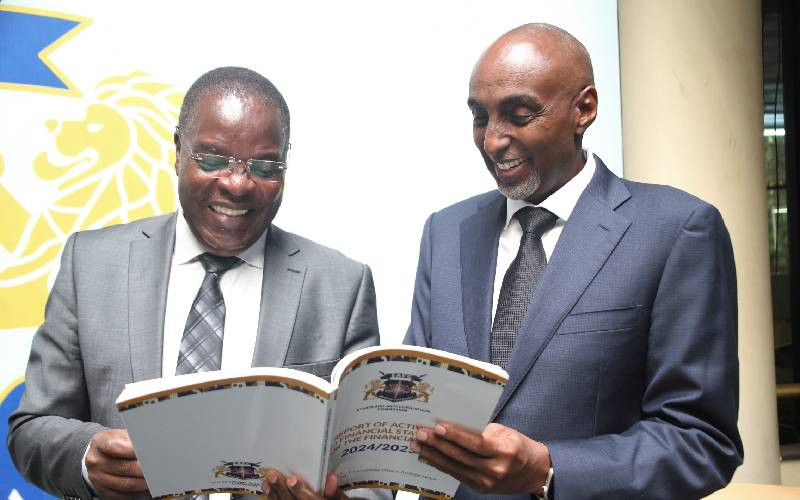
EACC Chairperson David Oginde and CEO Abdi Mohamud during the launch of the EACC annual report for the Financial Year 2024/2025 in Nairobi, on December 8, 2025. [Kanyiri Wahito Standard]

The Ethics and Anti-Corruption Commission (EACC) has announced that it recovered Sh3.4 billion in the 2024/2025 financial year, according to its newly released annual report on activities and financial statements.

The report was launched by EACC Chairperson David Oginde during a ceremony attended by Vice Chairperson Monica Muiru, commissioners, directors and staff. Presenting the highlights, Deputy Director of Budget and Planning, Willis Wasala, outlined key achievements in law enforcement, asset recovery, integrity verification and public education.

“The Commission filed 79 recovery suits with an estimated asset value of Sh4.8 billion. In total, we successfully recovered Sh3.4 billion, demonstrating our commitment to fighting corruption and safeguarding public resources,” he said.


Covering activities for 2024/2025, the report shows that the EACC received 4,083 allegations falling within its mandate, of which 2,846 were actionable. During the year, the Commission investigated 800 files, completing 229 cases on corruption and economic crimes, and 56 cases involving violations of Chapter Six of the Constitution.

Wasala affirmed that integrity verification remained central to EACC operations. “We processed 33,973 declaration forms and handled 2,783 integrity verification requests, ensuring that public officers comply with leadership and integrity standards,” he said.

Asset tracing and recovery also formed a significant part of the Commission’s work. In addition to the recovery suits, 27 cases were finalised with assets worth Sh22.9 million traced. Preservation orders were sought for assets valued at Sh2.685 billion, while 102 petitions and judicial review applications were filed to protect public interest in ongoing cases.

Preventive measures, included system reviews in state agencies, such as Kenya Power, the National Social Security Fund (NSSF) and the Kenya Prisons Service. The EACC also empowered 13 institutions across ministries and counties to conduct their own corruption risk assessments.

Wasala noted that public education remained a priority, with an estimated 128,000 citizens reached through school and community programmes. The Commission also engaged 742 institutions across 23 counties and trained 203 integrity assurance officers and other officials to strengthen governance and ethical standards.

The report’s audited financial statements show that the EACC received Sh4.2 billion from the government, 99 per cent of which was effectively utilised. The National Audit Office issued the Commission a clean bill of health for its expenditure.

Wasala acknowledged challenges, including limited financial, human and physical resources, delayed cooperation from other State agencies and a backlog of court cases.