×

The Standard e-Paper
Kenya’s Boldest Voice
 The Standard Group Plc is a
multi-media organization with investments in media platforms spanning newspaper
print operations, television, radio broadcasting, digital and online services. The
Standard Group is recognized as a leading multi-media house in Kenya with a key
influence in matters of national and international interest.
The Standard Group Plc is a
multi-media organization with investments in media platforms spanning newspaper
print operations, television, radio broadcasting, digital and online services. The
Standard Group is recognized as a leading multi-media house in Kenya with a key
influence in matters of national and international interest.

Audio By Vocalize

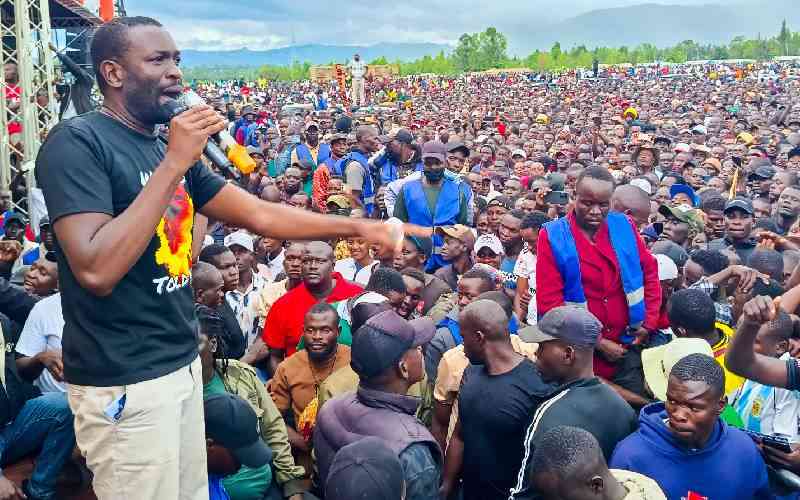
President William Ruto hosts more than 10,000 grassroots leaders from Kitui, Machakos and Makueni counties at Kitui State Lodge, on November 15, 2025. [File, Standard]
The presidency is not about the paycheck, but about the economic ecosystem it controls. I have isolated the presidency because it can give a picture of how much money Kenya loses every five years.
The 2022 presidential election was not only a contest of ideas and personalities but also a staggering display of financial muscle. Reports consistently described it as the most expensive election in Kenya’s history, with both William Ruto and Raila Odinga pouring billions into their campaigns.
Raila, backed by former President Uhuru Kenyatta and powerful business elites including the Mount Kenya Foundation, is estimated to have spent well over Sh10 billion in his bid for State House. His campaign was marked by high-profile rallies, extensive media advertising, and elaborate logistics that reflected the scale of the resources mobilised.
Dr Ruto, running on a “hustler nation” platform, also got immense financial backing, with estimates also placing his spending in the over Sh10 billion range. His campaign relied heavily on grassroots mobilisation, extensive travel across the country, and a sophisticated digital strategy, all of which demanded enormous funding.
The sheer disparity between the billions spent and the modest official salary of the presidency, about Sh1.4 million per month, raises the central paradox: How do presidents recover such colossal investments? With a monthly salary of Sh1.4 million, one would need 578 years, nearly six centuries, in the Kenyan presidency to recover Sh10 billion.
So who funds the politicians? The answer is: Business interests, both internal and external. The true nature of politics is that it is an enterprise where the pursuit of office is less about remuneration and more about access to the levers of economic power.
Financiers and allies invest heavily in the expectation of influence and returns once their candidate ascends to power. Politics has always been about power, but power has always been about resources. From the earliest human communities, leadership emerged as a way to manage cooperation and conflict, to organise hunting, land, and survival.
Monarchies and empires later centralised authority, and democracy eventually appeared in Athens in the 5th century BCE, promising equality and representation. Yet even as democracy spread and transformed into modern representative systems, politics never shed its economic dimension.
Today, politics is not merely about governance; it is about access to wealth, influence, and survival in the competitive marketplace of power. Presidents recover their campaign billions through political patronage, state influence, and opaque financial networks that blur the line between public service and private gain.
Allies and financiers are rewarded with lucrative government contracts, appointments, and protection. Control over taxation, regulation, and licensing allows leaders to tilt the business environment in favour of their enterprises or those of their supporters.
Campaigns often rely on shadowy funding sources, from foreign interests to local cartels, who expect policy favours in return. In this sense, the presidency functions less as a salaried job and more as a gateway to economic dominance.
Consider the issue of protection. Many politicians are not there because they want to serve people, but because they need to be there to protect their businesses.
Kenya is not unique in this regard. In the United States, campaign spending for presidential elections runs into billions of dollars, with corporate donors and lobbyists shaping policy outcomes. In many other democracies, business elites bankroll campaigns in exchange for access and protection. The pattern is universal: Politics is business, and business seeks politics.
The challenge for citizens is to start seeing politics as a public good rather than a private enterprise. It starts with citizens not valuing wealth and resorting to handouts to vote for certain people. The ball lies with the citizens, not the politicians. Until then, the arithmetic of campaign billions versus presidential salaries will remain a paradox.
Stay informed. Subscribe to our newsletter
Dr Ndonye is Dean of Kabarak University’s School of Music and Media

Subscribe to our newsletter and stay updated on the latest developments and special offers!






 join
join