×

The Standard e-Paper
Stay Informed, Even Offline
 The Standard Group Plc is a
multi-media organization with investments in media platforms spanning newspaper
print operations, television, radio broadcasting, digital and online services. The
Standard Group is recognized as a leading multi-media house in Kenya with a key
influence in matters of national and international interest.
The Standard Group Plc is a
multi-media organization with investments in media platforms spanning newspaper
print operations, television, radio broadcasting, digital and online services. The
Standard Group is recognized as a leading multi-media house in Kenya with a key
influence in matters of national and international interest.

Audio By Vocalize

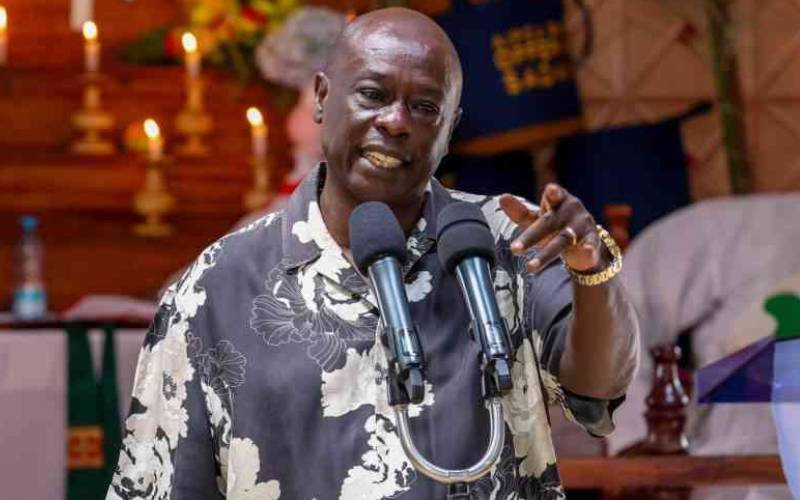
Prime CS Musalia Mudavadi during an interview with The Standard Group team on various national issues. [Wilberforce Okwiri, Standard]
The teaching service has the highest number of areas designated as hardship areas, followed by the Judiciary and then Civil Service, counties and State corporations.
Prime Cabinet Secretary Musalia Mudavadi has said that currently, the Civil Service, county governments and State corporations have 16 designated hardship areas, the teaching service has 44, while the Judiciary has 21.
The PCS said there are disparities in the unit of analysis for designated hardship areas, noting that it is still not harmonised and varies across public service jurisdictions.
For instance, Mudavadi said, the Civil Service uses the former district boundaries, while the Teaching Service under the Teachers Service Commission (TSC) uses educational zones for categorisation.
“The designated hardship areas and payment of hardship allowance were to be progressively reviewed as areas became relatively developed and socio-economic conditions improved. It was never meant to be static,” said Mudavadi.
He was making a presentation to the National Assembly on disparities in classifying hardship areas and payment of hardship allowance in the public service.
He also stated that over the years, various jurisdictions in the public service, including the Civil Service, the Teaching Service and the Judiciary, have independently reviewed hardship areas using different parameters, thereby creating disparities in terms of categorisation and rates of payment of hardship allowance.
“The Kenya National Bureau of Statistics (KNBS) provided and weighted seven parameters to guide the determination and re-categorisation of hardship areas and ensure that the determination of hardship areas in the country is harmonised, fair and equitable to all. The parameters were food, water, transport and communication services, social services, climate and terrain, security and poverty index,” he said.
To promote fairness in the treatment of public servants, Mudavadi said the government, through the Public Service ministry, constituted an inter-agency technical committee to undertake a study and review designated hardship areas.
The Committee was, among other tasks, expected to study the current policies and applicable circulars on designated hardship areas and payment of hardship allowance in the Civil Service and undertake a comparative analysis of other existing policies on designated hardship areas and payment of hardship allowance in the public service and other jurisdictions.
The committee found there were areas currently designated as hardship or petitioned by stakeholders to be categorised as hardship, but, upon review, were found not to qualify.
Some areas that were previously designated as hardship and have acquired a different status following implementation of the devolved system and improved socio-economic development have been reviewed and recommended for de-gazettement.
According to Mudavadi, the Committee’s report was finalised and submitted to the Salaries and Remuneration Commission for concurrence.
“The SRC reviewed it and provided proposed rates for the hardship allowance. It was to subsequently issue advice to the public service on the new rates once the hardship areas are gazetted,” he told Parliament.
Stay informed. Subscribe to our newsletter
But a court case filed by Kenya Teachers in Hardship and Arid Areas Welfare Association versus Teachers Service Commission, PSC, SRC, office of PCS and the Attorney General temporarily blocked the implementation of the report.
“The court case has sought to overturn the report and ensure the continuous payment of allowances in the status quo, arguing that the implementation of the report’s recommendations would violate constitutional fair labour practice and socio-economic rights. The Court issued a temporary injunction to maintain the status quo until the case is heard and determined,” he explained.
Subscribe to our newsletter and stay updated on the latest developments and special offers!








 join
join