×

The Standard e-Paper
Stay Informed, Even Offline
 The Standard Group Plc is a
multi-media organization with investments in media platforms spanning newspaper
print operations, television, radio broadcasting, digital and online services. The
Standard Group is recognized as a leading multi-media house in Kenya with a key
influence in matters of national and international interest.
The Standard Group Plc is a
multi-media organization with investments in media platforms spanning newspaper
print operations, television, radio broadcasting, digital and online services. The
Standard Group is recognized as a leading multi-media house in Kenya with a key
influence in matters of national and international interest.

Audio By Vocalize
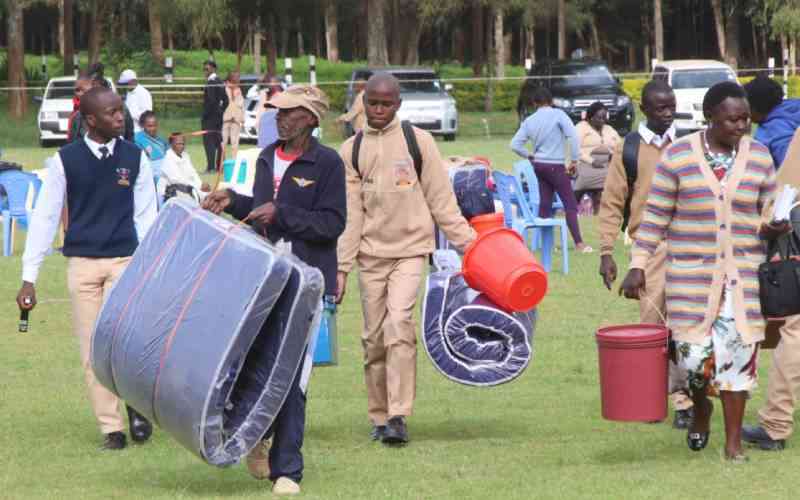
Transition to senior secondary school has exposed deep cracks in the education system, pitting government assurances against mounting frustration from parents, teachers and policy experts.
Stakeholders say more than 700,000 Grade Nine learners remained at home by last weekend, unable to report for Grade 10, triggering national debate over preparedness, equity and accountability under the Competency-Based Education (CBE) system.
Education stakeholders say the crisis is not accidental but the result of poor planning, weak coordination and rising costs, while the government insists the challenges are temporary “teething problems” in a new system.
According to Elimu Bora Policy and Strategy Advisor Boaz Waruku, many parents were caught off guard.
“The State should have released information much earlier to give parents time to prepare. Instead, we have hidden fees, frequent transfers, poor placement and a high cost of living that has pushed parents to the edge,” he said.
Waruku also questioned the government’s reclassification of schools into C1, C2, C3 and C4, arguing it has revived old inequalities.
“We thought categorisation of schools into national, provincial and district had ended with the Prof Munavu report. Now the pressure is back on learners to join so-called top schools,” he said.
Ironically, the Presidential Working Party on Education Reform (PWPER) chaired by Prof Raphael Munavu had proposed scrapping the old hierarchy altogether.
In its August 2023 report, the team recommended career-oriented clusters — STEM, Social Sciences and Arts, and Sports Science — instead of ranking schools by status. Critics say the current C1–C4 system contradicts that vision.
Many C4 day schools remain virtually empty, threatening their survival. By last Sunday, only 61 per cent of learners had reported, far below expectations under the government’s long-standing 100 per cent transition policy.

Mount Kenya University Pro-Chancellor Dr Vincent Gaitho warned that the crisis reflects systemic neglect.
“The CBE system is not an accident. Students are being forced to attend local day schools instead of the dream national schools they were invited to. Kenya is 63 years old — we should have been better prepared,” he said.
Gaitho expressed concern about the future. “It scares me what will happen in 2029 when the first CBE cohort enters university. We must invest now. Are the Cabinet secretaries working? Why is everything left to the President?” he posed.
He noted that although learners sit the same examinations, conditions are unequal.
Stay informed. Subscribe to our newsletter
“Some students get lower marks because they lack teachers, laboratories and facilities. Some have to imagine how a computer or swimming pool looks like,” he said.
Former Kenya National Union of Teachers (KNUT) Secretary General Wilson Sossion said the roots of the problem stretch back nearly a decade.
“We are not tracing the real cause. It started in 2016 when curriculum changes were introduced without proper planning,” he said.
Sossion cited a 2022 KNUT report that warned of the collapse of basic education, noting that teachers were unprepared for CBC. Still, he defended the decision to place junior schools within primary schools.
“Senior schools would have been overwhelmed. Parents are under pressure. There is also selectiveness about schools. We need to mop up learners still at home,” he said, adding that 74 per cent of senior school learners are day scholars, a figure he says should rise to 80 per cent but only with serious investment in facilities.
Former Vihiga MP Yusuf Chanzu questioned why government institutions are not working to solve he impulse.
“Presidential commission reports are not implemented. The President boasts about employing teachers, but where is the Teachers Service Commission?” he questioned.
Chanzu criticised weak oversight of public funds that end up helping few learners.
“A huge part of the national budget goes to education without accountability. MPs say Sh100 million is peanuts, yet schools are struggling,” he said.
Across the country, the statistics translate into near-empty classrooms. At ABulampya Mixed Secondary School in Isiolo, only one of 12 placed learners had reported.
“STEM is more than a laboratory,” said principal Galma Kosar, admitting the school lacks teachers and facilities for all pathways.
In Kajiado Central, Senior Chief Risa Secondary recorded only six learners.
“We were expecting 100 per cent transition,” said principal Fredrick Njoroge. Similar scenes are playing out in Bomet, Litein and other regions.
Isiolo County Director of Education Carolyne Mugo said authorities have launched a mop-up exercise.
“Some schools had zero admission. We held barazas, parents raised issues touching on the ministry and TSC, and they have agreed to take learners to school,” she said.
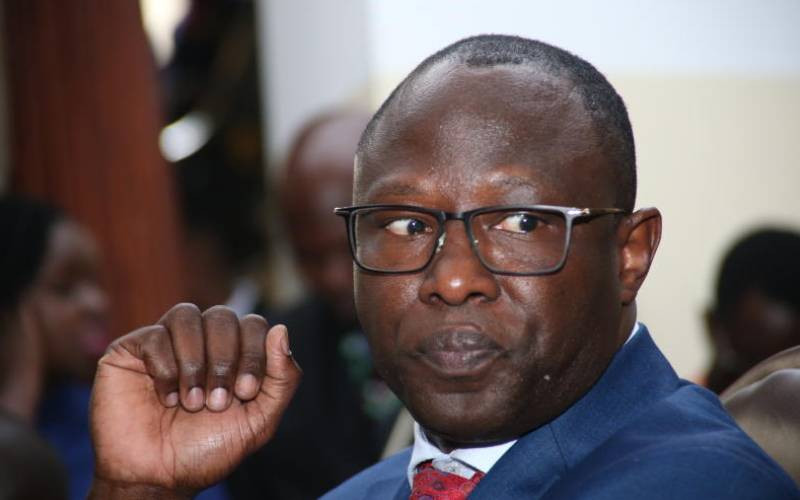
Education Cabinet Secretary Julius Ogamba acknowledged the challenges but struck an optimistic tone.
“There were teething problems because this is a completely new system,” he said. “As of Tuesday evening, at least 935,000 learners which translate to 85 per cent have been admitted in public schools,” said Ogamba.
The CS said the government is harmonising bursaries through a new KEMIS digital platform to prevent learners from “falling through the cracks.”
He added that some students are still at home awaiting bursaries or seeking transfers closer to home.
“We hope to complete the remaining numbers by the end of this week,” Ogamba said.
Subscribe to our newsletter and stay updated on the latest developments and special offers!










 join
join