×

The Standard e-Paper
Fearless, Trusted News
 The Standard Group Plc is a
multi-media organization with investments in media platforms spanning newspaper
print operations, television, radio broadcasting, digital and online services. The
Standard Group is recognized as a leading multi-media house in Kenya with a key
influence in matters of national and international interest.

Audio By Vocalize
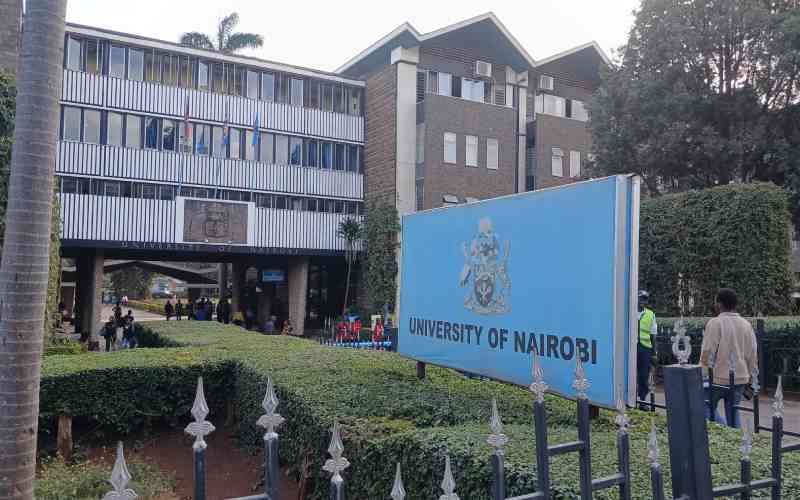
Universities across Africa have been challenged to embrace University Living Labs and strengthen partnerships with industry, government and communities to transform academic research into practical solutions, create employment opportunities and accelerate sustainable development.
The call comes amid growing concerns over the widening gap between university education and the demands of the modern workplace, with institutions being urged to move beyond traditional teaching models and establish innovation ecosystems where students can develop, test and commercialise ideas in response to real-world challenges.
Speaking during the 2026 Annual University Conference and Intelligence for Innovation (iN4iN) Conference at Mombasa Continental Resort, Mount Kenya University Pro-Chancellor Dr. Vincent Gaitho said universities must reposition themselves as centres of knowledge creation, entrepreneurship and innovation rather than merely institutions for transmitting knowledge.
He challenged higher learning institutions to strengthen collaboration with businesses and other stakeholders to ensure research and innovations translate into tangible economic and social benefits.
Dr. Gaitho observed that the changing global environment, driven by artificial intelligence, digitalisation, climate change and emerging technologies, demands graduates equipped with practical skills, creativity, critical thinking and entrepreneurial abilities.
"Education must equip graduates not only with qualifications but also with critical thinking, creativity, digital competencies, problem-solving abilities and an entrepreneurial mindset," he said.
He added that graduates should be prepared not only to seek employment but also to identify challenges facing potential employers and develop innovative solutions that respond to specific industry needs.
The two-day conference, held from November 12 to 13, 2026, brings together academics, researchers, policymakers, industry leaders, entrepreneurs and students from Africa and Europe under the theme, "The Triple Synergy: Building Sustainable Innovative Ecosystems Through Education and Partnerships."
A major focus of the discussions is the adoption of University Living Labs, an innovation model that connects academic institutions with businesses, government and communities to identify problems, develop solutions and test new ideas in real-life environments.
In his keynote presentation titled "Unlocking Business Potential Through University Living Labs," Prof. Dr. Utz Dornberger, Director of the SEPT Competence Center at Leipzig University in Germany and ACCESS Project Director, described Living Labs as user-centred, open innovation ecosystems that promote collaboration and practical experimentation.
He explained that the model provides an opportunity for students, researchers and industry players to work together in developing solutions that address actual business and community needs.
Prof. Dornberger identified seven critical elements for successful university-operated Business Living Labs, including clear value propositions, academic coaching, sustainable business models, strategic industry partnerships, real-life experimentation, integration into curricula and research, and responsible co-creation.
He emphasised that Living Labs should not operate as isolated university projects but as sustainable innovation ecosystems capable of supporting businesses, nurturing startups and strengthening industrial development.
The approach is expected to particularly benefit Micro, Small and Medium Enterprises (MSMEs), which often face challenges accessing research expertise, technological solutions and specialised business support.
Through university-industry collaboration, businesses can access academic knowledge while students gain opportunities to apply classroom learning, acquire workplace experience and develop solutions that can be commercialised.
Stay informed. Subscribe to our newsletter
The university's Vice-Chancellor Prof. Jaganyi, in remarks delivered by Deputy Vice-Chancellor Prof. Peter G. Kirira, said institutions must also change how they measure the success of innovation and entrepreneurship programmes.
He challenged universities to focus on businesses established, jobs created, young entrepreneurs empowered and communities transformed rather than the number of conferences, boot camps and participants.
"The real measure of our success is not the number of conferences we hold, the number of boot camps we organise or the number of participants who attend our programmes. The real measure of success is the difference we make in people's lives," he said.
He highlighted university's Graduate Enterprise Academy, established in 2013 to identify, nurture and support graduate-led startups through mentorship, business development services and access to networks.
The university also reaffirmed its commitment to strengthening international partnerships through the ACCESS programme, which brings together eight universities and a partner organisation from Africa and Germany, with support from the German Academic Exchange Service (DAAD) and the German Federal Ministry for Economic Cooperation and Development (BMZ).
Subscribe to our newsletter and stay updated on the latest developments and special offers!


 Prefer the Standard on Google