×

The Standard e-Paper
Stay Informed, Even Offline
 The Standard Group Plc is a
multi-media organization with investments in media platforms spanning newspaper
print operations, television, radio broadcasting, digital and online services. The
Standard Group is recognized as a leading multi-media house in Kenya with a key
influence in matters of national and international interest.
The Standard Group Plc is a
multi-media organization with investments in media platforms spanning newspaper
print operations, television, radio broadcasting, digital and online services. The
Standard Group is recognized as a leading multi-media house in Kenya with a key
influence in matters of national and international interest.

Audio By Vocalize
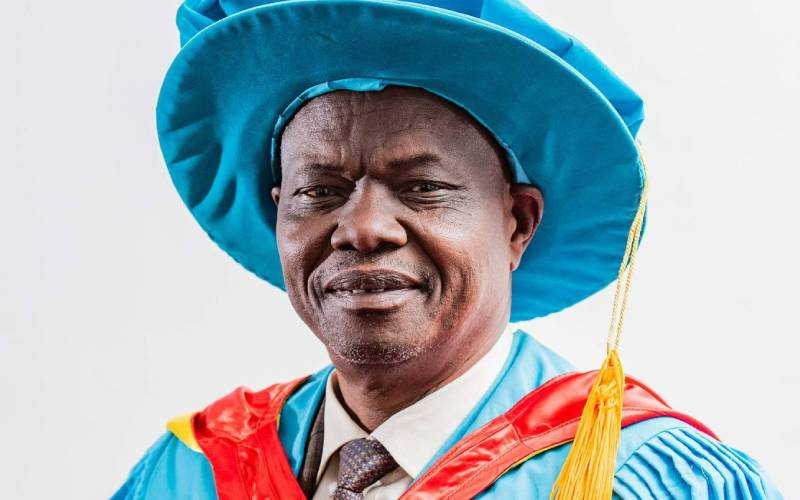
The University of Nairobi (UoN) will on Friday formally install Professor Eng. Ayub Njoroge Gitau as its ninth Vice-Chancellor.
This will mark the beginning of a new leadership chapter after more than a year of governance wrangles that unsettled Kenya's oldest and largest public university.
The investiture ceremony at the University's Taifa Hall will bring together members of the university community, government officials, diplomats, alumni, development partners and industry leaders to witness the formal installation of the institution's chief academic and administrative officer.
For many stakeholders, the ceremony signals a fresh start for a university that has in recent years grappled with internal governance disputes, leadership uncertainty and financial pressures that have threatened to overshadow its academic reputation.
Professor Gitau assumes office following a turbulent period that culminated in the exit of former Vice-Chancellor Prof. Stephen Kiama.
His departure came after months of disagreements involving the University Council, management and other stakeholders over governance and administrative matters.
The disputes triggered legal battles, public exchanges and uncertainty over the institution's leadership before Prof. Margaret Hutchinson was appointed Acting Vice-Chancellor to steer the university during the transition.
The leadership changes were accompanied by reforms at the governance level, including the reconstitution of the University Council as the government sought to restore stability and improve management at the institution.
Friday's installation is therefore expected to symbolize renewed confidence in the University's governance structures and future direction.
The University described the occasion as a celebration of leadership and institutional continuity.
"As the ninth Vice-Chancellor, Professor Eng. Ayub Njoroge Gitau joins a distinguished lineage of academic leaders. His installation marks not only the beginning of a new administration but also the continuation of a proud tradition of visionary leadership that has shaped generations of students, scholars, innovators and professionals," the University said ahead of the ceremony.
Professor Gitau is a distinguished scholar in civil and environmental engineering with decades of experience in academia, research and university administration.
An accomplished professional engineer, he has served the University of Nairobi in several senior leadership positions, including as Deputy Vice-Chancellor in charge of Administration and Finance, where he played a key role in institutional planning, financial management and strategic development.
He has also served as Dean of the Faculty of Engineering and held numerous academic and administrative appointments during his career. His research interests span water resources engineering, environmental management and infrastructure development, while his professional experience has seen him contribute to national and regional initiatives in engineering education and policy.
His appointment comes at a time when Kenya's higher education sector faces growing challenges, including declining government funding, rising operational costs, implementation of the new university funding model, digital transformation and increasing demand for research and innovation.
Stay informed. Subscribe to our newsletter
Established as Kenya's first university after attaining full university status in 1970, the University of Nairobi has built a reputation as one of Africa's leading institutions of higher learning. Over the decades, it has produced presidents, cabinet ministers, judges, diplomats, scientists, engineers, doctors, entrepreneurs and other professionals who have shaped Kenya and the wider region.
Successive Vice-Chancellors have overseen the expansion of academic programmes, strengthened research, forged international partnerships and enhanced the University's standing globally.
The University noted that Professor Gitau assumes office at "a pivotal moment for higher education," as universities are increasingly expected to respond to emerging societal needs through technological innovation, entrepreneurship, sustainability and impactful research.
Subscribe to our newsletter and stay updated on the latest developments and special offers!

 Prefer the Standard on Google