×

The Standard e-Paper
Stay Informed, Even Offline
 The Standard Group Plc is a
multi-media organization with investments in media platforms spanning newspaper
print operations, television, radio broadcasting, digital and online services. The
Standard Group is recognized as a leading multi-media house in Kenya with a key
influence in matters of national and international interest.
The Standard Group Plc is a
multi-media organization with investments in media platforms spanning newspaper
print operations, television, radio broadcasting, digital and online services. The
Standard Group is recognized as a leading multi-media house in Kenya with a key
influence in matters of national and international interest.

Audio By Vocalize
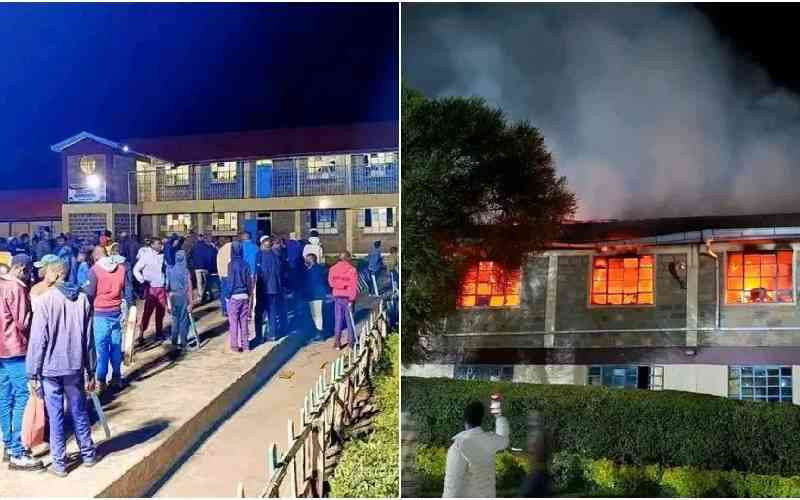
A wave of student unrest in the country is leaving a trail of destruction, interrupting learning as education authorities struggle to contain what is fast becoming a national crisis.
Learners are walking out of classrooms, torching facilities, boycotting examinations and demanding the removal of principals over grievances including poor feeding programmes, dilapidated infrastructure, academic pressure, harsh punishment and exclusion from decision-making.
The burden of destruction has fallen on the already struggling parents to foot the costs, which go into millions of shillings.
So far, the unrest, most rampant during the second term, has affected dozens of institutions across counties, including Nairobi, Coast, Rift Valley, Western, Nyanza, as well as Central regions, raising concern over the state of learner welfare and discipline in schools.
At State House Girls High School, students were ordered to leave the institution on May 12, 2026, after it was closed indefinitely following tensions over food shortages, healthcare concerns and alleged mistreatment of students.
The school admitted that learners had raised several complaints touching on hunger, healthcare services, quality of education and the treatment of students by the administration.
“We have had many concerns, including hunger, healthcare, the quantity of food, the quality of education and how students are treated,” one board member said.
In a communication to parents, the administration acknowledged that some students had expressed intentions of going on strike before the institution was shut down to ease tensions.
The closure reflected a wider pattern emerging across the country where students say their grievances are ignored until frustrations boil over into chaos.
In Taita Taveta County alone, institutions including Mwasere Girls High School, Dr Aggrey Boys High School, Kenyatta High School, Moi Boys, Eldoro Girls and St Mary’s Lushangonyi have reported fires, destruction and unrest.
In Embu County, unrest paralysed learning in institutions including Kangaru School, Kangaru Girls High School, Sacred Heart Kyeni Girls and Kimangaru Mixed Secondary School.
At Gatoori Day Secondary, Nguviu Boys and even St Martha Gatoori Primary School experienced unrest, with authorities expressing shock that younger learners are increasingly joining demonstrations once associated mainly with boarding schools.
Around the same time, Our Lady of Mercy Secondary School in Shauri Moyo, students staged protests over deplorable sanitation, stale bread, congested classrooms and what they termed embezzlement of funds meant for school development.
The girls further complained of overflowing toilets, weak perimeter walls, poor drainage and overcrowded dormitories where students were forced to squeeze and share lockers.
Stay informed. Subscribe to our newsletter
“The girls students have endured all this untold suffering until it became unbearable,” one parent said after the indefinite closure of the school.
In Kakamega County, Ingotse Boys High School was closed indefinitely after students went on a night rampage and torched the school library on May 20, 2026.
Other schools in the county, including Malava High School and Chebuyusi Secondary School, have also experienced repeated unrest.
At Chebuyusi, students protested over the lack of water, while at Malava High School, administrators have battled two strikes since the beginning of the year.
In Bungoma County, students at Toroso High School walked out and camped at the Cheptais Deputy County Commissioner’s office, demanding an audience with authorities.
At St Mary’s Kibabii High School, parents narrated receiving distress calls from children who fled the school at night protesting the transfer of their principal.
Still in the same county, students at Ndivisi Girls High School protested after rice was reportedly removed from the school menu, while others complained of excessive strictness by the administration. Police intervened after students started breaking classroom windows.
In Siaya County, Ambira Boys High School was closed after destructive unrest left property worth millions damaged.
At Bishop Abiero Oruga Secondary School, students went on strike demanding the removal of their principal and raising concerns over inadequate food, delayed bursary disbursement, poor sanitation and lack of support for sports activities.
According to a police report, learners complained about full latrines and frustration over the school's failure to sponsor them in sports competitions.
Meanwhile, at Maranda Boys High School, nearly 900 Form Three students staged unrest after some colleagues were implicated in an arson incident.
Security officers were forced to intervene as agitated learners demanded to be allowed to go home.
In Kericho County, Chebwagan Boys High School was closed barely a week after reopening when students protested over poor diet and dissatisfaction with the school administration following poor KCSE performance.
Residents living near the school reportedly rushed in to help calm tensions and prevent destruction.
Education experts say the recurring unrest points to deeper structural and emotional problems within schools.
Education Cabinet Secretary Julius Ogamba acknowledged the worrying trend but maintained that the incidents should be viewed in context.
He disclosed that roughly 100 schools out of Kenya’s more than 73,000 learning institutions had experienced unrest this term.
The CS warned of tough disciplinary measures against learners involved in criminal acts such as arson and destruction of property.
“If they are candidates, they will sit their exams from alternative centres. If they are in Form Two or Form Three, they will be required to study from home,” he said, adding that the right to education cannot excuse criminal behaviour.
His ministry is proposing strengthening guidance and counselling departments, enhancing psychosocial support and increasing mentorship programmes in schools.
Parents' associations and teachers’ unions are now calling for an urgent national dialogue on the state of schools.
Some parents say they are being unfairly punished through expensive repair levies after destruction caused by unrest.
“The rate at which schools are closing due to unrest is frightening. Government and school heads must listen to students before things get out of hand,” said a parent from Embu.
Another parent at Mwasere Girls questioned why schools only react after violence erupts.
“Children have been complaining about food and conditions for months. Why wait until dormitories are burnt?” she asked.
Kenya Secondary Schools Heads Association (Kessha) chairman Willie Kuria said some schools are struggling with overcrowding, underfunding and rising indiscipline fuelled by social media influence and drug abuse.
“Some of the things learners are raising can be handled when we have enough resources to meet their demands. Principals are doing what they can to ensure teaching and learning take place,” he said.
Dr Mercy Maina, a psychologist, warns that educators are increasingly becoming targets of student anger despite operating under difficult circumstances.
She called for better teacher-student engagement and stronger parental involvement.
“The Competency-Based Curriculum transition, rising cost of living and pressure to perform academically may be increasing stress among learners,” said Dr Maina.
Mental health expert Alfred Onyango warns that many students are silently battling anxiety, depression and emotional exhaustion in highly competitive school environments.
“Their brains need something to relieve their anger and pain; this can be done through sports, music and any creative activity,” he said.
Parents and education experts say many schools have failed to establish proper communication structures that allow learners to air grievances before frustrations boil over.
In a virtual meeting with school heads and education officials, Basic Education Principal Secretary Julius Bitok attributed the latest unrest to weak communication between students and school management, harsh disciplinary practices and increasing academic pressure.
“Schools must strengthen communication channels between students, teachers, parents, and administrators to promote trust, openness, and timely resolution of concerns,” said Bitok.
He urged schools to adopt student-centred approaches and involve learners in decision-making processes affecting their welfare.
“Discipline should be fair, supportive, and corrective. Schools must create environments where learners feel heard, respected, and supported,” Bitok added.
Education officials also linked the unrest to poor learning environments, peer influence, drug and substance abuse, social media pressure and ineffective guidance and counselling systems.
Sidebar: Hunger, harsh punishment and poor environment fuel strikes
Students have raised concerns over issues that continue affecting their well-being in schools. These growing concerns have exposed deep frustrations among students, pushing them to protest. Among issues raised are poor living conditions, harsh disciplinary measures, inadequate meals, and what learners describe as unresponsive school administrations.
In recent weeks, several schools have experienced strikes, destruction of property, and class boycotts as students protested against issues they say have been ignored for years.
At State House Girls high school that recently witnessed protests, students complained of poor feeding programmes, dilapidated infrastructure, poor drainage systems and unsafe perimeter walls that they said endangered their safety.
The learners also cited congestion in classrooms, shortage of lockers, poor sanitation, and lack of proper social amenities, including playing grounds.
“We have had many concerns, including hunger, healthcare, the quantity of food, the quality of education and how students are treated,” said one education official familiar with the students’ grievances.
In another school, students reportedly protested against punitive punishments allegedly imposed by administrators and teachers.
Students interviewed in several affected counties cited poor meals, punitive punishment, inadequate dormitories, denial of participation in co-curricular activities, overworking by teachers and authoritarian leadership styles as key frustrations.
Some learners also accused long-serving teachers and administrators of creating hostile environments.
“They have taken school heads hostage, unable to act on complaints we raise,” said one student.
Others pointed to mounting academic pressure, especially among candidates preparing for national examinations.
National Parents Association chairman Silas Obuhatsa appear to side with learners and throws the blame squarely on teachers.
Some teachers have been in some schools since they were employed by the Teachers Service Commission. They have made schools their homes and make students’ lives unbearable,” says Obuhatsa.
Obuhatsa further expressed concern over deteriorating conditions in some schools, saying many parents are paying school fees only for children to live in deplorable environments.
“Parents are disturbed by reports of students sleeping in congested dormitories, using broken sanitation facilities and receiving poor quality meals despite the huge burden families carry to pay school fees,” he said.
Some students also complained of being denied opportunities to participate in co-curricular activities, saying schools had become overly focused on examinations at the expense of talent development and social well-being.
“Our school has denied us the opportunity to take part in sports, music and drama festivals,” complained a female student.
At a mixed boarding school in western Kenya, students went on strike after claiming they were not psychologically prepared to sit examinations due to pressure from teachers and what they termed a toxic school environment.
Subscribe to our newsletter and stay updated on the latest developments and special offers!


 Prefer the Standard on Google






 join
join