×
App Icon
The Standard e-Paper
Truth Without Fear
★★★★ - on Play Store
Download Now

KJSEA vs KCPE: What you need to know

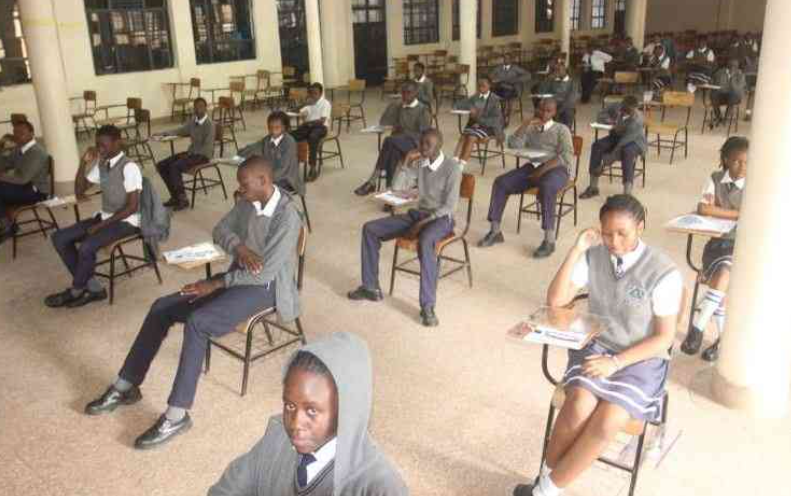
Kakamega Hill School Junior School assessment candidates wait to start their exams in their examination room on October 27, 2025. [File,Standard]

Education Cabinet Secretary Julius Migos Ogamba is set to release the first Kenya Junior School Education Assessment (KJSEA) results today, replacing the Kenya Certificate of Primary Education (KCPE).

The Ministry of Education and Kenya National Examinations Council (KNEC) will release results for 1,130,680 Grade 9 learners who sat the inaugural KJSEA between October 27 and November 3, officially replacing the high-stakes KCPE examination that ended in 2023 after 38 years.

But, you wonder, what’s the actual difference between the two national exams?


Examination period

Both KJSEA and KCPE follow similar marking timelines.

KCPE was a single high-stakes national examination administered at the end of Standard 8 under the 8-4-4 system.

Learners sat the test once, and their scores determined secondary school placement.

Unlike KCPE, which tested recall and memorisation in one sitting, KJSEA combines continuous assessment and summative evaluation administered across Grades 7, 8, and 9 under the Competency-Based Curriculum (CBC).

The assessment highlights competencies, skills development, and learner growth rather than ranking students nationally.

KCPE candidates could earn a maximum of 500 marks across five subjects: English, Kiswahili, Mathematics, Science, and Social Studies. Each subject carried 100 marks. Results were announced with top performers publicly celebrated, and schools ranked nationally. Students answered questions on paper and shaded answers using lines on Optical Mark Reader sheets.

Whereas KJSEA operates on an eight-level achievement system. Instead of marks out of 500, learners receive achievement levels (AL) ranging from AL 1 (1-10 percent) to AL 8 (90-100 per cent), with corresponding points from 1 to 8.

The assessment uses shaded bubble answer sheets for multiple choice questions, along with short structured questions, essay questions, performance tasks and practical assessments across 12 learning areas.

"The results we are getting today make up only 60 per cent of the total. Another 40 per cent comes from the exams they did in Grade 6, 7 and 8," Lewis Nyaundi, education reporter at Standard Group, said on Spice FM Thursday.

 "KPSEA contributes 20 per cent to KJSEA, and the remaining 20 per cent comes from school-based assessments.”

No ranking

Unlike previous examinations, KJSEA does not involve ranking of top schools or candidates.

"Ranking has been eliminated, and mean scores as well. We do not expect celebrations from schools like in the olden days. A new ranking system has been adopted, which will compile students' performance," Nyaundi explained.

Instead, learners receive detailed performance transcripts showing progress in each learning area.

"We do not want to subject a child to one assessment to tell their abilities. We wanted it to be something we see grow over a period of time," KNEC Chief Executive Officer David Njengere said in a previous interview.

Transition to university

KCPE marked the transition from primary to secondary school after eight years of primary education.

Students used their scores to compete for placement in national, extra-county, county, and sub-county secondary schools. Results largely determined a single academic pathway, with students competing for spots in traditional secondary schools regardless of their interests or abilities.

KJSEA marks the transition from junior secondary to senior secondary school under the 2-6-3-3-3 system, which comprises two years of pre-primary, six years of primary school, three years of junior secondary and three years of senior secondary. Students typically continue in the same institution since junior and senior secondary are now combined.

KJSEA results, combined with learner interests, guide placement into three senior school pathways: Science, Technology, Engineering, and Mathematics (STEM); Social Sciences; and Arts and Sports.

"After combining the 60 per cent from KJSEA, 20 per cent from KPSEA, and 20 per cent from school-based assessments, you get a cumulative score. KNEC will then assess it based on how you have performed in your projects and recommend where you are best placed, for example, in STEM or sports, depending on your strengths in the exams," said Nyaundi.

Upon completing Grade 12, learners will be awarded the Kenya Certificate of Basic Education (KCBE), the only official certificate under basic education, reflecting their specialisation pathway for transition to university, college, or technical and vocational training institutions.

Placement

Results will be accessible on the KNEC portal using each learner's specific assessment number.

The top six learners per gender in each STEM track per sub-county will be placed in their schools of choice. The top three learners per gender in each social science track per sub-county will also be placed in schools of their choice, as will the top two learners per gender in each arts and sports track per sub-county.

Placement will be done electronically by the Ministry of Education, and admission letters will be issued through the National Education Management Information System (NEMIS). Learners are expected to receive admission letters before December 25 and report to their new institutions on January 12, 2026.

The first KCPE examination was administered in 1985 when former President Daniel Arap Moi introduced the 8-4-4 education system.

The last KCPE was held in November 2023, ending 38 years of a system that attracted criticism and praise in equal measure.