×

The Standard e-Paper
Kenya’s Boldest Voice
 The Standard Group Plc is a
multi-media organization with investments in media platforms spanning newspaper
print operations, television, radio broadcasting, digital and online services. The
Standard Group is recognized as a leading multi-media house in Kenya with a key
influence in matters of national and international interest.
The Standard Group Plc is a
multi-media organization with investments in media platforms spanning newspaper
print operations, television, radio broadcasting, digital and online services. The
Standard Group is recognized as a leading multi-media house in Kenya with a key
influence in matters of national and international interest.

Audio By Vocalize
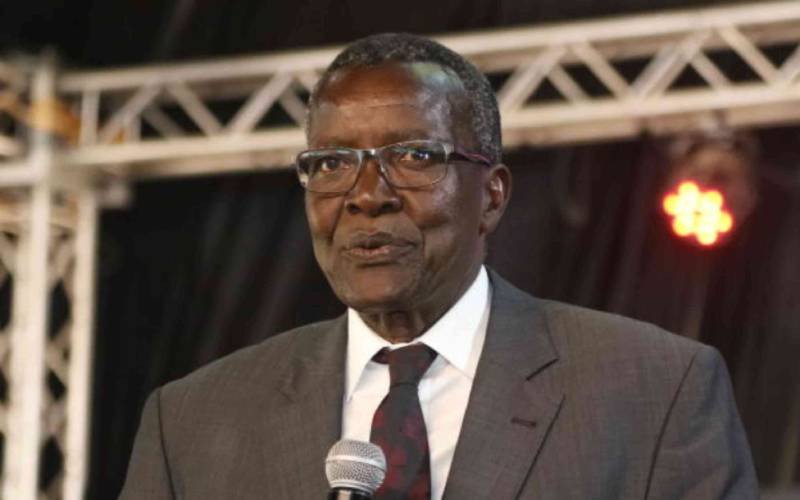
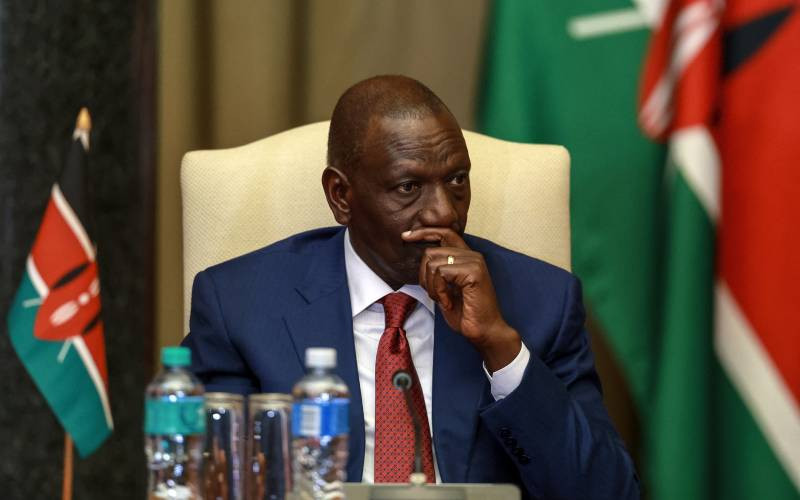
Retired Chief Justice David Maraga has challenged President William Ruto to release the police reforms taskforce report, which he chaired, within seven days or he would.
In an August 18, 2026, letter, Maraga accuses Ruto of failing to restore the independence of the National Police Service and end police brutality and impunity which are part of the recommendations contained in the report submitted to Ruto on November 16, 2023.
“For now, nearly three years, you have failed to implement the said recommendations and restore the Independence of the Service,” said Maraga.
He argues that NPS should be an independent national security organ that should not be directed by anyone when discharging their mandate including the President.
“Contrary to these express provisions, we have witnessed organized political violence, goonism and partisan policing in Homa Bay, Keumbu, Ol Kalou as well as acts of violence in churches in Kisumu, Nairobi and Witima, among others, under your watch, direction and for your political benefit,” he said.
He argued that Kenya had seen the worst of events recently witnessed before and it could only point to state capture of the NPS due to the police non-action.
“In the circumstances, and in view of the fact that report was secured at public expense, and in line with Article 35 of the Constitution, I demand that you immediately release and publish the complete and unedited Taskforce Report within Seven (7) days, failing which I will myself release it.”
The report submitted 598 recommendations for the police, prison officers and National Youth Service members with a bulk of it targeting NPS.
The recommendations cited outdated policies, weak leadership, underfunding, corruption, harsh working conditions, neglect of officer’s welfare and inadequate tools.
On corruption, the report found that it was deeply rooted in the service and began at recruitment level where slots were up for grabs for the wealthy, top police bosses, MPs and cabinet officials.
It said that the slots may fetch up to Sh600,000 in bribes and this opened the door for recruits to maintain loyalty bot their paymasters and those who got in on merit have to grant favours to remain in good books with their bosses.
"A significant percentage of slots in any recruitment process are allocated to the political elite, leaving only a few for merit selection," reads the report.
Among the recommendations is salary increment for the three agencies to address welfare concerns, accountability and operational inefficiencies.
Others include addressing housing challenges that has seen police officers share houses with their colleagues and families while others sleep in iron sheet houses.
Stay informed. Subscribe to our newsletter
"The task force found that the three services (NPS, National Youth Service, and the Kenya Prisons Service) face myriad challenges, primarily underfunding, endemic corruption, poor leadership, inadequate human capital management, and other structural issues."
The Maraga-led taskforce also recommended the return of the police airwing from the military.
In 2019, retired President Uhuru Kenyatta issued a directive that the police airwing be transferred to the National Air Support Department (NASD) which is led by military.
The move meant that police needed clearance from the military to fly out which created tension between the two security agencies with NPS leadership arguing that it hampered their operations.
"This has hampered NPS's operations and affected its capacity in flight operations," it observes.
Expertise and ability maintain aircrafts was cited by the military in their submission to the taskforce as one of the reasons they were not willing to give the airwing back.
The report also fingered the National Police Service Commission for allowing NPS leadership to overstep their role and failure to address malpractices which they said resulted in junior officers feeling abandoned.
Ethnic diversity was noted as a key issue with only eight communities taking up 81.05 per cent of police officers in the country which is not representative of the Kenyan population.
Subscribe to our newsletter and stay updated on the latest developments and special offers!


 Prefer the Standard on Google






 join
join