×

The Standard e-Paper
Fearless, Trusted News
 The Standard Group Plc is a
multi-media organization with investments in media platforms spanning newspaper
print operations, television, radio broadcasting, digital and online services. The
Standard Group is recognized as a leading multi-media house in Kenya with a key
influence in matters of national and international interest.

Audio By Vocalize

On the question of the United Opposition and its presidential flagbearer, Kenya seems to have settled into two schools of thought. The first is impatient: Name the candidate ASAP! Pronto! What are you waiting for? Let Kenyans know who will face President William Ruto.
The second advocates patience: Let us wait, perhaps until April next year, before settling on the candidate. I belong to neither school. My argument is that the opposition is having the wrong conversation, or at least in the wrong order. Before debating who should occupy the roof, its principals should lay the foundation and put up the walls.
Naming a flagbearer should be the culmination of deliberate coalition-building, not its starting point. A house cannot be built from the roof downwards. Neither can a viable political coalition be assembled around the ambition of one individual without first establishing the relationships, institutions, structures and shared vision that will sustain it.
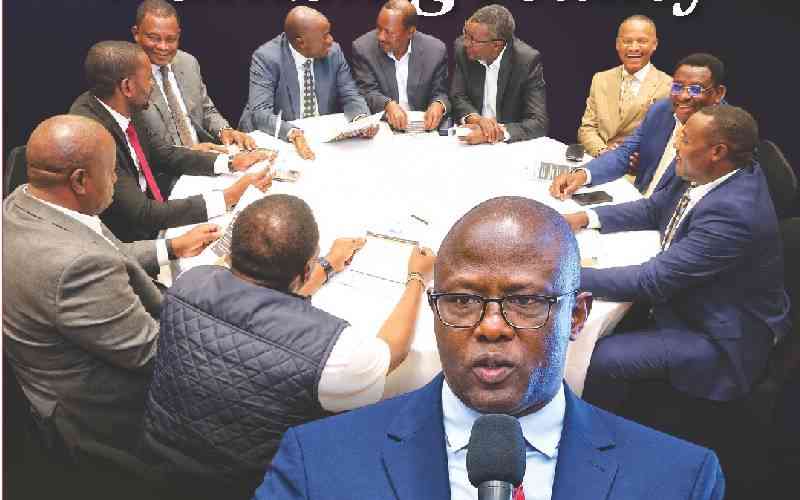
First, the principals need to be a team. So far, they are a group of political leaders, not necessarily a cohesive team. There is a difference between sharing a political platform and sharing a political purpose. They need to bond, develop chemistry, build mutual trust and cultivate collective solidarity. They need a Neto principle approach: if you touch one, you touch all.
What we are witnessing is an absence of open confrontation without necessarily having the deeper trust and cooperation required for genuine unity. The principals appear united when they meet, but separate media interviews sometimes expose disagreements and competing interests. Kenyans watch them make remarks about one another, only for them to present a united front at their next meeting.
This matters beyond the election. The chemistry they fail to build in opposition could become a governance problem if they succeed in forming the next government. Governing requires continuous negotiation, compromise, collective decision-making and management of competing interests. If they struggle to manage their differences while outside government, what happens when they must negotiate cabinet responsibilities, budget priorities, appointments and policy decisions? A coalition held together principally by a common opponent may discover that removing that opponent is easier than governing together.
Secondly, institutional infrastructure must be established. The coalition needs a functioning joint secretariat, clear decision-making procedures, grassroots structures, resource mobilisation mechanisms, a common communications strategy and an agreed framework for resolving disputes. Joint meetings and press conferences cannot substitute for institutions.
There must also be an honest conversation about how the coalition intends to campaign. How will resources be consolidated and managed? How will the principals' respective political networks and grassroots structures be coordinated? Who will undertake which responsibilities? What happens to those who do not secure the presidential ticket? If the entire political negotiation revolves around one position, those who miss out may feel
excluded and become indifferent to a project in which they have no meaningful stake.
Germany's 2021 Traffic Light Coalition offers a useful lesson. The Social Democratic Party, the Greens and the Free Democratic Party came together despite different political identities and policy interests. Their coalition agreement, "Daring to Make More Progress" established shared governing priorities and a framework for cooperation. They negotiated what they intended to do with power, not merely who would lead the government.
Kenya's opposition can draw from this experience.
Thirdly, the principals need to articulate the kind of government they want. What will be its governing philosophy? What will its priorities be? What will it do differently on the economy, unemployment, public accountability, devolution, social protection and institutional reform? Kenyans need more than an alternative presidential candidate; they need an alternative governing proposition.
The opposition must develop a political vision capable of capturing the imagination and aspirations of citizens. People should see themselves in the future being proposed. The conversation must move beyond who wants to occupy State House to what changes when that person gets there. A government-in-waiting must demonstrate not only its desire to acquire power, but also its understanding of how it intends to exercise it.
None of this means the flagbearer question should be postponed indefinitely. Early identification has its own merits, including allowing adequate time for campaign preparation and giving supporters clarity. Equally, delaying the announcement can provide room for negotiations. But neither timing resolves the more fundamental question of whether the coalition is organised, cohesive and prepared to act collectively.
The opposition should therefore build the foundation, put the pillars in place, raise the walls and agree on the architecture of its political house. Then it can settle on who should sit at the apex of that structure.
Stay informed. Subscribe to our newsletter
-The writer is a policy specialist
Subscribe to our newsletter and stay updated on the latest developments and special offers!

 Prefer the Standard on Google