×
App Icon
The Standard e-Paper
Kenya's Bold Newspaper
★★★★ - on Play Store
Download Now

How a small town almost became Kenya's Singapore

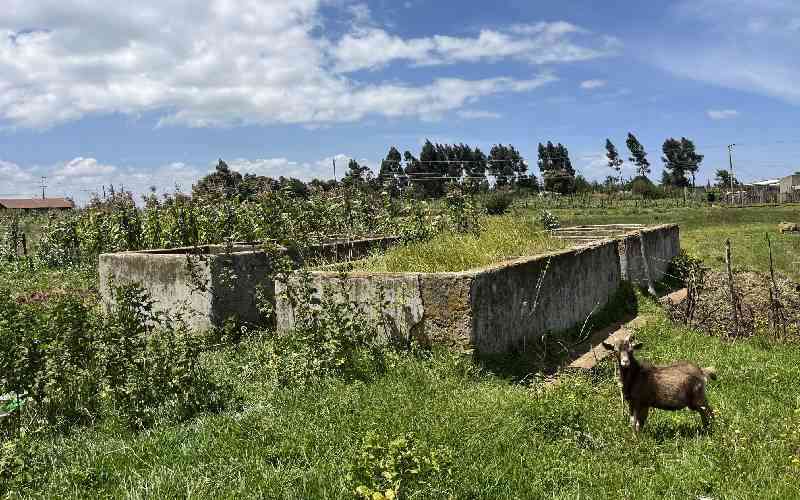
A disused tannery in Shamata town in the White Highlands. [XN Iraki, Standard]

The size of Singapore is only 0.12 per cent of Kenya’s landmass, smaller than most of our counties. It has a population of only six million people. It’s a city-state.

Its small size means the best approach to transforming Kenya into a developed country by 2055 is through the bottom-up, making every hamlet, village and county a “Singapore.”


One village almost became Singapore 43 years ago. And the evidence is there; an old disused tannery that once trained young men to tan leather and make bags, shoes, belts and other accessories.

It’s in Shamata town, 160 kilometres from Nairobi in the former White Highlands. The village overlooks the infamous Happy Valley, where merry making through drugs and wife swapping was the norm in the roaring 1920s.


The death of Lord Errol, who owned a home in the Happy Valley (Wanjohi) marked the end of the Happy Valley’s “golden age.”

Geoffrey Ngumi Kihiu (Njogu wa Tannery) was the pioneer industrialist who owned the tannery from 1972-1982. In the farming community, hides and skins were plentiful from sheep and cattle.

The supply chain was short; farmers simply delivered the hides to the tannery on foot or on bicycles, which was then a status symbol before motorbikes took over. Only Mr Karuri, a local policeman, owned a motorbike. 

Later, Zachary Nderitu (Mwalimu Kinyiriria) started buying hides, but long after the tannery had closed.

Kinyiriria got the nickname because of leading dancing troops that once entertained Jomo Kenyatta.

I have wondered where the small town, also called Kaheho would be economically if Njogu got the support he needed through marketing and connection to global supply chains.

The town would be competing with Italy on leather products. Remember, China was not on the scene then. Don’t all great firms, from Google to Toyota, boast of a hometown?

The tannery could have become the anchor industry, attracted other related industries and built an ecosystem of innovation around Shamata.

Jobs would have delayed the subdivision of land into uneconomical plots.

With no jobs, owning a piece of the Earth is cherished and a cause of social instability, particularly after women started inheriting their parents.

The British and South African settlers owned large pieces of land, which were part of the one million settlement scheme. They are now being subdivided a third time after the mzungu inheritors have passed away. Maybe a tarmacked road would have reached the town earlier. The natives of Shamata are still waiting, hoping that the search for “2027 votes “will translate into a tarmacked road.

No other industry was ever started there except a bakery, which too closed. Supplies come from Nyahururu 30 km away. Shamata is the end of the supply chain. Tourists heading to Aberdares National Park through Shamata gate give the place a semblance of modernity.

The late Njogu (1944-1989) later became a preacher, founder of the PAG church in 1978. May be found no earthly reward for his pioneering spirit. Maybe no prophet is accepted in his village.

Today hides are thrown away; his tannery would be thriving.

Maybe he would be importing hides and selling branded products: Njogu shoes, Njogu belts, Njogu handbags. And they would be found in malls globally, like Prada or Gucci. Njogu was never rewarded for his boldness in planting the first seeds of industrialisation in the small town. If he followed through, the town would be a Singapore today without a shoreline. He was not alone; his neighbour Eutychus Gichehe Githaiga (1956-1998) was a co-pioneer, starting a village polytechnic in 1986 and visiting Singapore the same year.

That could have become our Massachusetts Institute of Technology (MIT), the research centre of the industrial age. 

What did he learn from Singapore? Like the tannery, the polytechnic closed its doors in 1987. It was located in the buildings owned by a settler KW Nunn (Kihuko). Shamata’s dark ages finally set in. Will a renaissance come soon?

Both pioneers were immigrants and died young. Njogu at 45 and Gichehe at 42. A tarmacked road would bring more immigrants and their new ideas.

Njogu was born in Kiambu and Gichehe in Njiru, Nairobi.

Cable cars

With such pioneers, citizens of Shamata would be living longer and happier lives with many jobs.

It’s not only the tourists who would be visiting Aberdares National Park, but the citizens of Shamata too.

They would be hiking in the mountains and gliding over the Rift Valley overlooking Lake Ol Bollosat nearby.

Cable cars would take them to the lakeshore to watch hippos and sail. 

Datchas overlooking the Rift Valley and Happy Valley would be the status symbols.  The grandchildren of mzungus who once made this place their home would be marvelled by the progress.

The three airstrips that once dotted Shamata would be active.

Upgrading to AI and quantum computing from tanning leather would be the next phase of industrialisation.

May Njogu wa Tannery and Githaiga’s souls rest in peace. Next week, the pioneer transporter.