×

The Standard e-Paper
Kenya’s Boldest Voice
 The Standard Group Plc is a
multi-media organization with investments in media platforms spanning newspaper
print operations, television, radio broadcasting, digital and online services. The
Standard Group is recognized as a leading multi-media house in Kenya with a key
influence in matters of national and international interest.
The Standard Group Plc is a
multi-media organization with investments in media platforms spanning newspaper
print operations, television, radio broadcasting, digital and online services. The
Standard Group is recognized as a leading multi-media house in Kenya with a key
influence in matters of national and international interest.

Audio By Vocalize
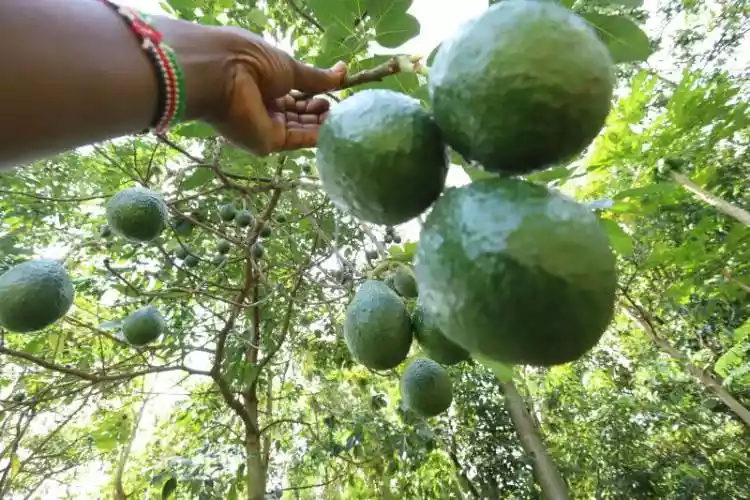
In an attempt to raise the standard of living for small-scale farmers in the lower Kangema, hundreds of people in Muguru, Murang’a, are working to invest in the establishment of avocado orchards on their farms.
Under the direction of the agriculture extension officers, Nephat Chege has mobilised the farmers to concentrate on producing high-quality avocados that are ready for the export market.
The avocado programme is anticipated to enrol 3,000 households that have been identified in a strategy focused on the establishment of aggregation and value-addition centres that will employ the youth, out of a population of 18,498 registered in the 1999 national census.
At the height of coffee liberation in the 1990s, most farmers uprooted their coffee bushes and switched to other crops, making the area suitable.
Together with other opinion leaders, Chege concluded that it would be prudent to help the people of Muguru Ward invest in high-value crops that will pay off for them in less than four years.
“After realising the demand for avocados in international markets, which are currently controlled by a few exporters associated with estates with better returns, small-scale farmers moved into avocado farming,” stated Chege.
According to the Ministry of Agriculture, Murang’a is a fruit-growing region that leads Kenya and the African continent in avocado production.
According to him, there is an urgent need to empower the community by acquiring high-quality seedlings so they can enter the market and profit.
“To make sure they will be suppliers in the upcoming years, we have contacted several nursery operators who are propagating quality seedlings for distribution to the farmers,” Chege stated.
Isaa Wanjambi, a resident, claimed that he received 20 seedlings through Mwangi’s programme, which he planted during the brief rains.
He declared, “This is a noble programme that nurtured Muguru and the larger Iyego area to transform the locality.”
According to 50-year-old Samuel Mungai, the widespread introduction of avocados will compel the national government to set up an aggregation centre in order to help with collections.
He stated, “Iyego locality has more than 2,000 farmers with a large portion of land measuring between an acre and two acres that will be viable for the economic programme.”
Stay informed. Subscribe to our newsletter
According to Jedida Wandia, the avocado’s introduction will enable them to participate in value-adding initiatives and raise their prices.
“If farmers adhere to agricultural principles, agriculture continues to be the best source of income,” stated Wandia, a mother of four.
Agronomist John Chege says farmers must prune and apply zinc, boron, and Omex.
Chege says in order to increase their income, farmers should relocate and diversify.
According to Chege, “they are supposed to apply fertiliser, compost manure, and control pests.”
Gakira Market resident Rebecca Wambui Mwangi urges the authorities to assist the locals in starting an agricultural programme that will raise their standard of living.
According to Wambui, Kangema is endowed with a climate that is favourable for the majority of fruits that, if embraced, have the potential to significantly boost the local economy.
Says Wambui: “High-value crops have replaced coffee and tea in many places, so vibrant irrigation programmes are needed to support modern farming, which has high returns.”
According to Murang’a Agriculture CEC Kimani Mugo, avocado farming is successful in every part of Kangema.







Subscribe to our newsletter and stay updated on the latest developments and special offers!








 join
join