×

The Standard e-Paper
Kenya’s Boldest Voice
 The Standard Group Plc is a
multi-media organization with investments in media platforms spanning newspaper
print operations, television, radio broadcasting, digital and online services. The
Standard Group is recognized as a leading multi-media house in Kenya with a key
influence in matters of national and international interest.
The Standard Group Plc is a
multi-media organization with investments in media platforms spanning newspaper
print operations, television, radio broadcasting, digital and online services. The
Standard Group is recognized as a leading multi-media house in Kenya with a key
influence in matters of national and international interest.

Audio By Vocalize
More than two decades after it was conceived as Kenya's flagship industrial hub, Mombasa's Dongo Kundu Special Economic Zone (SEZ) is showing fresh signs of life as new investors prepare to establish operations.
Yet the slow rollout of critical supporting infrastructure continues to delay large-scale private investment and raises questions over the government's seriousness about the industrial transformation.
The latest investor to commit to the zone is Milly Glass SEZ Ltd, a subsidiary of the Milly Group of Companies, which plans to establish Africa's first pharmaceutical glass bottle manufacturing plant.
The company has acquired 15 acres within the SEZ and intends to construct an 80-tonne glass manufacturing factory dedicated to producing amber pharmaceutical bottles for Kenya, Tanzania, Uganda, Rwanda, Burundi and the wider Common Market for Eastern and Southern Africa (Comesa).
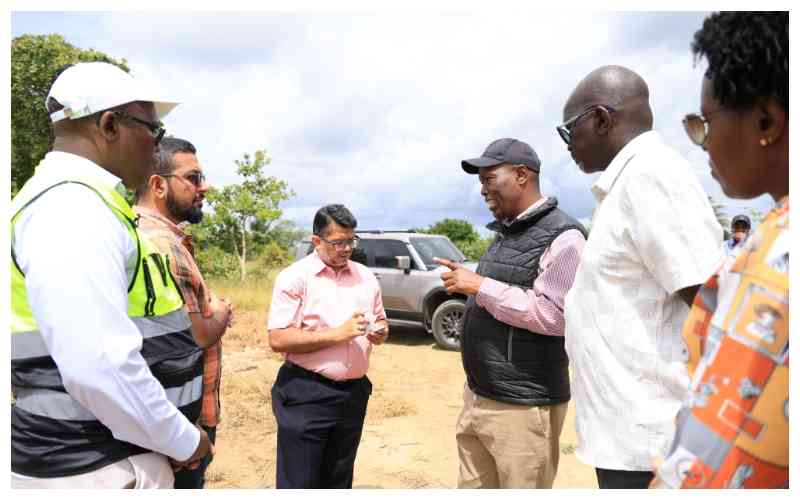
Speaking last week during a tour of the project by Trade and Industry Cabinet Secretary Lee Kinyanjui, Milly Glass SEZ director Mohamed Rashid said the company expects to break ground at the end of this month.
"We hope to be able to start production of amber bottles for pharmaceuticals by July 2027," Rashid said.
He said the plant will produce about 300,000 pharmaceutical bottles using state-of-the-art machinery imported from Germany, Italy and Switzerland.
The investment is expected to create at least 300 direct jobs and another 200 indirect opportunities through transport, packaging, chemical supplies and other supporting services.
"This factory is expected to create employment for at least 300 people directly and another 200 indirectly because of packaging material, raw materials, chemicals needed, drivers, among others," Rashid said, adding that the project is also expected to support more than 100 small and micro-enterprises.
However, Rashid said the company cannot proceed efficiently without basic infrastructure, particularly an all-weather access road linking the factory site.
"The contract is ready to start work, but with no access road, it will be costly to move materials because of the delicate nature of some of them," he said.
His concerns reflect a broader challenge that has slowed the development of Dongo Kundu despite years of government promotion.
Originally conceived in the early 2000s under the Mombasa Port Development Programme, the approximately 3,000-acre SEZ was envisioned as a world-class industrial and logistics hub that would leverage the Port of Mombasa to attract export-oriented manufacturers, create thousands of jobs and position Kenya as a regional manufacturing centre.
Over 20 years later, however, only two major private investors have made visible commitments on the ground—Taifa Gas and Milly Glass—highlighting the slow pace at which the zone has attracted anchor industries.
Stay informed. Subscribe to our newsletter
Although government agencies say implementation is accelerating, investors point to the absence of essential infrastructure, including internal access roads, reliable electricity, water, sewerage systems and worker housing, as the main reason many manufacturers continue to delay investment decisions.
Construction of Berth One by the Kenya Ports Authority (KPA) is among the most significant projects currently underway. The dedicated berth is expected to give industries within the SEZ direct maritime access, lowering cargo handling costs and improving logistics by integrating manufacturing with port operations.
But industry stakeholders argue that port infrastructure alone cannot unlock the SEZ's potential without simultaneous investment in utilities and internal transport networks.
The Kenya National Highways Authority has awarded the contract for the port access road, although construction is yet to begin as contractual processes are finalised.
Meanwhile, procurement of electricity transmission infrastructure by the Kenya Electricity Transmission Company (Ketraco), alongside water and sewerage systems financed through the Japan International Cooperation Agency (JICA), is still underway.
The slow roll-out has contributed to cautious investor sentiment, with many companies adopting a wait-and-see approach before committing millions of dollars to factory construction.
Unlike many successful special economic zones globally, Dongo Kundu also lacks supporting social infrastructure such as residential housing, healthcare facilities and commercial centres needed to sustain a large industrial workforce.
Analysts warn that without these amenities, attracting labour-intensive manufacturing industries could remain difficult despite the zone's strategic location next to the Port of Mombasa.
Among the few projects nearing completion is Taifa Gas, whose liquefied petroleum gas storage facility is estimated to be about 80 per cent complete in a few months.
Once operational, the facility will add approximately 30,000 metric tonnes of LPG storage capacity, strengthening Kenya's position as a regional energy distribution hub.
During the visit, Kinyanjui said the government was committed to removing infrastructure bottlenecks to encourage more private investment.
"The government will ensure a proper access road is done within the next few weeks because investments of this nature require government support," he said.
He added that Kenya had deliberately structured its investment policies to attract both local and foreign investors.
"The role of government is to create the necessary incentives for the private sector to invest. This area will become a major logistics site serving both the domestic and export markets," Kinyanjui said.
The completion of the Dongo Kundu Bypass has already improved access to the area by reducing travel time between the South Coast, mainland Mombasa and the Port of Mombasa, making the location increasingly attractive for logistics and export-oriented industries.
While construction has created temporary jobs, the long-term economic gains will only be realised once factories begin production.
Local leaders have repeatedly called for Coast residents to receive priority in employment and for expanded technical training to prepare young people for opportunities in manufacturing and logistics.
As Dongo Kundu enters another phase of development, Berth One, Taifa Gas and Milly Glass signal that the project is finally gaining momentum.



Subscribe to our newsletter and stay updated on the latest developments and special offers!