×

The Standard e-Paper
Join Thousands Daily
 The Standard Group Plc is a
multi-media organization with investments in media platforms spanning newspaper
print operations, television, radio broadcasting, digital and online services. The
Standard Group is recognized as a leading multi-media house in Kenya with a key
influence in matters of national and international interest.
The Standard Group Plc is a
multi-media organization with investments in media platforms spanning newspaper
print operations, television, radio broadcasting, digital and online services. The
Standard Group is recognized as a leading multi-media house in Kenya with a key
influence in matters of national and international interest.

Audio By Vocalize
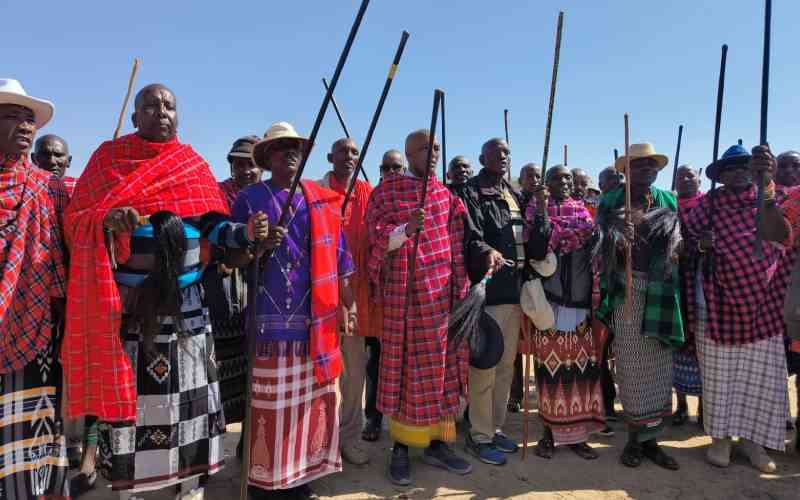
The British government has intervened to assist the Samburu community in locating the grave of Laibon Bari Kaldojan Leaduma, a revered spiritual and ritual leader, who was captured and detained by the British colonial authorities in 1934.
Matt Baugh, the British High Commissioner, wrote in a letter to the Samburu Council of Elders dated August 21, 2026: His Majesty’s Government remains committed to engaging openly and constructively with the complex and difficult legacies of shared history.
“The search for historical truth, dignity, and cultural continuity remains of deep importance, particularly to the family and the wider Samburu community, and I welcome and appreciate the commitment that has been shown over many years in pursuing this work,” Baugh wrote.
Despite lacking a photograph to identify his grandfather, Anthony Leaduma, 50, has been attempting to trace the grave of Laibon Leaduma and seek justice for his unlawful deportation and possible execution by the British since 1985.
According to him, the community has struggled to find answers regarding the disappearance of their spiritual leader, who led their resistance against the British colonial administration.
Anthony said his family, which still resides in Samburu County, was most affected by the events leading to his arrest and disappearance.
“Since childhood I have wanted to know what happened to my grandfather. I have been in the United Kingdom and the Kenyan archives, trying to find out what happened and where my grandfather was buried,” he told The Standard in a recent interview.
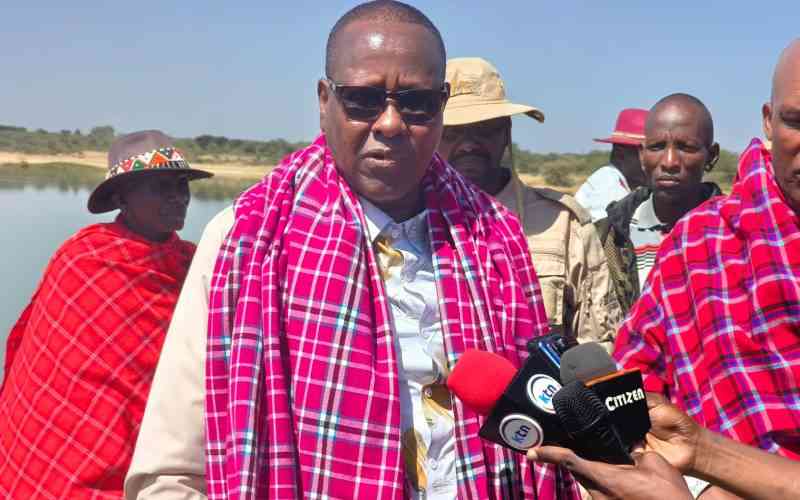
Anthony Leaduma, the grandson of Loibon Kaldojan Leaduma, a Samburu spiritual and ritual leader who was abducted by the British colonial authorities in the 20th century. [Michael Saitoti, Standard]
He welcomed the British government's initiative to help the family pursue answers and seek justice.
“The British government has made their commitment. We have recovered some crucial documents like a death certificate, traced the places where he was taken after his arrest, the Kwale detention centre where he was held for some time, and Embu, where he died on April 15, 1946,” he said.
Anthony said that now the only remaining task is to locate his grave, exhume his remains, and give him a proper burial.
He also mentioned that the family and community hope to recover all artefacts used by him as Laibon, some of which are reportedly held in museums in the United Kingdom.
Leaduma’s name has resonated through generations in Samburu history and features in legendary tales of heroism, folklore, and sayings.
He was a traditional prophet among the Samburu, serving as a chief decision-maker before colonial rule arrived.
Stay informed. Subscribe to our newsletter
Widely, the British colonial administration regarded him with fear, perceiving him as a being with mystic powers capable of disrupting government operations.
Historical accounts indicate that the legal disputes involving the Laibon drew the attention of then-colonial governor of the Kenyan Protectorate, Joseph Aloysius Byrne, as Leaduma was seen as “dangerous to peace and order”.
Byrne issued a deportation order against Laibon Leaduma in November 1934, directing that he be deported to Kwale on the Kenyan coast.
The British viewed Kwale as an ideal place to permanently disconnect the Laibon from his native Samburu, where he actively resisted their rule. Moreover, Kwale was regarded as the furthest point from Samburu.
“The said Laibon Ole-oduma shall forthwith be re-conveyed to Kwale and there detained during my pleasure in accordance with the terms of my said order dated the 15 February 1934. Given under my hand and the official seal of the colony at Nairobi this day of November 1934,” the deportation letter from Byrne stated.
Since then, no one has known whether the Laibon Leaduma was executed or imprisoned for life.
The question continues to linger in the minds of the larger Leaduma family, the Samburu people, and many Kenyans interested in this relatively obscure freedom fighter.







Subscribe to our newsletter and stay updated on the latest developments and special offers!