×

The Standard e-Paper
Fearless, Trusted News
 The Standard Group Plc is a
multi-media organization with investments in media platforms spanning newspaper
print operations, television, radio broadcasting, digital and online services. The
Standard Group is recognized as a leading multi-media house in Kenya with a key
influence in matters of national and international interest.

Audio By Vocalize
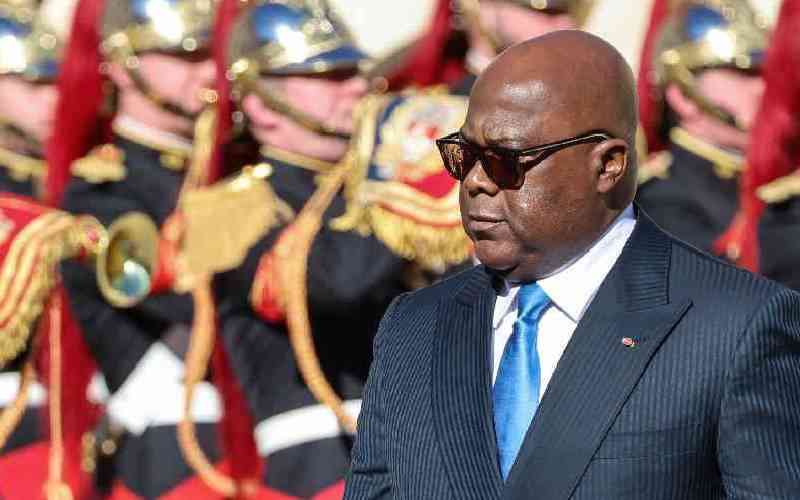
Democratic Republic of the Congo's President Felix Tshisekedi arrives for a meeting with France's President at The Elysee Presidential Palace in Paris on February 25, 2026. [AFP]
For years, DR Congo President Félix Tshisekedi has been dragging his feet.
He promised the opposition an inter-Congolese dialogue, only to postpone it indefinitely.
Now he is in for a rude awakening because that dialogue is taking place without him, in Goma.
It began within the ranks, M23 itself. Following the internal wrangling that fractured their movement in 2012 and led to their military defeat, M23 members eventually reunited around a common objective of bringing their people back home and protecting those they had left behind from the deadly militias terrorizing their communities.
What began as an internal effort to reconcile and reunite their ranks gradually evolved into something much bigger. The dialogue expanded to include an initial group of political and civil society leaders, giving birth to the Congo River Alliance (AFC/M23) and broadening its agenda from the concerns of a community to what it presented as the liberation of the entire country.
The dialogue subsequently expanded to include the Banyamulenge of South Kivu, following negotiations and the gradual integration of AFC/M23 forces with MRDP/Twirwaneho.
More recently, another strand of this dialogue, which had been underway for over a year, culminated in former president Joseph Kabila joining forces with his former enemies and emerging as their leader.
Now, the leaders of C64, including Moïse Katumbi and Martin Fayulu, are heading to Goma, ostensibly to mediate and preach peace. Their initiative is particularly significant because it brings into the same political conversation actors who have very different backgrounds, ambitions and grievances.
They are neither natural allies, nor do they necessarily share the same vision for Congo. But they increasingly find themselves confronting the same political reality.
Katumbi and Fayulu, too, may soon discover what Kabila, the Banyamulenge and Nangaa's allies before them have come to realise that Tshisekedi has little interest in genuine dialogue and no intention of pursuing a political settlement.
His overriding priority, they will conclude, is to cling to power indefinitely, whether through a constitutional referendum or by repeatedly postponing elections under the pretext of a war that his own policies continue deliberately to fuel.
The reaction of those who reach this conclusion, however different their backgrounds and political trajectories, has so far followed the same pattern: aligning themselves with FRN.
This is precisely why Goma matters. It is emerging as an alternative political space where actors excluded from, or opposed to, Kinshasa's political arrangements can meet, negotiate and explore a different vision for the country.
There is an irony here. The unity government Tshisekedi himself called for to confront a common enemy is taking shape. The very people he expected to bring together under his leadership are instead converging around a rival political and military project, with one overriding objective: to rebuild the Congolese state without Tshisekedi.
Stay informed. Subscribe to our newsletter
- The writer is a social worker

Subscribe to our newsletter and stay updated on the latest developments and special offers!