×

The Standard e-Paper
Smart Minds Choose Us
 The Standard Group Plc is a
multi-media organization with investments in media platforms spanning newspaper
print operations, television, radio broadcasting, digital and online services. The
Standard Group is recognized as a leading multi-media house in Kenya with a key
influence in matters of national and international interest.

Audio By Vocalize
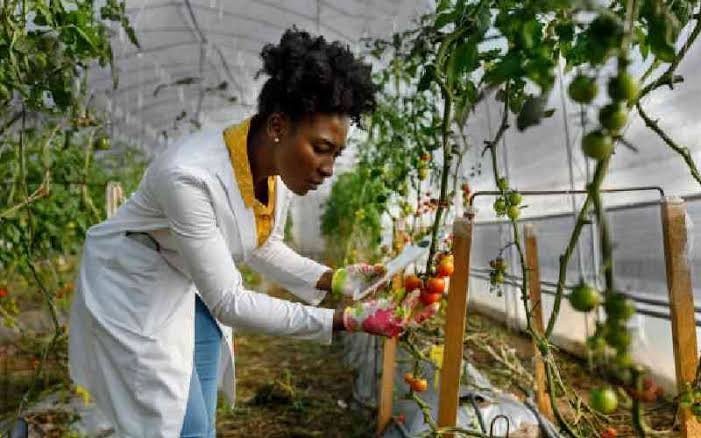
In Nairobi, you can get a smokie and chips for as little as Sh190, about US$1.50. It fills you up, yet it does not necessarily provide the nutrients your body needs. That gap tells us more about Africa’s food system than most policy documents do.
As Nairobi marks Africa Day for Food and Nutrition Security, discussions will turn to hunger, nutrition gaps and boosting agricultural yields. Yet hunger remains unmoved by rhetoric, and an empty pot offers little appreciation for policy documents, however well drafted. The problem I want to highlight lies in the middle of the chain, between the farm and the plate, where a good harvest must be transformed into an affordable meal.
Consider a farmer in East Africa who has tended a crop, monitored the weather and secured a harvest. The hardest part may still lie ahead: finding a buyer, securing storage, paying for transport and getting a fair price. By the time a Kenyan household buys flour, tomatoes or leafy greens, the farmer may have earned too little, the trader may have absorbed high costs, and the consumer may still find food unaffordable.
The scale of this contradiction is stark. The 2026 State of Food Security and Nutrition in the World (SOFI) report estimates that 1.03 billion Africans, or 66.6 per cent of the population, could not afford a healthy diet in 2025. In sub-Saharan Africa, the number reached about 935 million. Those who produce food and those who need to buy it are being failed by the same system. Cheap calories are easy to find in our markets, but a diverse, nutritious diet remains beyond the reach of many families.
Food is also lost along the way. The same SOFI report estimates that about 23 per cent of food is lost between the farm and retail stages in sub-Saharan Africa, compared with 13.3 per cent globally, based on 2023 data. These losses occur across much of the value chain, including handling, storage, processing, transport and distribution.
Fruits and vegetables are especially vulnerable because they perish quickly. When so many people cannot afford a healthy diet, losing food before it reaches the market is an economic failure as well as a food security concern.
This year, Kenya has faced a milk crisis that intensified in mid-2026, with severe shortages, empty supermarket shelves and purchase limits at major retail outlets. This marks a sharp turn for a country where farmers have previously poured surplus milk down the drain during periods of oversupply.
Food loss before the market is only half the picture. Food is also wasted further down the chain, in food service establishments and households. Globally, 1.05 billion tonnes of food was wasted in 2022, equivalent to about 19 per cent of the food available to consumers. Food loss and waste combined are also estimated to generate 8 to 10 per cent of global greenhouse gas emissions.
The lesson is clear: producing food is not enough if too much of it never gets eaten.
We will not make our countries food secure by focusing solely on producing more food. What good is a bumper harvest if food rots because of inadequate storage, reaches markets only after transport costs have driven up prices, or is plentiful but remains beyond a family’s means? And a full plate is not necessarily a nutritious one.
Science has an important role to play. We need to harness the range of solutions already available to us. Across Africa, researchers and entrepreneurs are developing technologies, from drought-tolerant seeds and better soil and water management techniques to digital tools, livestock technologies, and improved storage and processing methods.
The challenge is getting these innovations beyond laboratories and pilot projects and into widespread use among farmers and other actors across food systems.
A promising seed must be multiplied, approved, financed and delivered at a price farmers can afford. A digital tool is useful only if farmers can access it and act on its advice. Processing technology needs reliable, affordable energy, financing, transport and buyers.
These innovations can scale only when supported by effective policies and institutions, with businesses and other actors working together. Many of our governments recognise that agriculture is not merely a farmers’ issue or a science issue. It is an economic system, and when it fails, it becomes a security issue too.
Stay informed. Subscribe to our newsletter
In Kenya, a four-year National Agri-food Systems Investment Plan for 2026–2030 has been developed, with a proposed investment envelope of Sh1.081 trillion. The plan places research alongside irrigation, finance, digital agriculture, processing and climate resilience.
However, a plan alone does not produce a harvest, and an announced investment does not mean money is reaching the ground. The real test is whether these components are delivered together and whether households feel the difference.
Regional markets are another missing link. African countries and their leaders talk about a continental market of more than a billion people, yet individual countries often behave as though they are islands.
A truck carrying food across a border can face delays, paperwork, differing standards and additional costs. The United Nations Conference on Trade and Development reported that intra-African trade accounted for about 16 per cent of the continent’s total trade in 2022, compared with 68 per cent in Europe and 59 per cent in Asia.
That gap represents missed opportunities to process food, create jobs, retain more value within African economies and reduce capital outflows.
To better support our farmers, we do not need each of the African Union’s 54 member states to grow and process everything they consume or export. One country can grow oilseeds, another can turn them into cooking oil or animal feed, while others supply packaging, machinery or markets.
The goal should not be self-sufficiency at any cost, but interdependence on better terms, supported by the African Continental Free Trade Area and the Comprehensive Africa Agriculture Development Programme.
As we mark Africa Day for Food and Nutrition Security, I would like to see Kenya and the rest of Africa measure progress by what changes for people across the value chain, rather than by the number of strategies launched.
Two concrete steps would demonstrate that implementation has begun. Kenya’s Ministry of Agriculture could publish weekly farm-gate prices for major crops, enabling farmers and traders to negotiate with access to the same information. East African Community member states could commit to clearing perishable goods at border points within 24 hours, helping tomatoes, milk and other products reach buyers before they spoil.
Are our farmers selling at a fair price? Can traders move food before it spoils? Can processors access reliable, affordable energy and financing? And, most critically, can families afford varied, nutritious meals?
The day a family in Kenya can afford a diverse, nutritious meal for the price of smokie and chips, we will know that the system is working.






Subscribe to our newsletter and stay updated on the latest developments and special offers!