×

The Standard e-Paper
Home To Bold Columnists
 The Standard Group Plc is a
multi-media organization with investments in media platforms spanning newspaper
print operations, television, radio broadcasting, digital and online services. The
Standard Group is recognized as a leading multi-media house in Kenya with a key
influence in matters of national and international interest.
The Standard Group Plc is a
multi-media organization with investments in media platforms spanning newspaper
print operations, television, radio broadcasting, digital and online services. The
Standard Group is recognized as a leading multi-media house in Kenya with a key
influence in matters of national and international interest.

Audio By Vocalize
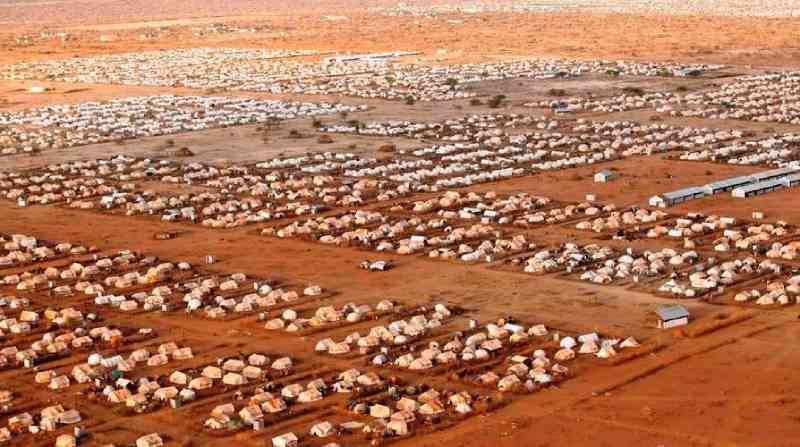
In 1997, I was a young boy in Ifo, one of the refugee camps that make up Dadaab in northeastern Kenya, when the El Niño rains came. When the rains intensified, the fragile roads disappeared beneath water and mud. Dadaab was cut off by road from the rest of Kenya for almost three months, and food, medicine and fuel eventually had to be brought in by air.
I do not need a report to remember the airplanes. I remember being a half-naked little boy, barefoot, running dangerously beneath the belly of an aircraft as it passed overhead, watching huge sacks of food fall from the sky. I did not understand the extraordinary logistics required to get that food to us. I only understood that something we desperately needed was finally arriving. For a child, it almost seemed as though food were falling from heaven.
Nearly 30 years later, I think about that memory differently. I am grateful the airplane came. Humanitarian response saves lives, and when communities are trapped by disaster, survival must come first. But I now find myself asking a different question: If another El Niño of that magnitude arrived today, would we be ready? Or would we once again be surprised?
That question reaches far beyond Dadaab. Across Africa, drought comes, and appeals are launched. Floods arrive, and roads disappear. Conflict displaces communities. Governments and humanitarian organisations mobilise, often heroically. Then the immediate danger recedes and recovery begins. But what happens before the next crisis?
This is why I have become increasingly interested in a simple way of thinking about development: Response, recovery and resilience. Response saves lives during an emergency. Recovery helps communities restore what was lost. Resilience asks the harder question: When the shock returns, will it cause the same devastation? Africa has experience with the first two. The third deserves greater attention.
Many of these shocks are not entirely unpredictable. We may not know when the next drought will become severe or where the heaviest rain will fall. But drought in the Horn of Africa is not new. Flooding in East Africa is not new. We know enough to know they will return. During the 2023-24 El Niño period, severe flooding again struck the Horn. In November 2023, flooding affected nearly 25,000 people in the Dadaab camps. By the following April and early May, UNHCR estimated that more than 20,000 people there had been displaced from their shelters. Much has changed since 1997. Forecasting and communications are better, and institutions and humanitarian systems have evolved. That is precisely why the question of preparedness has become more demanding. Nearly three decades later, surprise is a less convincing explanation.
Resilience does not mean preventing rain, drought or conflict. No government can eliminate every shock. It means building societies capable of absorbing shocks without allowing them to become catastrophes: Infrastructure designed for known risks, local authorities able to act, social protection that reaches vulnerable families before they lose everything, and financing that can be released before a crisis becomes visible to the world. Resilience is therefore not merely a humanitarian issue. It is a question of development and state capacity.
We often praise Africans for their resilience. Refugees are resilient. Farmers who survive repeated droughts are resilient. Families rebuild after floods. There is truth in that admiration; I witnessed such resilience growing up. But we should be careful about what we celebrate. There is a difference between resilience and being forced to survive institutional weakness. A family rebuilding the same fragile home after another flood may demonstrate remarkable determination, but determination is not infrastructure. A refugee child running beneath an aircraft for food may survive, but survival should never become our development model. Africa's people have demonstrated extraordinary resilience. The challenge now is for African institutions to demonstrate the same.
Success after a crisis cannot be measured only by tonnes of food distributed, shelters rebuilt or roads reopened. We must also ask what will happen when the shock returns. A country that repeatedly recovers from crisis but remains equally vulnerable to the next one has rebuilt. It has not necessarily developed.
Africa has become familiar with two Rs of crisis: response and recovery.

Subscribe to our newsletter and stay updated on the latest developments and special offers!






 join
join