×

The Standard e-Paper
Join Thousands Daily
 The Standard Group Plc is a
multi-media organization with investments in media platforms spanning newspaper
print operations, television, radio broadcasting, digital and online services. The
Standard Group is recognized as a leading multi-media house in Kenya with a key
influence in matters of national and international interest.
The Standard Group Plc is a
multi-media organization with investments in media platforms spanning newspaper
print operations, television, radio broadcasting, digital and online services. The
Standard Group is recognized as a leading multi-media house in Kenya with a key
influence in matters of national and international interest.

Audio By Vocalize

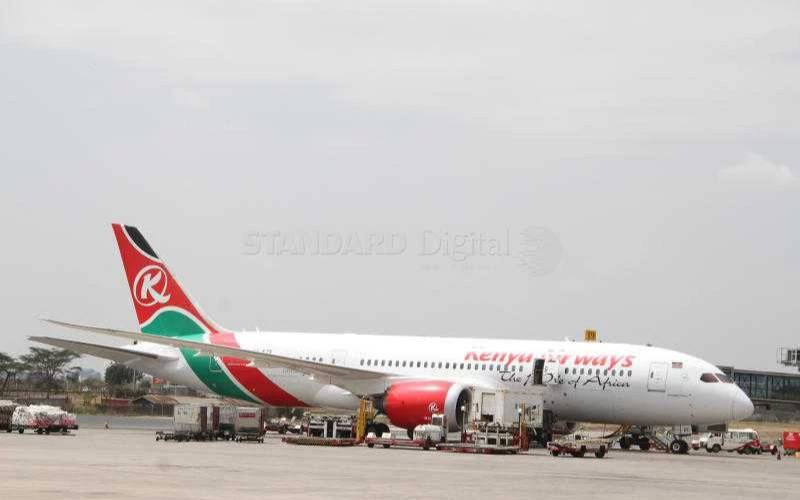
The return of Kenya Airways’ (KQ) Boeing 777-300ER, after a decade on lease to Turkish Airlines, has generated considerable interest. The 400-seater wide-body has undertaken a series of domestic flights, serving both crew training requirements and promotional purposes. It has now entered service on the Nairobi-London route, where its substantially greater capacity is expected to help meet robust passenger demand and ease capacity constraints on one of the airline’s most important long-haul services.
The events preceding the return of this wide-body aircraft offer an instructive glimpse into the workings of the aviation industry. They underscore, first and foremost, that aviation ranks among the world’s most tightly regulated sectors. Safety lies at the heart of this regulation. KQ’s Boeing 777 has satisfied every regulatory requirement, including deregistration in Turkey and subsequent registration in Kenya.
Although the lease to Turkish Airlines expired on April 1, 2026, pre-delivery work started in January this year. The Turkish national carrier removed the aircraft from its service and grounded it to facilitate exhaustive pre-delivery checks. Inspections, tests and technical assessments were carried out to ensure that the aircraft remained fully compliant with original equipment manufacturer’s specifications and internationally recognised airworthiness and safety requirements.
These standards are not merely domestic. They are harmonised across jurisdictions through the International Civil Aviation Organisation’s Standards and Recommended Practices (SARPs), which govern commercial aviation; from aircraft design and continuing airworthiness to flight operations and personnel licensing. An aircraft that fails to meet these requirements cannot lawfully enter commercial service.
Second, airlines must continually adapt to challenging circumstances for survival. When the Boeing 777s were acquired, Kenya’s aviation sector was buffeted by a succession of external shocks. The terrorist attack on the Westgate shopping centre prompted several European governments to issue travel advisories against Kenya, depressing inbound tourism. Soon afterwards, the Ebola epidemic effectively shut KQ out of its strategically important West African market for almost a year. At roughly the same time, a fire destroyed the arrivals terminal at the country’s principal airport.
Collectively, these disruptions undermined demand on KQ’s core long-haul network and reduced utilisation of its wide-body fleet. The result was a challenge of excess Boeing 777 capacity that was resolved by the sub-lease to Turkish Airlines.
Third, shifts in the global economy and geopolitical landscape are not invariably detrimental to airlines. They can also create opportunities. KQ is a case in point. Historically, cargo transported in the belly holds of its aircraft was largely one-way, with flights departing Nairobi heavily laden with exports but returning with comparatively little freight. As the continent’s largest air-export gateway, Jomo Kenyatta International Airport handles substantial volumes of fresh produce, cut flowers, sea food and chilled meat destined for international markets. Today, however, return flights are increasingly filled with cargo, reflecting the rapid expansion of e-commerce and the deeper integration of global supply chains.
The current conflict in the Middle East has disrupted established aviation corridors, enhancing Nairobi’s role as an alternative hub linking African cities with Europe and North America. Against this backdrop, the return of the Boeing 777 is well-timed. The aircraft provides the additional capacity required to meet demand in both passenger and cargo, strengthening KQ’s ability to capitalise on these shifting market dynamics.
Mr Khafafa is a public policy analyst








Subscribe to our newsletter and stay updated on the latest developments and special offers!







 join
join