×

The Standard e-Paper
Home To Bold Columnists
 The Standard Group Plc is a
multi-media organization with investments in media platforms spanning newspaper
print operations, television, radio broadcasting, digital and online services. The
Standard Group is recognized as a leading multi-media house in Kenya with a key
influence in matters of national and international interest.
The Standard Group Plc is a
multi-media organization with investments in media platforms spanning newspaper
print operations, television, radio broadcasting, digital and online services. The
Standard Group is recognized as a leading multi-media house in Kenya with a key
influence in matters of national and international interest.

Audio By Vocalize
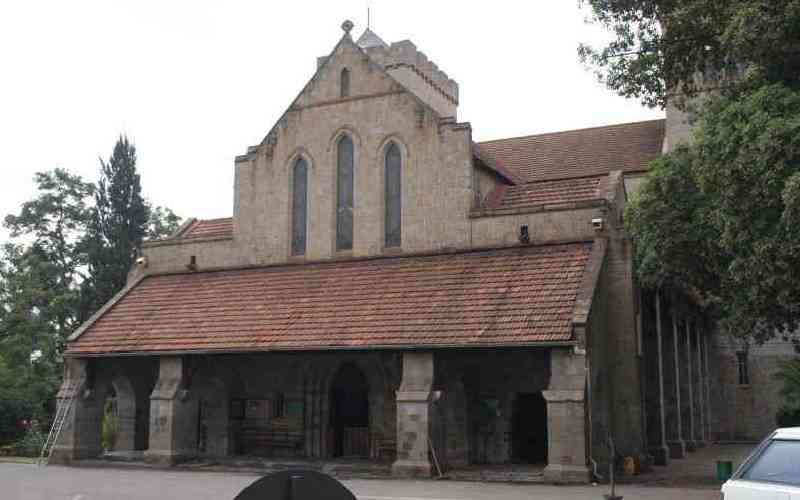
The violent invasion of All Saints’ Cathedral in June should have jolted the nation. Hired goons stormed a post-budget dialogue organised by civil society, assaulted participants and vandalised property inside one of Kenya’s most respected places of worship.
The attack drew condemnation from church leaders, civil society organisations and political leaders across the divide. Among the responses was that of former Interior CS Fred Matiang’i. Having once overseen the same docket, he described the incident as “a shameful act” and said it reflected the leadership crisis he had warned about in 2022. Whether one agrees with his politics or not, his remarks underscored the gravity of what had occurred.
Yet beyond the violence lies a deeper question. Why did this attack not provoke the level of public outrage that similar assaults on sacred institutions might once have generated?
As Kenya begins its journey towards the 2027 General Election, the Church should see this incident not only as an attack on its sanctuary but also as an opportunity for honest introspection about its public witness and moral authority.
For generations, the Church has occupied a unique place in Kenya’s national life. It built schools, hospitals and charitable institutions, but its greatest contribution was becoming the nation’s moral compass when many public institutions lacked the courage to confront injustice.
During the struggle for multiparty democracy and constitutional reform, church leaders defended human rights, challenged authoritarianism and reminded governments that public office exists to serve citizens.
The stories of Bishop Alexander Muge and Father John Anthony Kaiser remind us that this moral authority was not inherited. It was earned, often at great personal cost. The Church’s credibility rested on its independence, not its proximity to power. That legacy should never be taken for granted.
Kenya remains one of the world’s most religious societies, and surveys continue to rank religious leaders among the country’s most trusted public figures. At the same time, recent research reveals a growing tension. While most Kenyans want religion to shape public values, many are increasingly uneasy about the relationship between politicians and religious institutions.
Many believe political donations to churches often come from corrupt wealth, while others favour a clearer separation between religion and the State. These findings do not suggest that Kenyans are abandoning faith. They suggest that citizens want a Church that remains morally independent.
Against this background, the attack on All Saints’ Cathedral should be viewed through two lenses. First, it was an attack on freedom of worship, peaceful assembly and the democratic space that churches have historically protected. Every Kenyan should condemn such violence without qualification.
Second, the incident invites the Church to ask a more uncomfortable question. Has its relationship with political power altered the way some Kenyans perceive its role? Whether that perception is entirely fair is almost beside the point. Public confidence depends on both reality and perception, and institutions that value trust cannot ignore.
Pope Leo XIV offered a lesson during his visit to Africa earlier this year. Speaking to political leaders, he addressed corruption, justice, ethical leadership and the common good with clarity and conviction. He reminded governments that authority is a responsibility to serve citizens, not an opportunity for personal enrichment.
His example demonstrated that the Church exercises its greatest influence when it speaks with moral clarity rather than political convenience. Religious institutions strengthen democracy not by becoming close to power but by remaining sufficiently independent to challenge every government by the same standards.
Stay informed. Subscribe to our newsletter
This lesson is relevant as Kenya approaches another election cycle. Every election season brings politicians to church in search of legitimacy. There is nothing wrong with churches engaging public affairs because the Gospel speaks directly to justice, accountability, peace and human dignity. Kenya does not need a Church that competes for political influence. It needs one whose integrity, independence and prophetic courage remain beyond question.




Subscribe to our newsletter and stay updated on the latest developments and special offers!