×

The Standard e-Paper
Home To Bold Columnists
 The Standard Group Plc is a
multi-media organization with investments in media platforms spanning newspaper
print operations, television, radio broadcasting, digital and online services. The
Standard Group is recognized as a leading multi-media house in Kenya with a key
influence in matters of national and international interest.
The Standard Group Plc is a
multi-media organization with investments in media platforms spanning newspaper
print operations, television, radio broadcasting, digital and online services. The
Standard Group is recognized as a leading multi-media house in Kenya with a key
influence in matters of national and international interest.

Audio By Vocalize
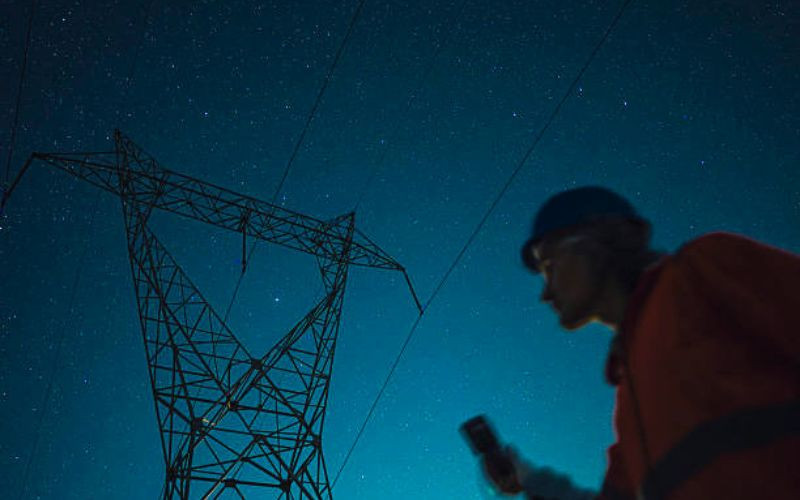
Across East Africa, momentum is building around grid digitisation. Smart meters, automation and AI-enabled energy management are increasingly positioned as a viable means to establish efficient, sustainable and resilient energy provision.
But there is a fundamental reality that cannot be overlooked: digitisation cannot compensate for gaps in basic infrastructure. Granted, while digital technologies are critical to the future of energy, their effectiveness depends on the strength of the very systems it is optimising.
It’s a catch-22 scenario in the truest sense; Sub-Saharan Africa averages 15–20 per cent losses, nearly double the global average. Smart grids can reduce this, but only if the physical grid is strong enough to carry the load. Indeed, where grids are fragile, under-capacitated, or unevenly distributed, digital tools unfortunately have little to optimise. And energy digitisation risks becoming a misplaced priority if pursued in isolation.
East Africa’s energy transition therefore requires a dual focus: strengthening existing infrastructure while progressively layering in digital capabilities. One cannot succeed without the other. East Africa faces ageing infrastructure, limited transmission capacity, and gaps in rural electrification, these impact critical sectors such a healthcare, education, manufacturing and agriculture.
Even where generation capacity is improving, distribution remains uneven. Some 140 million people remain without electricity in East Africa, meaning these communities might be within reach of power, but without the necessary network infrastructure, they simply can’t gain access.
This is particularly evident at the last mile, where electrification is most complex and most consequential. Reliable electricity at this level underpins everything from cold storage for farmers to basic services in schools and clinics.
The prudent and sustainable route to follow is transform infrastructure in phases. This begins with identifying priority area such as urban centres or industrial hubs with high energy demand. From there, targeted investments can be made to strengthen network reliability, reduce losses, and stabilise supply.
Once these foundations are in place, digital technologies can be introduced incrementally. Pilot projects allow utilities and governments to test solutions, measure impact, and refine deployment strategies before scaling further. This also enables clearer alignment around objectives.
Whether the goal is reducing technical losses, improving reliability, or lowering operational costs, each phase can be designed with specific outcomes in mind. Delivering this transition requires close collaboration between governments, utilities, and technology partners.
As always, regulators will play a critical role in setting priorities, enabling investment, and creating frameworks that support long-term infrastructure development. Technology providers, in turn, bring the tools and expertise needed to design, plan, and implement modern energy systems.
Digitisation will undoubtedly play a defining role in East Africa’s energy future. But its success depends on sequencing. First, build and stabilise the grid. Ensure reliable generation, strengthen transmission, and expand access to underserved areas. Then, layer in digital technologies to optimise, manage, and future-proof the system.
When approached in this way, digitisation becomes not just a technological upgrade, but a force multiplier—enhancing performance, improving sustainability, and unlocking long-term value. Until then, the principle holds: you can’t digitise a blackout.
-Writer is business leader at Schneider Electric







Subscribe to our newsletter and stay updated on the latest developments and special offers!







 join
join