×

The Standard e-Paper
Stay Informed, Even Offline
 The Standard Group Plc is a
multi-media organization with investments in media platforms spanning newspaper
print operations, television, radio broadcasting, digital and online services. The
Standard Group is recognized as a leading multi-media house in Kenya with a key
influence in matters of national and international interest.
The Standard Group Plc is a
multi-media organization with investments in media platforms spanning newspaper
print operations, television, radio broadcasting, digital and online services. The
Standard Group is recognized as a leading multi-media house in Kenya with a key
influence in matters of national and international interest.

Audio By Vocalize
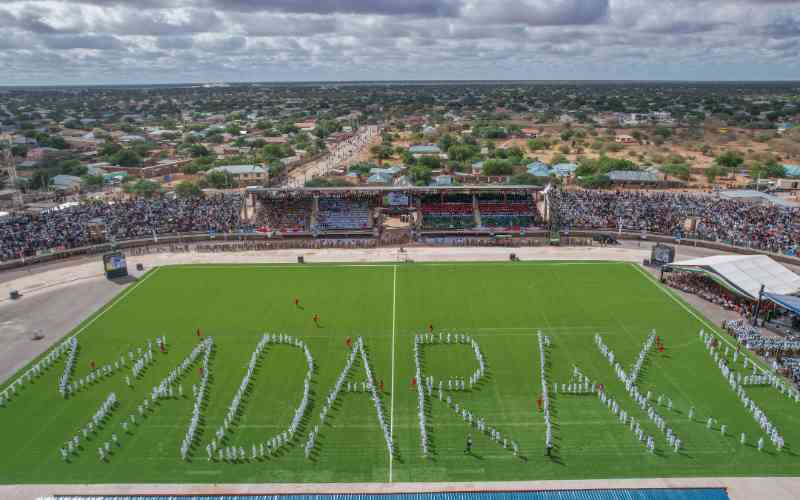
The Government's hosting of the 2026 Madaraka Day celebrations in Wajir County carried significance far beyond ceremony. It signalled a national acknowledgement that Northern Kenya — long neglected politically and economically — deserves inclusion within Kenya’s development agenda. For decades, counties across the north remained geographically distant, economically underserved, and politically marginalised.
The roots of these inequalities can be traced to post-independence policies, particularly Sessional Paper No. 10 of 1965 on African Socialism and its Application to Planning in Kenya. Although intended to promote economic growth, the policy prioritised investment in “high potential areas” with stronger agricultural productivity and colonial infrastructure. Roads, industries, schools, hospitals, and irrigation projects were concentrated in already advantaged regions such as Nairobi, Central Kenya, and parts of Rift Valley and Western Kenya. Historical reports by the Kenya National Bureau of Statistics (KNBS) and the World Bank have consistently documented these disparities.
Meanwhile, Northern Kenya — largely classified as arid and semi-arid land — was treated more as a security frontier than a development priority. Following the Northern Frontier District secession debate and the Shifta conflict in the 1960s, the region increasingly became associated with insecurity and suspicion. The effects of this political profiling were profound. Emergency regulations, restrictions on movement, collective punishment practices, and repeated security crackdowns became defining features of state presence in the region for many years. Historical tragedies such as the Wagalla massacre and the infamous Garis Gubay left lasting trauma and reinforced perceptions that Northern Kenya was treated differently from the rest of the republic. Historical inquiries, parliamentary discussions, and reports by the Truth, Justice and Reconciliation Commission (TJRC) and the Kenya National Commission on Human Rights (KNCHR) have documented the long-term effects of security operations on communities in Northern Kenya.
What makes this history particularly painful is the contradiction between the rhetoric of national unity and the lived reality of exclusion. The country consistently projected the image of one united nation while entire communities remained excluded from meaningful state investment, underrepresented in public institutions, and subjected to recurring profiling during moments of political tension or insecurity.
.Marginalisation was not only political but also economic and social. Chronic underinvestment in roads, electricity, water infrastructure, schools, and healthcare systems left Northern Kenya at a severe disadvantage compared to more developed regions. Poor infrastructure restricted economic growth, access to markets, and employment opportunities, while low levels of educational advancement contributed to the underrepresentation of Northern communities within the civil service and national institutions.
Healthcare inequalities remain particularly visible. According to Ministry of Health data, Kenya has 68 Level 5 hospitals, yet only a few serve the vast northern region. Wajir County alone covers approximately 55,000 square kilometres but still faces serious shortages in specialised healthcare services, forcing many residents to travel hundreds of kilometres for treatment.
Northern Kenya’s greatest untapped asset is livestock. Kenya’s arid and semi-arid counties hold the majority of the national livestock herd, yet the sector remains constrained by inadequate veterinary services, disease-control systems, quarantine facilities, export abattoirs, and limited access to international markets.
The experience of Somalia demonstrates what is possible. Despite decades of insecurity and governance challenges, livestock remains the backbone of the Somali economy, contributing roughly 40 percent of GDP and serving as one of the country’s largest sources of foreign exchange earnings. According to data cited by Somalia’s Central Bank, livestock export earnings increased from approximately US$311 million in 2018 to about US$970 million in 2024, with Gulf markets absorbing the majority of exports. Recent estimates indicate that Somalia exported more than 31 million animals between 2018 and 2024.
The lesson for Kenya is clear. If a country facing persistent insecurity can build a livestock export industry approaching US$1 billion annually, Kenya should be able to do far more. Strategic investments in animal health certification, quarantine stations, export abattoirs, cold-chain infrastructure, livestock markets, and trade agreements could transform pastoral livelihoods across Northern Kenya. Such investments would generate foreign exchange, expand government revenue, create jobs, and increase household incomes while positioning Kenya as a major supplier to Middle Eastern markets.
Recent projects such as the Isiolo–Mandera road corridor have generated hope across the region. For many residents, the expansion of tarmac roads represents more than infrastructure — it symbolises long-delayed inclusion in the national story. One elder aptly described the road as “road that had been painted black” because many communities had never seen such infrastructure before. The humour is memorable, but the reality behind it is painful.
Even conversations about corruption and underdevelopment have frequently been disingenuously framed in ways that unfairly individualize blame toward local leadership while ignoring the structural inequalities created over generations. We whole heartedly thank the president for his public apology for the Marginalization. The future will judge whether the roads reaching Northern Kenya carried more than vehicles — whether they carried investment, opportunity, and dignity. The true measure of independence is whether geography still determines destiny, or whether every region finally receives an equal stake in the republic. The Wajir Madaraka celebrations and the President’s apology may mark a historic turning point in Kenya’s national conscience — shifting marginalisation from a forgotten grievance into a defining political question that future governments can no longer afford to ignore.
Abdikarim M Dahiye, Governance and communication expert



Subscribe to our newsletter and stay updated on the latest developments and special offers!







 join
join