×

The Standard e-Paper
Fearless, Trusted News
 The Standard Group Plc is a
multi-media organization with investments in media platforms spanning newspaper
print operations, television, radio broadcasting, digital and online services. The
Standard Group is recognized as a leading multi-media house in Kenya with a key
influence in matters of national and international interest.
The Standard Group Plc is a
multi-media organization with investments in media platforms spanning newspaper
print operations, television, radio broadcasting, digital and online services. The
Standard Group is recognized as a leading multi-media house in Kenya with a key
influence in matters of national and international interest.

Audio By Vocalize
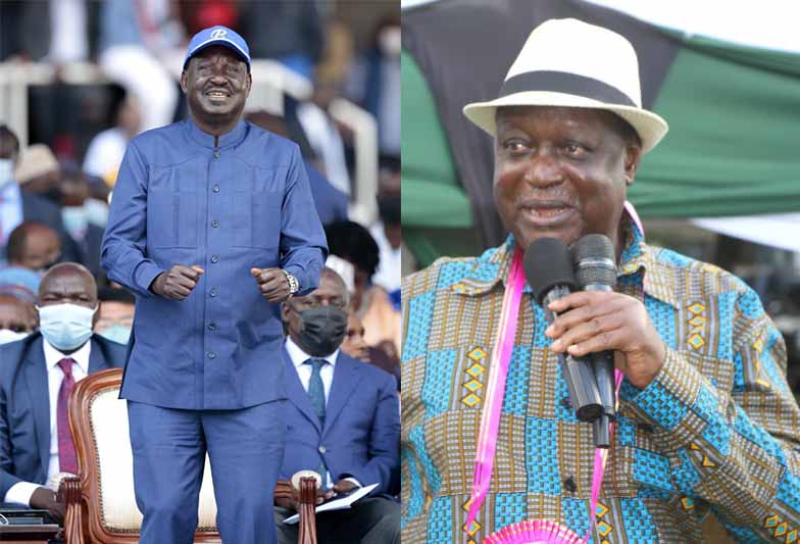
Seven months after the death of its chief shepherd, Raila Odinga, the Orange Democratic Movement (ODM) is riven by turmoil. Thus far, Senator Oburu Oginga has shown scant political capacity to preserve the party his brother bequeathed to him.
When did the deluge first hit the Orange Party? The August 2024 co-option of ODM’s chairman, Minority Leader and two deputy party leaders into the Cabinet of President William Ruto’s government following a handshake with Odinga lit the fuse now consuming the party. Critics decried it as a travesty of multiparty democracy given ODM’s standing as the principal opposition force in both the Senate and the National Assembly. Odinga’s gambit was widely viewed as a breach in the ramparts of oversight within Kenya’s bicameral Parliament.
Raila’s failure to name a successor left ODM dangerously exposed long before his death. The Scripture is clear: “May the Lord, the God who gives breath to all living things, appoint someone over this community to lead them, so the Lord’s people will not be like sheep without a shepherd” (Numbers 27:16-17). Leaders who refuse to pass the baton leave their people rudderless. Build systems that outlast you, or watch your legacy crumble irreparably.
Immediately after Raila passed on, his brother, Oburu, assumed the party mantle in an interim capacity. Yet seven months on, ODM is a pale shadow of its former self. Raila left behind a formidable political dynasty and a widow who, though not politically active, understands her late husband’s entire political journey. Raila’s sister, Ruth Odinga, is the Kisumu Woman Representative, whilst his daughter sits in the East African Legislative Assembly, all beneficiaries of an ODM now teetering on the brink.
Since Raila’s death, a troubling conspiracy has circulated. Kalonzo Musyoka, James Orengo, Rigathi Gachagua and Caroli Omondi have repeatedly hinted at foul play, suggesting the State had a hand in his demise. Yet the family has remained largely silent. Only Ida Odinga has publicly questioned why Raila insisted on burial within 72 hours.
Two rival factions have since calcified: One, styled Linda Ground and marshalled by Senator Oburu and Homa Bay Governor Gladys Wanga; the other, Linda Mwananchi, led by Senator Edwin Sifuna and Governor James Orengo. The grandstanding of Ms Wanga, Oburu, CS John Mbadi and their allies betrays the reformist ethos upon which ODM was forged.
The party cannot abdicate its founding crusade for economic and social justice, slashing the cost of living, deepening devolution and defending constitutionalism. ODM must remain the clarion voice on these bread-and-butter issues, not a chorus for Oburu’s fixation on raw power.
What confounds ODM loyalists and the late party leader’s admirers is why his immediate family, though politically astute, remains ambivalent on the ODM imbroglio rather than seizing the moment to quell the conflagration.
The Odinga family has only made matters worse. Instead of steadying the party, they have deepened the perception that ODM is increasingly captive to family interests. Winnie Odinga blows hot and cold, principled one day, silent the next. Odinga Jr was recently in Kibra endorsing President Ruto. Oburu is dug in deep with the broad-based government that Raila handed over. Even Ida ended up as a UNEP ambassador. Ruth Odinga talks about reconciliation, but it sounds scripted and spineless, with no credible plan to end the impasse. With all their name recognition and influence, the Odingas have failed to do the one thing that matters: End the infighting and give ODM a future beyond Raila.
From Agwambo to Baba, the Odinga name is woven into ODM’s identity. Parties outlive personalities, but not when the founder’s house is divided. The family must either steady the ship or step aside. No fiery rhetoric from Sifuna against William Ruto can hide the contradiction: The Odingas sit in government, or straddle the fence, as ODM unravels and its doctrine weakens. The truth is stark: The family holds the key to the party’s survival. To save ODM, they must reunite the ranks, just as Raila did in steering the party through past political storms and entrenching it across Kenya. Reconciliation and unity of purpose should be the rallying call of the Orange party.



Subscribe to our newsletter and stay updated on the latest developments and special offers!






 join
join