×

The Standard e-Paper
Fearless, Trusted News
 The Standard Group Plc is a
multi-media organization with investments in media platforms spanning newspaper
print operations, television, radio broadcasting, digital and online services. The
Standard Group is recognized as a leading multi-media house in Kenya with a key
influence in matters of national and international interest.
The Standard Group Plc is a
multi-media organization with investments in media platforms spanning newspaper
print operations, television, radio broadcasting, digital and online services. The
Standard Group is recognized as a leading multi-media house in Kenya with a key
influence in matters of national and international interest.

Audio By Vocalize
The idea behind the Local Content Bill is good, but challenges lie ahead
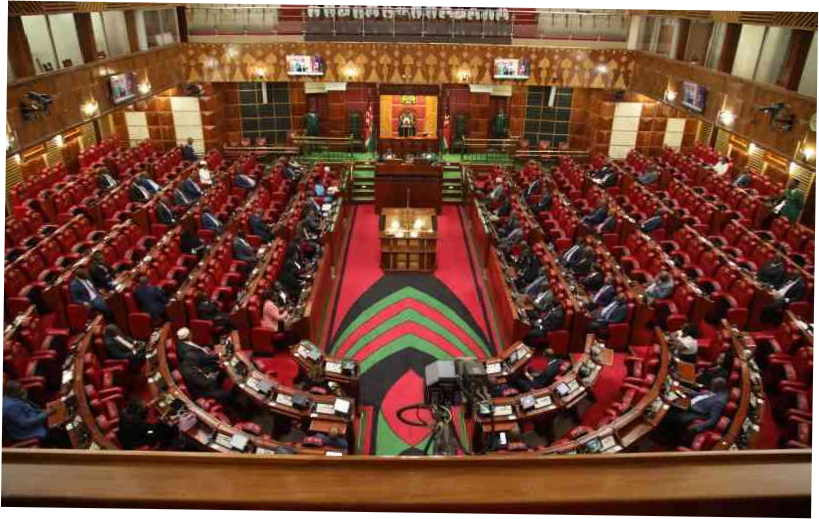
Parliament is currently considering one of the most ambitious economic proposals in recent years: A law that would require a significant share of business activity in Kenya to be anchored locally. At its core, the Local Content Bill 2025 is a simple but far-reaching idea-- retain more value within the domestic economy.
It proposes that foreign enterprises source at least 60 per cent of their goods and services locally (where standards are met), ensure full local sourcing of agricultural raw materials in manufacturing, employ at least 80 per cent Kenyans across all levels, and invest in building domestic supplier capacity. Non-compliance would attract fines of no less than Sh100 million and, in some cases, criminal liability for executives.
The ambition is clear, but the harder question is whether the current structure of Kenya’s economy can support it at that scale.
For years, there has been growing frustration that multinational firms extract significant value from Kenya while leaving behind limited local linkages. Profits are repatriated, supply chains remain external, and local firms often participate at the margins. Public reactions to high-profile transactions and campaigns calling for stronger local participation reflect a broader concern: Economic growth must translate into tangible benefits for Kenyans.
The Bill is, in that sense, a response to a real problem. It seeks to ensure that investment does more than pass through the economy but embeds itself within it.
If it works, the gains could be meaningful. Stronger local sourcing requirements can stimulate domestic supply chains, pushing firms in manufacturing, logistics, and services to scale up and meet higher standards. Agriculture could benefit from more stable demand if manufacturers are required to source inputs locally. Employment provisions may accelerate the transition of Kenyans into management and technical roles, building skills that persist beyond individual projects. Over time, such linkages can reduce import dependence and deepen industrial capacity.
But this is where the central question returns, and it cannot be avoided: Do we currently have the capacity to sustain 60 per cent local sourcing across sectors without distorting the system?
In many areas, the answer is not yet.
Kenya’s manufacturing base, while growing, still struggles with consistency, scale, and cost competitiveness. Local suppliers often face unreliable power, high transport costs, and limited access to affordable finance. Certification and quality assurance systems are uneven. In some sectors, the supply simply does not exist at the level required.
Imposing a uniform 60 per cent threshold in such conditions risks forcing firms into a corner. They either comply at a higher cost and lower efficiency, or they scale back operations. In both cases, the consequences are felt elsewhere: Through higher consumer prices, disrupted supply chains, or reduced investment.
Foreign direct investment is not indifferent to these signals. Kenya competes within the East African region and beyond for capital that is highly mobile. Countries that combine openness with predictability tend to attract and retain investment. When rules appear rigid, enforcement uncertain, and penalties severe, firms adjust accordingly, sometimes by delaying entry, sometimes by limiting exposure.
The intention behind the Bill is to strengthen local participation. The risk is that, if mis-calibrated, it will do the opposite: Shrink the very pool of investment it seeks to leverage.
There are also practical questions of implementation that cannot be glossed over. What qualifies as a “local company”? Is it ownership, control, or registration? How will compliance be monitored across diverse sectors with different supply dynamics? Who verifies that capacity-building obligations are meaningful rather than symbolic? And how do we prevent the familiar problem of elite capture, where a small group benefits disproportionately from policies designed for broad inclusion?
Kenya has seen ambitious policies before, including affirmative procurement rules, 'Buy Kenya, Build Kenya' campaigns, whose impact has been limited less by design than by execution. Without strong institutions, even well-intentioned laws can become vehicles for inefficiency or rent-seeking.
Stay informed. Subscribe to our newsletter
Also, global trade frameworks do not always look kindly on strict localisation requirements, particularly when they distort competition. An overly protectionist stance risks unintended consequences, including reduced market access or strained trade relationships.
None of this suggests that the Bill should be abandoned. The objective it pursues is legitimate. The issue is how to pursue it without undermining the very outcomes it seeks.
Other countries offer useful lessons that successful industrialisers did not rely on rigid quotas alone. They deliberately built capacity through investment in education, infrastructure, and technology while using incentives and phased targets to encourage local participation. Where localisation worked, it followed capability; where it was forced prematurely, it often produced inefficiencies.
Kenya’s situation calls for that same realism.
A more effective approach would begin by aligning ambition with capacity. Rather than a flat 60 per cent requirement, targets should be phased and sector-specific, starting at levels that reflect current capabilities and increasing over time as those capabilities improve. This would allow firms to adjust while giving local suppliers a clear path to growth.
Incentives should carry as much weight as penalties. For instance, companies that exceed localisation targets could benefit from tax relief or preferential access to public contracts. At the same time, local firms need support in areas like access to credit, technical training, and assistance in meeting international standards, if they are to compete effectively.








Subscribe to our newsletter and stay updated on the latest developments and special offers!








 join
join