×

The Standard e-Paper
Smart Minds Choose Us
 The Standard Group Plc is a
multi-media organization with investments in media platforms spanning newspaper
print operations, television, radio broadcasting, digital and online services. The
Standard Group is recognized as a leading multi-media house in Kenya with a key
influence in matters of national and international interest.

Audio By Vocalize
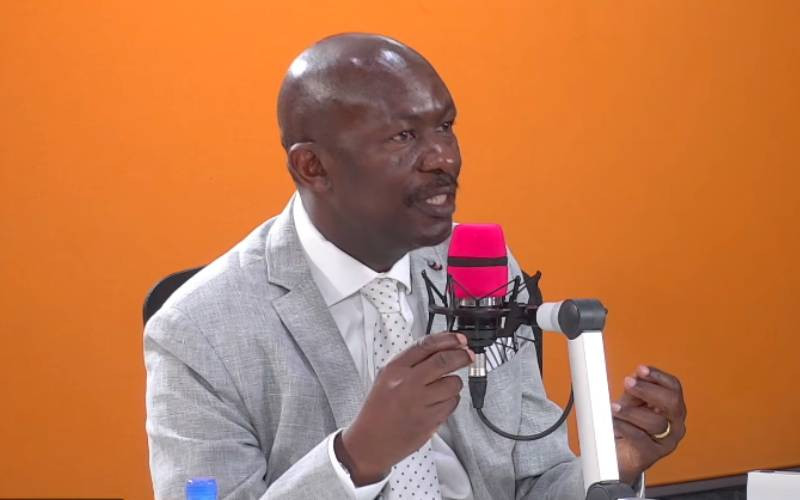
Nyamira Senator Okong’o Omogeni has accused President William Ruto of failing to curb corruption, saying he must answer for governance failures outlined in a World Bank report on Kenya.
Speaking during an interview on Spice FM on Tuesday, November 17, Omogeni said the President, as head of government, should answer for the misuse of public resources and failure to implement recommendations by oversight institutions.
“President William Ruto should own up and admit that he is leading one of the most corrupt regimes ever,” he argued.
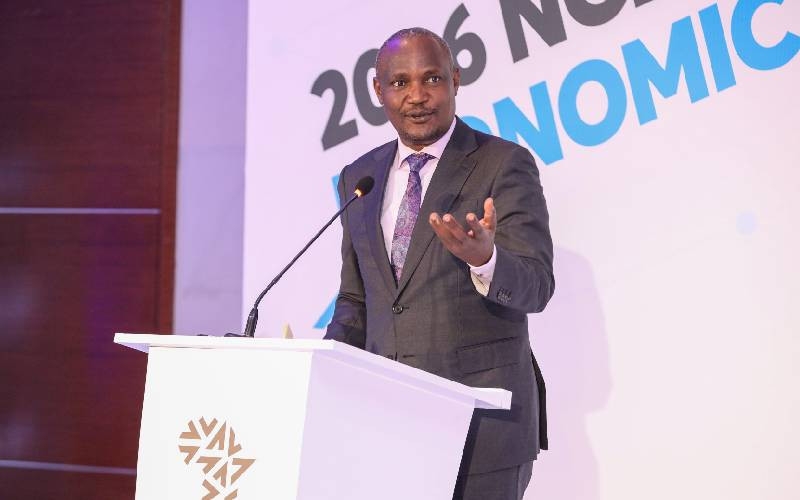
The senator cited the World Bank's 34th Kenya Economic Update, released in November 2026, which identifies corruption and weak governance as major constraints to the country's economic growth and job creation.
According to the report, corruption and collusion contribute to widening Kenya's annual fiscal deficit by an estimated two percentage points of gross domestic product (GDP) through revenue losses, inefficient public spending and procurement irregularities.
The report also found that 39 per cent of Kenyan firms considered corruption a major or severe constraint to doing business in 2025, up from 25 per cent in 2013.
Omogeni said the findings should serve as a warning to the government, arguing that corruption continues to make life difficult for ordinary Kenyans.
“We must remind the President that you cannot dismiss this report by the World Bank. If your government is corrupt, the trickle-down effect is that you are making life so difficult for Kenyans,” he maintained.
He also criticised the government's enforcement of recommendations by Parliament and other oversight institutions, saying audit reports continue to expose the misuse of public funds without sufficient action against those responsible.
The World Bank report shows that the implementation rate of recommendations by the Office of the Auditor-General declined from 45 per cent in 2015 to between 18 and 21 per cent by late 2025.
It further notes that approximately 79 per cent of recommendations made by the National Assembly's Public Accounts Committee during the 2020/2021 financial year were still pending implementation.
“The country cannot be serious with dealing with corruption if it cannot even implement its own Auditor-General's report,” Omogeni observed.
The senator questioned the effectiveness of parliamentary oversight, arguing that committee recommendations were rarely followed through and anti-corruption agencies had not done enough to ensure accountability.
He called for greater independence of accountability institutions, including Parliament, the courts, the Office of the Auditor-General, the Controller of Budget, the Ethics and Anti-Corruption Commission (EACC) and the Directorate of Criminal Investigations (DCI).
Stay informed. Subscribe to our newsletter
Omogeni argued that these institutions should be allowed to exercise their mandates without interference from the Executive.
“Our leaders must understand that they have obligations to fulfil and that failure to do so has consequences. Without consequences, there can be no accountability,” he warned.
The senator also cautioned that failure to address corruption would undermine employment opportunities for young people.
The World Bank report estimates that ambitious anti-corruption reforms could support up to 7.7 million additional and better jobs by 2035, compared with a scenario where no improvements are made.
Omogeni maintained that the findings should prompt the government to strengthen accountability rather than focus solely on development projects.
He also criticised what he described as the growing influence of the Executive over Parliament, arguing that lawmakers must exercise their oversight role independently.
“I hope whoever takes over from President William Ruto in 2027 will allow institutions to operate independently. You cannot run a country from a phone or the top of vehicles,” he added.
Omogeni urged Kenyans to take responsibility for choosing leaders who uphold accountability, saying voters should prioritise competence over political loyalty.
“The power lies with the people. Let them decide whether they want to elect compliant or competent Members of Parliament,” he urged.

Subscribe to our newsletter and stay updated on the latest developments and special offers!