×

The Standard e-Paper
Home To Bold Columnists
 The Standard Group Plc is a
multi-media organization with investments in media platforms spanning newspaper
print operations, television, radio broadcasting, digital and online services. The
Standard Group is recognized as a leading multi-media house in Kenya with a key
influence in matters of national and international interest.

Audio By Vocalize
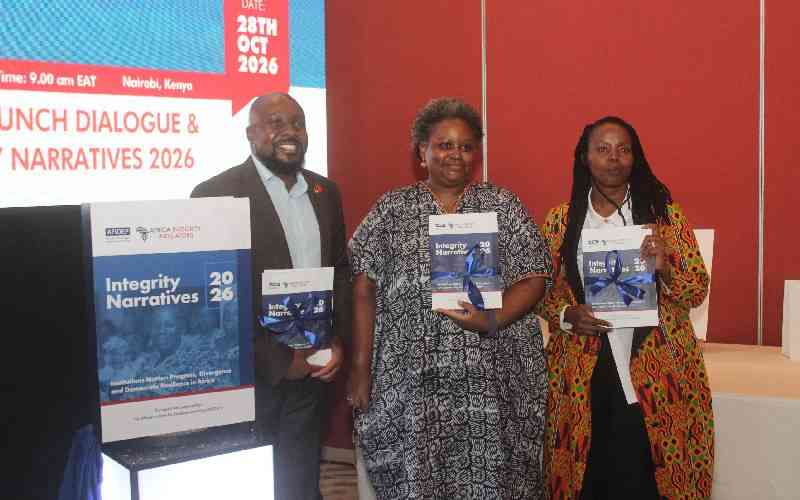
Research and Policy Analyst Dr Mziwandile Ndlovu and AFIDEP Head of the Kenya Office Joyce Mbiti during the report launch in Nairobi on October 28, 2026. [Benard Orwongo, Standard]
African countries continue to struggle with corruption, weak oversight institutions and poor implementation of existing laws, raising concerns about accountability and the management of public resources, a new governance report has warned.
The African Integrity Indicators report, launched by the African Institute for Development Policy (AFIDEP), highlights the gap between laws and policies on paper and their implementation, calling for stronger institutions, adequate funding and political commitment to address persistent governance challenges.
The report assesses transparency, accountability and social development across African countries, examining institutions such as the judiciary, electoral management bodies, anti-corruption agencies, supreme audit institutions and public procurement authorities.
Dr Alex Nester Jiya, AFIDEP's research and policy analyst and project lead for the African Integrity Indicators, said the findings reveal significant differences in how countries implement laws and make public institutions accountable to citizens.
“Institutions are very important. But are we making those institutions work?” Jiya said, calling for greater independence, effectiveness and adequate funding for oversight bodies.
The indicators assess whether citizens can access public information, whether courts publish rulings promptly, how public officials are appointed and whether audit reports are released in line with established procedures.
The assessment also examines the operating environment for civil society organisations, particularly where governments may restrict their activities or target organizations working on human rights and governance.
Jiya said the initiative provides an opportunity to identify weaknesses that might otherwise remain hidden behind the existence of laws and formal institutions.
He added that limited funding remains a major challenge to expanding the assessment, which currently focuses on 58 indicators examining how governance laws and policies work in practice.
The data also feeds into broader governance assessments, including the Ibrahim Index of African Governance and the World Bank's Worldwide Governance Indicators.
Speaking during the launch, a representative of the African Union Advisory Board Against Corruption said political will must translate into concrete action, including investment in institutions mandated to fight corruption and monitor public finances.
She said governments must move beyond declarations of commitment and provide oversight agencies with the resources needed to investigate wrongdoing, monitor public officials and strengthen accountability.
“There is no point in having an institution that does not have money to even support its own operations,” she said.
Stay informed. Subscribe to our newsletter
She also called for greater citizen participation in governance, arguing that the public must have meaningful opportunities to question leaders and provide feedback on government decisions.
The representative said African governments should also harmonize laws and policies, strengthen regional cooperation and create an enabling environment for non-state actors, including the media, to hold public officials accountable.
The report comes as Kenya prepares for the 2027 General Election, with the quality of electoral institutions and access to information emerging as important areas of scrutiny.
Jiya said the assessment examines whether electoral management bodies publish timely information before and after elections, including details on voter registration, electoral complaints and the conduct of polls.
It also evaluates whether opposition candidates have equitable access to publicly funded media outlets, which play a critical role in informing voters.
He said such information can help citizens assess the performance of electoral institutions and identify areas requiring reform.
Beyond elections, the findings point to the importance of independent national statistics offices, which are responsible for producing data used to inform public policy on issues including poverty, health and economic development.
Jiya warned that political interference and inadequate funding can undermine the ability of these institutions to perform their mandates effectively.
Nancy Muigei, who participated in a high-level dialogue on integrity, narratives and oversight for institutions in Africa, said governments should use data to improve institutional design, measure progress and respond to citizens' concerns.
She also called for greater engagement with young people, saying they should be involved in governance discussions in ways that reflect their interests and the platforms they use.
Muigei said evidence-based governance could help shift political debates away from personalities and ethnic divisions towards issues affecting citizens and future generations.
The report's launch also featured experiences from Sierra Leone and Egypt, where representatives discussed how governance data can inform efforts to strengthen institutions and address corruption.
The African Integrity Indicators initiative aims to encourage governments and other stakeholders to use evidence to identify weaknesses and guide reforms.
The speakers said the success of the exercise would ultimately depend on whether its findings lead to practical changes in public institutions and improved accountability.
They called for stronger partnerships between African governments, regional institutions, civil society and the media to ensure that the evidence informs decisions and translates into better governance.





Subscribe to our newsletter and stay updated on the latest developments and special offers!