×

The Standard e-Paper
Kenya’s Boldest Voice
 The Standard Group Plc is a
multi-media organization with investments in media platforms spanning newspaper
print operations, television, radio broadcasting, digital and online services. The
Standard Group is recognized as a leading multi-media house in Kenya with a key
influence in matters of national and international interest.
The Standard Group Plc is a
multi-media organization with investments in media platforms spanning newspaper
print operations, television, radio broadcasting, digital and online services. The
Standard Group is recognized as a leading multi-media house in Kenya with a key
influence in matters of national and international interest.

Audio By Vocalize
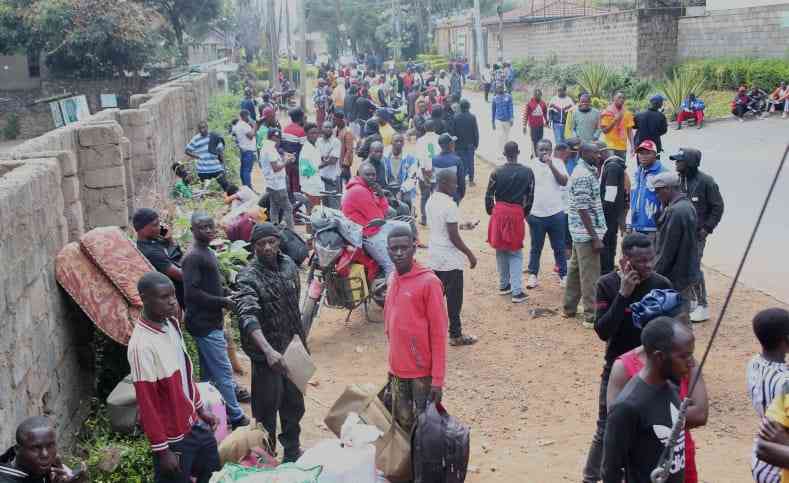
Tension has mounted in Nairobi as President William Ruto’s directive targeting foreigners operating small businesses in Kenya took effect, with a notable influx of Burundians seeking travel assistance at the Burundi Embassy.
Queues began forming outside the embassy as early as 7 am, with many of those waiting reportedly seeking documentation and facilitation to return to Burundi.
At Nairobi’s famous Country Bus Station, scenes shared on social media showed anxious foreign nationals scrambling for limited buses travelling to neighbouring countries. Several buses were labelled Burundi, Rwanda and DRC, amid reports that some foreigners were making arrangements to leave Kenya.
The development has also triggered concern among foreign nationals operating small businesses, particularly in Nairobi’s informal markets.
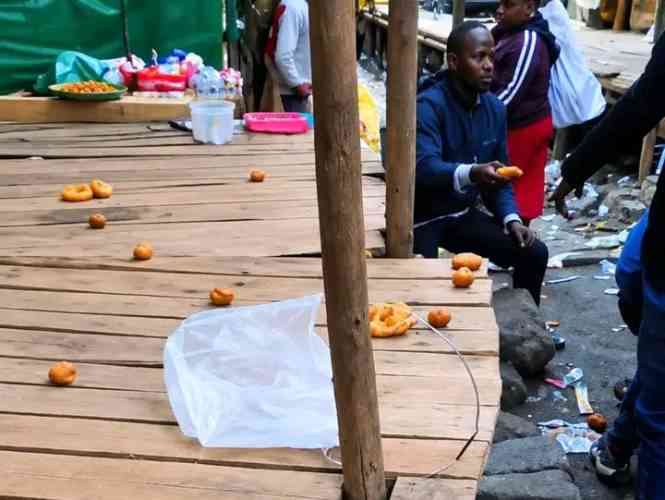
Images circulating on social media appeared to show some foreigners being harassed while conducting business, including selling coffee and mandazi in the Gikomba area.
Several cybercafés in Nairobi’s Central Business District also recorded an influx of foreigners seeking to update or process travel documents, according to observations by The Standard.
The crackdown follows President Ruto’s directive last week that foreigners operating small-scale businesses should shut down their operations, arguing that such activities should be reserved for Kenyans.
“All those traders and hawkers doing these small businesses should close down, and if they don’t do that,” the President said.
Ruto said the Government was seeking to protect economic opportunities for Kenyans while distinguishing between genuine foreign investors and those engaged in small-scale trading.
“We have not built investor confidence so that hawkers can come to Kenya. The investor confidence we have built is for investors to come to Kenya, not hawkers and traders. People should not confuse us,” he said.
The directive has, however, raised questions over whether the Government is applying the rules uniformly to all foreign nationals engaged in small-scale businesses.
The issue has particularly affected citizens of Burundi, Uganda, Tanzania and Rwanda, whose nationals enjoy rights under the East African Community Common Market framework, subject to applicable laws and regulations.
Burundi warns Kenya
Tensions escalated further after Burundi’s Foreign Minister Édouard Bizimana warned that continued hate speech targeting Burundians could strain relations between the two countries.
Stay informed. Subscribe to our newsletter
“Kenyans live peacefully in Burundi. But if this hate speech against Burundi continues, things will certainly change. Kenya’s government is responsible for the lives of Burundians living in Kenya,” Bizimana wrote on X, tagging Kenya’s Parliament.
His remarks came amid growing online debate and complaints over the treatment of Burundian nationals in Kenya.
Kenyan lawmakers have also publicly raised concerns over the employment of foreign workers, with one legislator claiming that some construction companies preferred Burundian labour because it was cheaper than hiring Kenyans.
Economists urge caution
Economist and lecturer Martin Wangwe warned against blanket measures based solely on nationality, saying authorities should first establish whether individual foreign traders have the necessary permits and legal status to operate in Kenya.
“Are we checking if, let us say, the Burundian trading in Gikomba has a valid permit or not? Don’t be shocked that some have the EAC requirements to do trade, but end up wrapped in one blanket of condemnation,” Wangwe told The Standard.
The debate has also centred on whether foreigners operating small businesses should be classified as self-employed workers, traders or proprietors, and whether their activities fall within the rights granted under the EAC Common Market.
Kenya is not the first EAC member state to impose restrictions on businesses operated by non-citizens.
In July 2025, Tanzania introduced measures under the Business Licensing (Prohibition of Business Activities for Non-Citizens) regulations, restricting non-citizens, including nationals of other EAC countries, from engaging in 15 categories of businesses. The affected sectors included retail trade, mobile money services and salons.
The developments have renewed scrutiny of the EAC Common Market Protocol, which was intended to facilitate the free movement of people, labour, services and capital across the region.
The Common Market was initially scheduled for full implementation by 2015, but the deadline was missed, with member states continuing to implement its provisions in phases.
The latest crackdown has therefore placed Kenya’s commitment to regional integration under renewed scrutiny, even as the Kenya Kwanza government insists that its priority is to protect economic opportunities for Kenyan citizens.







Subscribe to our newsletter and stay updated on the latest developments and special offers!