×

The Standard e-Paper
Stay Informed, Even Offline
 The Standard Group Plc is a
multi-media organization with investments in media platforms spanning newspaper
print operations, television, radio broadcasting, digital and online services. The
Standard Group is recognized as a leading multi-media house in Kenya with a key
influence in matters of national and international interest.
The Standard Group Plc is a
multi-media organization with investments in media platforms spanning newspaper
print operations, television, radio broadcasting, digital and online services. The
Standard Group is recognized as a leading multi-media house in Kenya with a key
influence in matters of national and international interest.

Audio By Vocalize
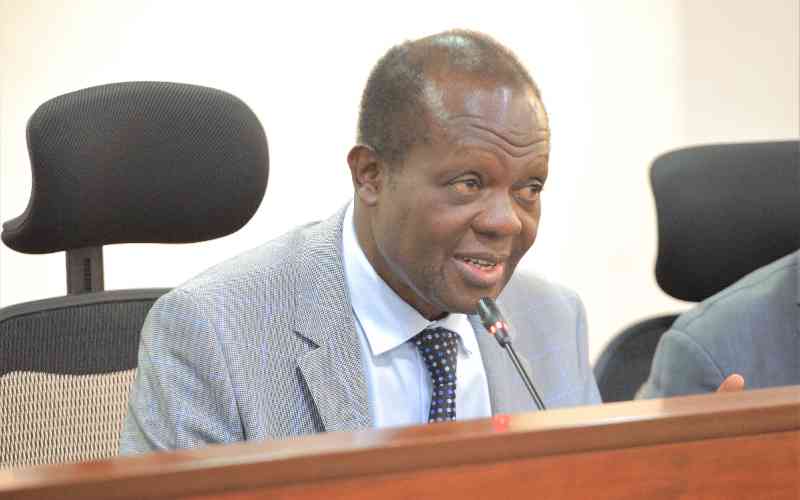
The National Assembly committee on Finance has said it will now require the East African Development Bank (EADB) directors and National Treasury Cabinet Secretary, John Mbadi, to appear before it to shed light on its operations in the country.
The committee Chairman, Kuria Kimani said the Constitution is clear that the regulatory body for banking services is Central Bank of Kenya (CBK) but neither the law or the bill addresses that aspect, noting that if EADB is to undertake banking transactions in the country, it should be subject to supervision of CBK.
He made the remarks after former Cabinet minister Raphael Tuju made a presentation on the East African Development Bank (Amendment) Bill (National Assembly Bill No. 33 of 2026) yesterday.
“The task before is that we need to have a discussion with the directors of the bank on what necessitated the bank and the National Treasury to submit to National Assembly a schedule of all those disbursements from the consolidated bank, I have not seen that report. So, we will invite EADB to come and explain and also the National Treasury to present that report for tabling in the House,” Kimani said.
“We want to thank you for these new perspectives. This new information now calls on us to thoroughly scrutinize this Bill to make sure we do not adopt any provisions that are in breach of the constitution”, he added.
He said a key concern raised by the courts was that EADB would operate as a financial institution and it would therefore lend to individuals and government.
The Bill sponsored by the Leader of Majority Party, was published on 5th June, 2026, and was read for a First Time on 1st July, 2026 before being committed to the Finance Committee for consideration and tabling of report.
The principal objective of this Bill is to amend the East African Development Bank Act, Cap. 493A, to require the approval of the National Assembly prior to the Cabinet Secretary authorizing a charge or issuance of public funds from the Consolidated Fund to the East African Development Bank.
In his presentation, Tuju poked holes into the design and intent of some of the clauses in the proposed Bill, as he particularly made reference to subsection 2(6) of the Bill, which provides that if the National Assembly does not pass a resolution within 30 days of the notification for approval, it shall be deemed to have been given and this defeats the purpose of the amendment.
He warned that this could create an avenue for abuse in operations by the EADB.
“There is provision that Parliament has to approve whatever asked for within 30 days failure to which it is deemed to have been approved. What happens if Parliament is in recess or is dissolved? That is a mischief and the fact that it has to be done within 30 days must be corrected,” Tuju told the committee.
“The mischief with respect to access to taxpayers' money has been smoked out. That is only a first step. In the fullness of time, the architects of the 2014 EADB Act scheme will face the law,” he added.
According to Tuju, this could be subject to abuse since it could allow critical financial decisions to take effect without Parliament having substantively considering them.
Also of concern to Tuju was the issue on immunity the bank employees enjoy from any legal process other than cases where it has expressly waived its immunity in writing.
Stay informed. Subscribe to our newsletter
He explained that the provision is cause of concern because it could remove Parliament’s oversight role by allowing a subscription to proceed since the 30-day period may have elapsed.
“Such mischief are by technical people in the National Treasury and this is what happened previously in cases surrounding Goldenberg and Anglo-Leasing scandals and you can trace that in every major scandal of money over the last six years or so,” Tuju said.
Tuju was concerned that proposed section 2(3) requires only that the CS reports to the National Assembly on payments done but it does not require such payments, once done, be subject to an audit by the Auditor General or an equivalent independent auditor answerable to Parliament.
Similarly, he argued that Bill is silent on the core structural, licensing and governance defects at EADB, adding that a Bill that addresses only the funding while leaving untouched the institutions unlicensed banking operations, its governance capture and its misuse of immunity to shield criminal conduct, is not a complete or honest legislative response to the problem Parliament itself has acknowledged.
Other issues he raised surrounded the EADB’s accountability framework, noting that the proposed changes does not adequately provide for oversight of the regional bank.
Tuju stated that EADB does not operate under the regulatory framework of the CBK and raised questions on the safeguards governing its operations and financial activities in the country.
“EADB does not report to anyone and is not regulated, that is something we can look at. Without clear provisions for independent scrutiny, Parliament and the public could have limited visibility over the bank’s financial affairs, despite Kenya being a shareholder in the institution,” he stated.
Kitui Central MP David Mboni said the operations of the bank must be scrutinized, noting that reports indicate that it has never declared any dividends or paid out despite receiving billions of taxpayers' money.
“Whom does EADB report to? Whom does EADB report to? Is it the Council of Ministers of the East African Community or whom? This bank is yet to declare any dividends and Kenya hasn’t received any returns from its investment in the bank despite the bank having paid millions to its lawyers,” Mboni said.
Homa Bay Town MP Peter Kaluma agreed the need to scrutinize the bank for the sake of public interest.
“We need to look at the EADB Act beyond the Bill so as to secure the interest of this country,” Kaluma said.








Subscribe to our newsletter and stay updated on the latest developments and special offers!






 join
join