×

The Standard e-Paper
Stay Informed, Even Offline
 The Standard Group Plc is a
multi-media organization with investments in media platforms spanning newspaper
print operations, television, radio broadcasting, digital and online services. The
Standard Group is recognized as a leading multi-media house in Kenya with a key
influence in matters of national and international interest.
The Standard Group Plc is a
multi-media organization with investments in media platforms spanning newspaper
print operations, television, radio broadcasting, digital and online services. The
Standard Group is recognized as a leading multi-media house in Kenya with a key
influence in matters of national and international interest.

Audio By Vocalize
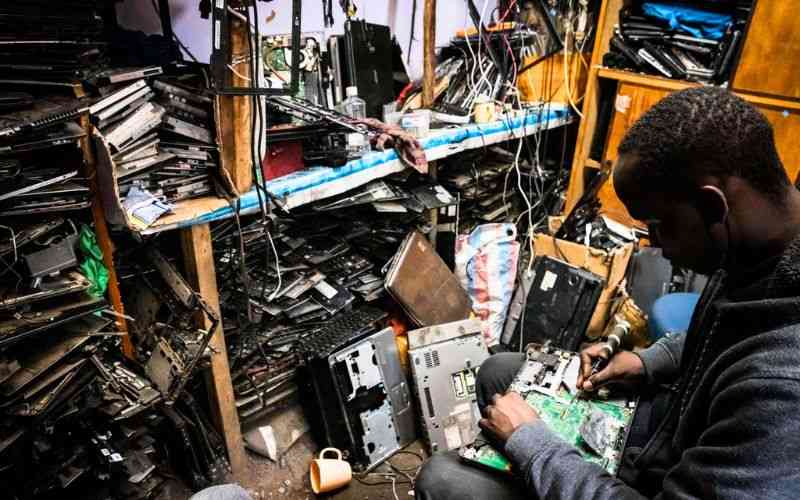
Kenya is grappling with an electronic waste crisis, with the latest survey by the Kenya National Bureau of Statistics (KNBS) showing that the country generated 55,956 tonnes of e-waste in 2025.
Of this waste, 21,942 tonnes came from small household equipment like electric kettles, microwave ovens and radios, followed by temperature-exchange equipment such as air conditioners, freezers and refrigerators which generated 10,996 tonnes.
Meanwhile, information communication technology equipment like mobile phones, computers and printers contributed 6,608 tonnes of e-waste.
Several studies have shown that e-waste, if not handled properly, poses a threat to not only the environment but also animal and human health, with long term effects linked to the loss of biodiversity.
E-waste is one of the fastest-growing solid waste streams in the world, with the current volume globally estimated at 65 million metric tonnes (MMT).
KNBS data shows e-waste volumes in Kenya have increased by 15.47% in the last five years, five times more than the annual global rate of 3.53%. Data by the Global E-waste Monitor shows that the generation of e-waste worldwide is rising by 2.6 million tonnes annually, and is expected to hit 82MMT by 2030.
These numbers may not make sense to ordinary Kenyans, and how e-waste is discarded to may not really matter to them but a recent policy brief by Greenpeace Africa now warns that the country could witness a public health crisis if urgent measures are not taken to properly manage e-waste.
A survey done in the Korogocho slum involving waste pickers who work at one of Kenya’s biggest dumpsites, Dandora, showed that the unsafe handling of e-waste has caused health challenges to the pickers, most of whom have worked at the dumpsite for more than 10 years.
The survey, commissioned by the Royal Danish Embassy in Nairobi, notes that 51 per cent of waste pickers at Dandora collect e-waste from equipment such as motherboards, phones, cables, switches, sockets, cables, wires, kettles, flat irons, radios, TV remotes, and laptops.
In Kenya, e-waste is usually mixed with regular waste during disposal, leaving the job of collection and sorting to informal waste pickers in dumpsites. After sorting, the pickers sell recyclables and other valuable items found in the waste to willing buyers.
At Dandora, waste pickers earn between Sh3 and Sh20 per kilogram of regular waste by selling to aggregators, farmers or companies coming to the dumpsite for different materials. However, waste from electrical and electronic equipment (WEEE) fetches up to Sh50 per kg, according to the study.
Unbeknownst to them, however, e-waste contains toxic elements, and unsafe handling of their components leads to exposure, causing some of the health problems they have been experiencing.
Electrical and electronic equipment (EEE) contain toxic substances that are harmless when they are functional. However, when devices become waste, these substances may be released to the environment if not handled safely, and cause harm to human beings, animals and plants alike.
Components of E-waste
Stay informed. Subscribe to our newsletter
E-waste comprises metals, plastics glass, printed circuit boards (PCBs) and hazardous materials. Metals like iron, steel, aluminum copper, gold and silver are used in connectors and semiconductors due to their conductivity.
Plastics are used for electrical insulation and provide casings for devices such as smartphones, laptops, and televisions.
Glasses are mainly used to make display components such as phone or TV screens, while PCBs are used as conductors in most electronics. Hazardous materials such as lead, mercury, cadmium and barium are used as conductive materials in electronics.
While these substances are vital for the proper functioning of devices, they can release toxicants that contaminate water, soil and the air when not handled properly. In Kenya, only one per cent of e-waste is recycled formally; the rest is handled by the informal sector, which has neither the equipment nor expertise to recycle safely.
When electronic devices are disposed of in landfills, they release toxic materials like lead, mercury and cadmium into the environment, causing soil, water and air pollution.
Studies have shown that exposure to lead and mercury can cause neurological disorders and cardiovascular problems, with women of childbearing age and children being the most vulnerable. Exposure among pregnant women has been found to cause low birth-weight, preterm delivery and still births, and also hinder brain development in children.
Exposure to lead caused more than 1.5 million deaths globally in 2021, according to the World Health Organization. Exposure to mercury, one of the ten most hazardous substances in the world, according to WHO, can also cause various cancers, liver damage and gastrointestinal issues.
Chronic exposure to cadmium, a component of rechargeable Nickel-cadmium (NiCd) batteries, causes cancer, kidney failure, lung damage and cognitive problems among children who are exposed during pregnancy.
Arsenic, mostly used as a semiconductor in smartphones, is the most significant chemical contaminant in drinking water globally, according to WHO. Long-term exposure through drinking contaminated water and food causes skin, lung and bladder cancers. Ingestion of inorganic arsenic is also associated with developmental effects, diabetes, pulmonary disease and cardiovascular disease.
Brominated Flame Retardants (BFRs), which are hazardous chemicals used to reduce flammability in PCBs, are linked to neurodevelopmental delays in children, decreased sperm count and several cancers. Meanwhile, chromium, a respiratory carcinogen, can cause lung cancer, liver and kidney damage.
The health problems caused by long-term exposure to e-waste are no longer just global; they are now here with us. The global e-waste crisis is now slowly eating up ignorant Dandora waste pickers, who are bearing the brunt of poor waste management practices.
“Exposure to toxic chemicals released during unsafe handling of electronic waste, including open burning, acid leaching, and manual disassembly, has left 61 per cent of waste pickers in Nairobi’s Korogocho settlement with health problems, with nearly half of them suffering from respiratory illness, and more than a third reporting skin infections,” reads Greenpeace Africa’s policy brief.
The organisation identifies high volumes of electronic imports and weak quality control as key challenges in Kenya’s electronics sector. Many imported second-hand devices are also neither functional nor repairable, further compounding the e-waste problem. “This e-waste is labelled as refurbished and recyclable, receiving tax levies, but often consists of contaminated materials that cannot be processed locally.”
The burning of e-waste to extract metals releases toxins that pollute the environment and affects air quality. Breathing this contaminated air causes respiratory challenges in humans and animals. Furthermore, incineration also emits greenhouse gases into the atmosphere, leading to global warming.
Toxic chemicals from devices disposed of in landfills are absorbed in soils and waterways. Crops and aquatic animals may ingest these pollutants, allowing them to enter the food chain. For instance, WHO says that high levels of carbon in the atmosphere lead to the acidification of oceans, which affects marine biodiversity.
According to the United Nations Environment Programme’s (UNEP) Chemicals and Waste Unit, over 3.2 billion people globally are affected by the degradation of land and soils, posing risks to health and food security.
Furthermore, the disruption of ecosystems affects the availability of clean air, water and food, and leads to the loss of natural resources like plants and animals which carry nutritional and medicinal benefits.
Additionally, disposing of waste incorrectly clogs drainage systems, leading to blockages that have been blamed for floods during heavy rains in urban areas like Nairobi.








Subscribe to our newsletter and stay updated on the latest developments and special offers!






 join
join