×

The Standard e-Paper
Home To Bold Columnists
 The Standard Group Plc is a
multi-media organization with investments in media platforms spanning newspaper
print operations, television, radio broadcasting, digital and online services. The
Standard Group is recognized as a leading multi-media house in Kenya with a key
influence in matters of national and international interest.

Audio By Vocalize
The push for independent leadership of junior schools suffered a major setback after the Teachers Service Commission (TSC) maintained that primary school headteachers will remain substantive heads of comprehensive schools, rejecting demands for a separate administrative structure.
The position emerged during the ongoing Kenya Comprehensive Schools Heads Association (KECSHA) conference in Mombasa, where the Commission’s leadership responded to growing agitation for junior schools to have independent principals and their own management structures.
The response, delivered during the conference deliberations, puts the Commission at odds with the Kenya Union of Post-Primary Education Teachers (Kuppet), which has been pushing for autonomy, arguing that junior schools have distinct professional and administrative needs that cannot be adequately addressed under primary school leadership.
It also reinforces the position taken by the Kenya National Union of Teachers (Knut) and primary school heads, who want the comprehensive school model retained, with one administration overseeing learning from Early Childhood Development Education (ECDE) to Grade Nine.
Knut Secretary-General Collins Oyuu, addressing delegates at the conference, firmly opposed attempts to separate the two levels, warning that the autonomy debate risked creating divisions within the teaching profession.
“Enough is enough. This is one school. From ECDE to Grade 9, we are one school,” Oyuu told the delegates.
He cautioned teachers against allowing trade union rivalry to interfere with the running of schools, insisting that educators should work together under the comprehensive school arrangement.
The disagreement has exposed deepening divisions within the teaching profession, particularly between primary school teachers and those deployed to junior schools following the introduction of the Competency-Based Education system.
At the centre of the dispute is the status of junior school teachers, many of whom hold university degrees and were recruited or deployed to teach subjects traditionally associated with secondary education.
Kuppet argues that their professional status places them within the post-primary education sector and that they should therefore operate under an independent administrative structure. The union has also questioned why teachers trained to handle the secondary school curriculum should remain under the supervision of primary school headteachers.
Kuppet Secretary-General Akelo Misori has argued that the deployment of teachers to Junior Schools effectively moved them into the post-primary sector.
“It is illegal to have a union cling to members who have expressed the intention to be in another union,” Misori said in an earlier dispute over the movement of teachers between the two unions.
The autonomy debate has also become a major source of tension between Knut and Kuppet, with the two organisations fighting over the representation of thousands of teachers deployed to Junior Schools.
Kuppet has demanded the release of teachers it says have expressed interest in leaving Knut, arguing that their deployment to junior schools makes them eligible for representation by the post-primary teachers’ union.
Stay informed. Subscribe to our newsletter
In early November, the union accused Knut of refusing to release more than 10,250 teachers who had applied to switch membership.
However, primary school heads have defended the comprehensive school model, arguing that having separate administrations would create unnecessary bureaucracy and duplicate responsibilities within institutions sharing the same compounds and facilities.
KECSHA Chairman Fuad Ali has previously maintained that the association supports one administration for the entire comprehensive school, with different deputies overseeing the respective levels.
The commission’s position comes as it continues to address staffing pressures arising from the introduction of Junior Schools.
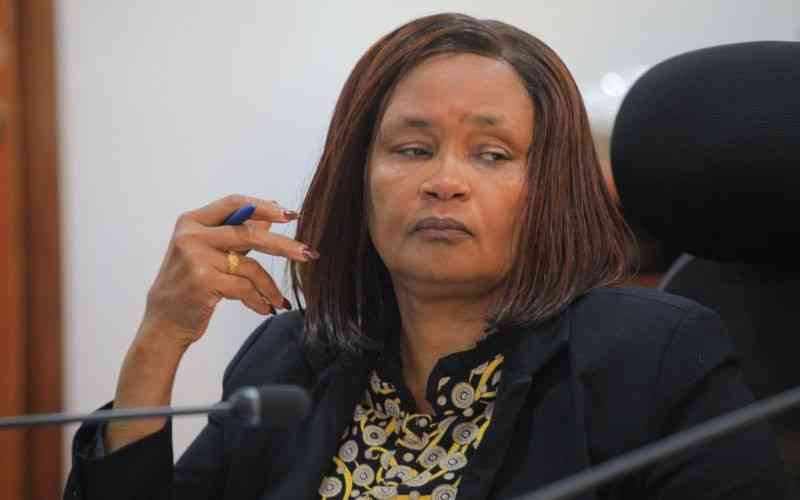
In her address to the conference, TSC Commission Secretary Dr Evaleen Mitei said the government had recruited an additional 100,000 teachers over the past three years, with another 16,000 expected to be recruited shortly
“The growing learner population and rollout of CBE have significantly increased the demand for teachers across all levels of our education system,” she said.
She added that the recruitment had significantly bridged the teacher shortage in Junior Schools, urging administrators to ensure the available teachers were optimally utilised.
Addressing school heads during the Kenya Secondary School Heads Association (KECSHA) annual conference in Mombasa, also highlighted the commission’s efforts to address staffing challenges arising from the introduction of Junior Schools.
She said the government had recruited an additional 100,000 teachers over the past three years, with another 16,000 expected to be employed shortly.
“The growing learner population and rollout of CBE have significantly increased the demand for teachers across all levels of our education system,” she said.
“This has significantly bridged the teacher shortage in JS, and the road to delivery of quality Education at that level is on course.”
Mitei commended school heads for navigating the challenges associated with the implementation of Junior Schools, urging them to ensure teachers were properly utilised to improve learning outcomes.
The TSC position comes as the Kenya Institute of Curriculum Development (KICD) warned parents and teachers against purchasing commercially produced assessment books containing ready-made questions and answers that do not conform to the philosophy of the new curriculum.
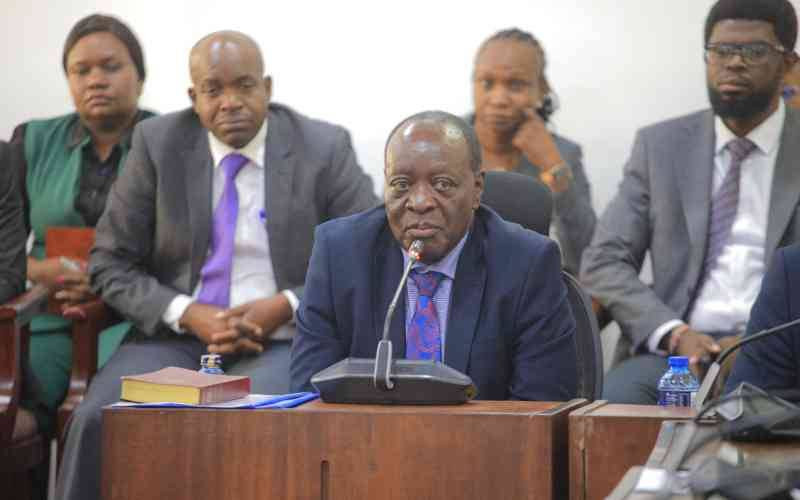
KICD Chief Executive Officer Prof Charles Ong’ondo said some of the materials being sold to parents and schools were not approved for use under the Competency-Based Education system.
He warned that the materials could undermine the learner-centred approach, which seeks to identify and nurture individual abilities rather than subject learners to uniform assessment methods.
“Why waste money on things you know add no value as far as the Competency-Based Curriculum is concerned?” Prof. Ong’ondo said.
He said it was unlawful to purchase or distribute fake, unapproved and poor-quality curriculum support materials purported to have been approved by the institute.
The KICD boss cited Section 27 of the KICD Act, 2013, which gives the institute the mandate to evaluate, vet and approve curriculum support materials, warning that those found culpable would face the law.
Meanwhile, KICD is reviewing textbooks for Early Years Education, with particular attention to English, Kiswahili and Mathematics, following concerns that books supplied to schools had become worn out after prolonged use.
Ong’ondo said new textbooks would be available when schools reopen in January 2027, targeting learners in Grades One to Three.
“We are aware that the textbooks that the Government supplied for EYE learners are now old and torn. We will replace them when schools reopen in January 2027,” he said.
He urged school heads to work with county directors of education to ensure the new books reach schools and that worn-out copies are replenished.
The KICD chief also called on school administrators to involve parents in the implementation of CBE, saying the system was not designed to rank learners but to recognise their different abilities and talents.
He said Community Service Learning, parental engagement, and the integration of digital technologies were among the new curriculum's critical components.
The TSC, meanwhile, said more than 310,000 teachers had undergone CBE retooling through a multi-agency programme, as it pushes for improved preparedness among educators.
Mitei said the commission was also preparing teachers for new learning areas, including Creative Arts, Music and Dance, Theatre and Film, and Media Technology and Studies.
Training in these areas, through a partnership with the Kenya Institute of Mass Communication, is scheduled to begin on November 23.







Subscribe to our newsletter and stay updated on the latest developments and special offers!