×

The Standard e-Paper
Fearless, Trusted News
 The Standard Group Plc is a
multi-media organization with investments in media platforms spanning newspaper
print operations, television, radio broadcasting, digital and online services. The
Standard Group is recognized as a leading multi-media house in Kenya with a key
influence in matters of national and international interest.
The Standard Group Plc is a
multi-media organization with investments in media platforms spanning newspaper
print operations, television, radio broadcasting, digital and online services. The
Standard Group is recognized as a leading multi-media house in Kenya with a key
influence in matters of national and international interest.

Audio By Vocalize
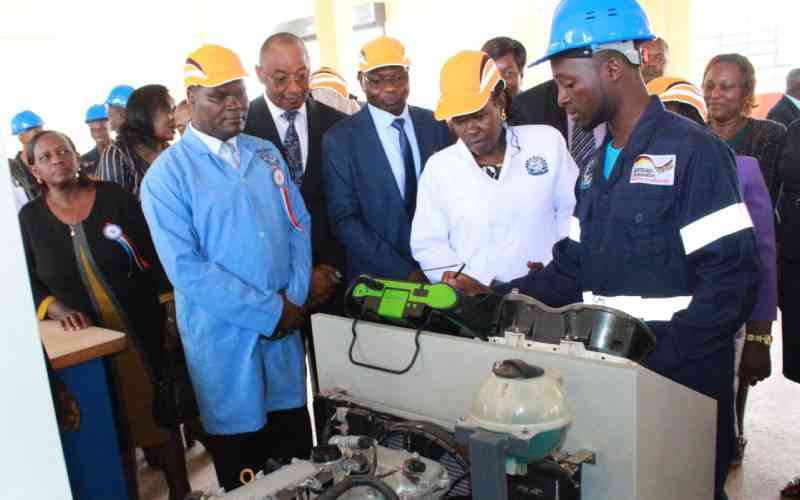
The government has called for deeper collaboration between universities, technical training institutions and industry to accelerate research commercialization, innovation and job creation.
Principal Secretary for Technical and Vocational Education and Training Esther Muoria said stronger linkages between training institutions and the private sector are essential to ensure graduates acquire practical skills needed in today’s labour market.
Speaking during the 20th Scientific, Technological and Industrialization Conference at Jomo Kenyatta University of Agriculture and Technology, Dr. Muoria said Kenya must deliberately align its education and training systems with industry needs to support the country’s industrialization agenda.
“We must strengthen the linkage between training institutions and industry to ensure skills development is demand-driven and future-oriented,” said Dr. Muoria, who was represented at the event by TVET Director Archer Arina.
The two-day conference, held from March 26–27 under the theme “Transforming Livelihoods Through Training, Research, Innovation and Entrepreneurship for Sustainable Development,” marked two decades of the university’s efforts to advance research and technological innovation.
“This requires an integrated approach where training institutions and industry collaborate closely to support applied research, technology transfer and skill development through labour market surveys, industry participation in curriculum design and work-based learning through internships, apprenticeships and industrial attachments,” she added.
The PS said the government is implementing reforms under the Competency-Based Education and Training framework to ensure graduates are equipped with practical skills.
She emphasized that training must move beyond theoretical learning to real workplace experience.
“Through Competency Based Education and Training we are systematically aligning skills development with labour market demands, producing graduates who are not only employable but capable of driving industrial transformation,” she said.
She said the government wants training institutions to integrate production into learning, allowing trainees to work on real projects that generate income for colleges while building practical skills.
“Our vision is that by the time trainees reach the final stage, they are not simulating work, they are delivering it. Real projects, real standards and real accountability,” she said.
The PS also challenged universities and training institutions to focus on emerging technologies shaping the global economy.
“Emerging technologies such as artificial intelligence, robotics, green technologies and big data are transforming industries and redefining the future of work. We must prepare our young people to thrive in this evolving environment.”
Vice Chancellor Victoria Ngumi said the conference has grown into a major platform for collaboration between researchers, industry leaders and policymakers.
“Over the past 20 years our conferences have showcased thousands of research papers, inspired policy reforms and facilitated groundbreaking collaborations,” she said.
Stay informed. Subscribe to our newsletter
“JKUAT remains committed to producing graduates who are not just job seekers but job creators whose research addresses real societal challenges.”
University Council Chair Micah Onsando emphasized the responsibility of universities to translate knowledge into practical solutions that benefit society.
“Institutions of higher learning have the capacity and duty to contribute to national development through research, innovation and knowledge sharing,” he said.







Subscribe to our newsletter and stay updated on the latest developments and special offers!









 join
join