×
App Icon
The Standard e-Paper
Kenya’s Boldest Voice
★★★★ - on Play Store
Download App

KUCCPS eye schools for early career guidance ahead of placements

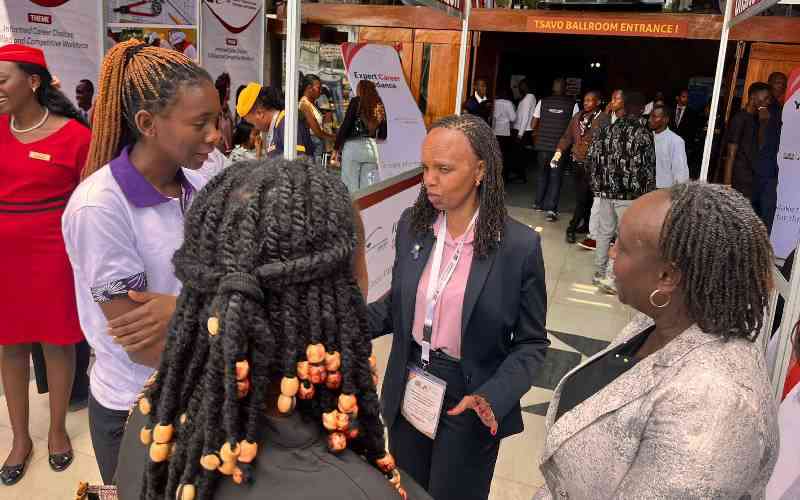
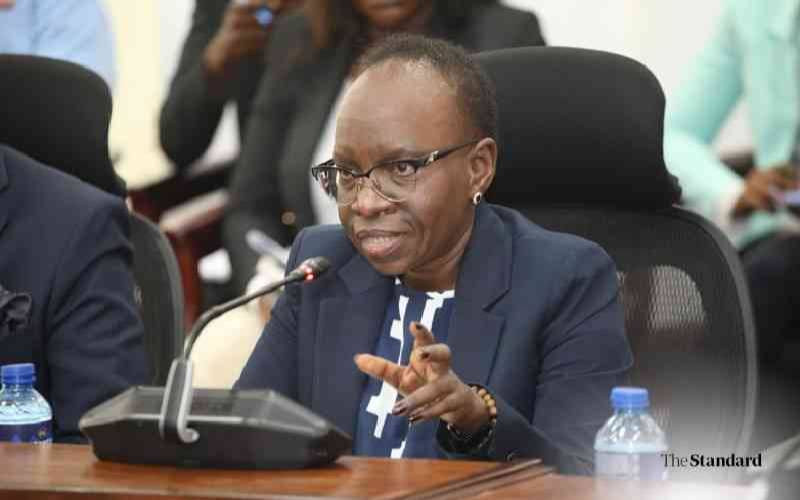
The Kenya Universities and Colleges Central Placement Service (KUCCPS) Chief Executive Officer Dr Agnes Mercy Wahome during theNational Career Conference and Exhibition on January 28, 2026. [Jonah Onyango, Standard]  

The Kenya Universities and Colleges Central Placement Service (KUCCPS) targets structured career guidance programme targeting learners under the Competency-Based Curriculum (CBC).

This is a major shift in how students will prepare for university, college and technical training pathways.

The move comes ahead of the 2026 university and college placement cycle and the planned introduction of a new CBC-aligned placement system that will assess learners based on competencies, skills and continuous assessments, rather than relying solely on a final examination.

KUCCPS Chief Executive Officer Dr Mercy Wahome said the forum comes at a critical moment as Kenya transitions from the 8-4-4 system to CBC and implements sweeping reforms in technical training through the Competency-Based Education and Training (CBET) framework.


“The three-day forum leverages KUCCPS’ experience in placement and career guidance to shape informed decisions for learners as they prepare for the 2026/2027 placement cycle,” Dr Wahome said.

Speaking during a three –day inaugural National Career Conference and Exhibition in Nairobi She noted that under CBC, learners are required to make key pathway and subject decisions as early as junior secondary school, a shift that has raised concerns about preparedness among learners and parents.

“Career guidance now starts with self-awareness. At junior school level, learners must ask themselves what they love doing and what they are good at. From there, we help them understand whether they fit into sciences, arts, sports, technology or creative pathways,” she explained.

The three-day forum, themed “Informed Career Choices; A Skilled and Competitive Workforce,” brings together more than 500 public and private universities, colleges and TVET institutions from across the country.

The conference targeted Grade 10 learners, Form Four candidates, teachers, parents, career guidance experts and education stakeholders, marking the first government-led national platform dedicated entirely to structured career guidance.

Dr Wahome said as learners transition to senior secondary school, the  focus shifts to aligning subject combinations with specific careers such as engineering, health sciences, education, technology and creative industries.

She said early structured and credible career guidance will be central to producing a skilled, competitive workforce aligned with national development priorities.

“Career guidance cannot wait until the final year. CBC is about competencies and skills, not just examinations,” Dr Wahome said.

A key focus of the initiative is the promotion of TVET and CBET pathways, which education stakeholders say are transforming technical training by shifting from theory-based instruction to practical, skills-oriented and learner-centred learning.

“CBET has changed the face of technical education. Learners can now train in modules, earn certification at every level and join the job market even before completing their full courses,” Dr Wahome said.

She noted that under CBET, students spend about 30 per cent of their time in class and the rest in industry attachments and hands-on training, enhancing employability.

Government investment in modern training equipment and the establishment of at least one TVET institution in every constituency has further strengthened access to skills training.

“With the modular curriculum from artisan to diploma level, students  acquire practical skills that allow them to be employed or self-employed at every stage,” she added.

Dr Wahome called for a mindset shift in how success is measured, arguing that academic grades alone should not define excellence.

“About 75 per cent of KCSE candidates in the last two years did not qualify for university. That does not mean they have failed,” she said.

“A balanced system should have about 30 per cent of learners in universities and 70 per cent in technical and vocational pathways,” she added.

She clarified that placement criteria for current KCSE candidates remain unchanged, with the  minimum university entry grade staying at C+ for candidates sitting KCSE between 2025 and 2027.

However, learners currently in Grade 10 will be the first cohort to be placed under the new CBC-aligned system.

“The final grade will reflect the learner’s entire journey, not just one exam,” Dr Wahome said, adding that placement will be guided by criteria set by universities, colleges and regulatory bodies once finalised.

Third left Universities Fund CEO Dr. Edwin Wanyonyi, KUCCPS CEO Dr Mercy Wahome and HELB CEO Geofrey Monari during the National Career & Exhibition on January 28, 2026. [Jonah Onyango, Standard] 

KUCCPS Board Chairperson Cyrus Gitwai said the agency is also strengthening school-based career guidance by training teachers to support learners as they choose pathways and subject combinations.

“Students must make informed choices. We want teachers and parents equipped to guide learners properly, especially at the point where pathways are selected,” Gitwai said.

He assured parents that systems are being aligned progressively to ensure a smooth transition.

“There is a lot of work going on behind the scenes. Parents should be confident that learners are not at risk,” he said.