×
App Icon
The Standard e-Paper
Truth Without Fear
★★★★ - on Play Store
Download Now

Ogamba pushes universities to innovate for long-term survival

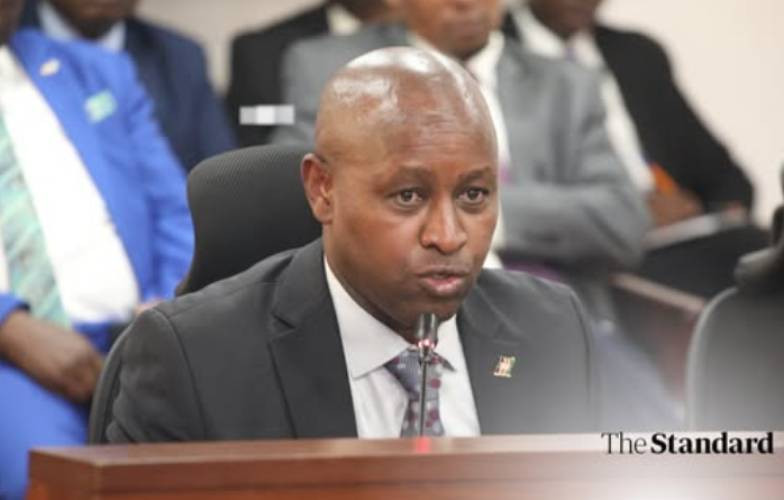
Cabinet Secretary for Education, Julius Ogamba appearing before the National Assembly  Committee on Education.[FILE]

Education Cabinet Secretary Julius Ogamba has called on public universities to rethink their sustainability models, warning that the era of relying solely on government funding is no longer tenable as economic pressures tighten.

Speaking during the Technical University of Kenya’s (TUK) 14th graduation ceremony, the CS acknowledged that TUK, like many other public institutions, is grappling with serious financial constraints.


He said the Ministry of Education is working closely with the National Treasury to address emerging issues, including obligations arising from recent industrial actions and the return-to-work agreement signed with staff unions.

Ogamba assured staff and students that the ministry, together with the university council, remains committed to fostering a stable and harmonious working environment to ensure the institution continues delivering on its critical mandate.


“We are committed to supporting TUK to fulfil its societal mission. Stability within our universities is essential for the country’s human capital development,” he said.

However, the CS emphasized that long-term sustainability will require universities to embrace innovation, entrepreneurship and strategic partnerships.

He noted that many public universities possess vast land holdings and other resources that remain underutilized, arguing that unlocking this potential could ease financial pressures.

“In this era of tightening budgets, public universities must adopt innovative approaches to sustainability. Relying exclusively on government funding is no longer viable,” Ogamba said.

He also highlighted the immense commercial potential of countless innovations developed within Kenya’s institutions of higher learning.

The CS urged universities to strengthen their partnerships with industry players to commercialize these innovations, generate new revenue streams and enhance the practical relevance of academic research and training.

“Universities must empower their lecturers, researchers and staff to transform ideas and skills into tangible entrepreneurial ventures. This not only bridges budgetary gaps but enriches the broader economy,” he said.

In a direct challenge to TUK, Ogamba encouraged the institution to explore strategic government partnerships that align with its technical expertise.

He singled out the repair and maintenance of government vehicles as an opportunity with substantial commercial potential.

“I want to challenge you as an institution to seek partnerships, for instance, to undertake the repair and maintenance of all government vehicles. This would translate into serious commercial income,” he noted.

The CS further urged graduates to embrace innovation and resilience, saying the future of the country depends on institutions and individuals willing to adapt and lead in times of change.