×

The Standard e-Paper
Stay Informed, Even Offline
 The Standard Group Plc is a
multi-media organization with investments in media platforms spanning newspaper
print operations, television, radio broadcasting, digital and online services. The
Standard Group is recognized as a leading multi-media house in Kenya with a key
influence in matters of national and international interest.

Audio By Vocalize
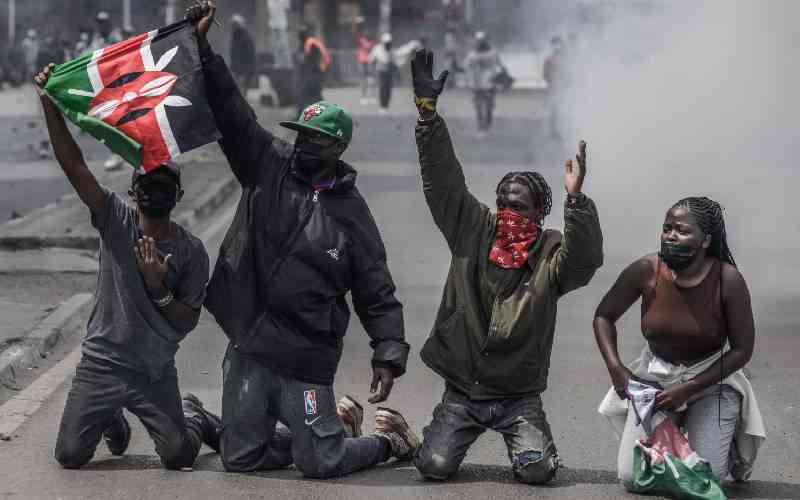
The right to protest in Kenya remains a challenge for many citizens, with fear of intimidation, arrest and violence increasingly limiting their ability to take their grievances to the streets, a new survey shows.
Despite 65 per cent of Kenyans saying they are free to express their opinions, only 42 per cent feel free to participate in public demonstrations without fear of repression.
The findings by Afrobarometer shows that while Kenyans feel free to speak their minds, they are less confident about exercising their constitutional right to demonstrate against decisions and actions of those in power.
The survey further shows that 57 per cent of Kenyans do not feel free to participate in public protest without fear of intimidation, arrests or violence. Of these, 32 per cent say they are not very free, while 24 per cent say they are not free at all.
The findings come against the backdrop of the 2024 Gen Z-led protests against the Finance Bill, which brought thousands of young Kenyans to the streets to challenge government policies and demand accountability.
The demonstrations marked by deadly confrontations, arrest and widespread cases of police brutality, appear to have had a lasting impact on how Kenyans view protests as a means of influencing government decisions.
About 51 per cent of respondents said the Gen Z protest changed their views on participating in protests to push the government to act, with 2 per cent saying their views changed a lot and 29 per cent saying somewhat.
The Afrobarometer Round 11 survey tilted; “Kenyans’ perspectives on participation in protests, democracy, and human rights” was led by the Institute for Development Studies at the University of Nairobi, through face-to-face interviews with 2,400 adult Kenyans between September 1 and 20, 2026.
According Prof Paul Kamau, Afrobarometer National Investigator for Kenya, men are more likely to participate in protests compared to women, while young and educated Kenyans were found to be the majority in protests, attributing to their understanding of democracy.
However, despite the perceived risks associated with demonstrations, half of Kenyans believe citizens should be allowed to exercise their right to protest, even when demonstrations sometimes turn violent.
The survey reveals a divided public on the limits of the right to assembly. While 51 per cent support the right to protest despite occasional violence, 45 per cent disagree.
The findings also challenge the narrative that protesters are primarily responsible for violence during demonstrations.
More than half of respondents (53 per cent) believe people hired to cause violence, commonly known as goons, are mainly responsible when violence breaks out during public protests.
Another 29 per cent blame the police, while only 16 per cent attribute the violence to protesters.
Stay informed. Subscribe to our newsletter
Public concerns about violence are accompanied by widespread disapproval of how police handle demonstrations, with 62 per cent of Kenyans considering the use of force to maintain order during protests unjustified. The survey also raises questions about the effectiveness of public demonstrations as a means of holding the government accountable and influencing policy decisions.
Only 37 per cent of respondents believe the government takes citizens’ concerns raised through protests seriously.
Police conduct
In contrast, 63 per cent say the government gives little or no serious consideration to grievances raised through demonstrations. Of these, 31 per cent say the government does not take these concerns seriously at all, while 32 per cent believe it gives them little attention.
Beyond public perceptions of how police handle protests, the survey also reveals concerns about the conduct of security agencies, particularly over reported abductions and extrajudicial killings.
Two-thirds of Kenyans (66 per cent) believe police or other State security agencies are primarily responsible for reported abductions, highlighting the extent of public suspicion directed at security agencies over enforced disappearances.
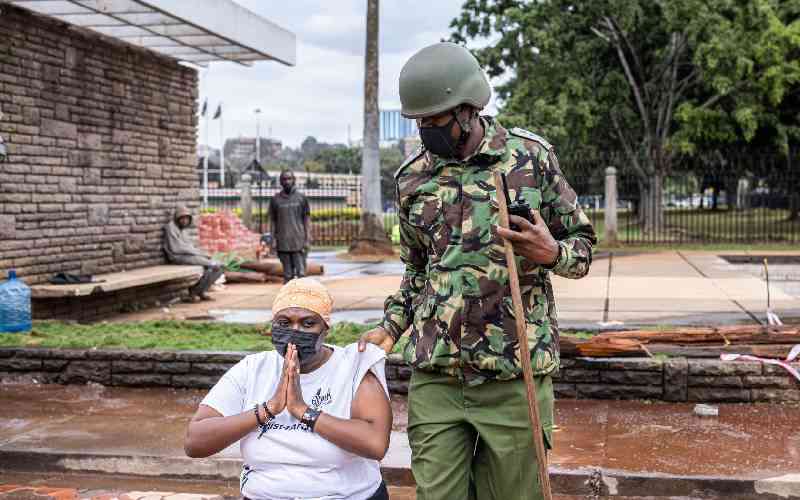
The disappearance of Kenyans critical of the government remains a major human rights concern, with dozens of people reportedly still missing after being picked up during protests.
Only 26 per cent attribute the disappearances to criminal gangs, while seven per cent believe the reported abductions are staged or that no one is responsible.
An overwhelming 92 per cent of respondents believe the government needs to do more to investigate and prevent abductions and extrajudicial killings. Of these, 68 per cent say the government needs to do a lot more, while 24 per cent believe it should do somewhat more. Only five per cent think the government is doing enough.
The survey also reveals low public confidence in the ability of victims of extrajudicial killings and their families to obtain justice through the courts. Only 34 per cent of Kenyans expressed confidence in their chances of securing justice.
In contrast, 65 per cent expressed little or no confidence, with 31 per cent saying they were not at all confident and another 33 per cent saying they were not very confident.
Prof Kamau said only 34 per cent of Kenyans believe victims of extrajudicial killings and their families can obtain justice through the courts, while 36 per cent feel justice will not be achieved through the judicial system.
The findings point to a significant deficit in public confidence in institutions mandated to investigate human rights violations, prosecute offenders and secure justice for victims and their families.
The survey also found that 54 per cent of Kenyans believe the government is not committed to protecting human rights for all citizens, compared with 42 per cent who consider it committed.
“Our findings show that only 42 per cent think the government is committed to protecting human rights. Does this mean there are rights for a select population and rights for all of us?” Prof Kamau posed.
On the broader state of democracy, 54 per cent of Kenyans still consider the country a full democracy or a democracy with minor problems. This represents a 14-percentage-point decline from the 68 per cent recorded in 2019. The survey attributes the decline in public confidence in democracy largely to concerns over human rights violations and police accountability
The survey further found that Kenyans prefer to expose cases of human rights violations on social media as compared to reporting through the mainstream media.







Subscribe to our newsletter and stay updated on the latest developments and special offers!