×

The Standard e-Paper
Join Thousands Daily
 The Standard Group Plc is a
multi-media organization with investments in media platforms spanning newspaper
print operations, television, radio broadcasting, digital and online services. The
Standard Group is recognized as a leading multi-media house in Kenya with a key
influence in matters of national and international interest.
The Standard Group Plc is a
multi-media organization with investments in media platforms spanning newspaper
print operations, television, radio broadcasting, digital and online services. The
Standard Group is recognized as a leading multi-media house in Kenya with a key
influence in matters of national and international interest.

Audio By Vocalize
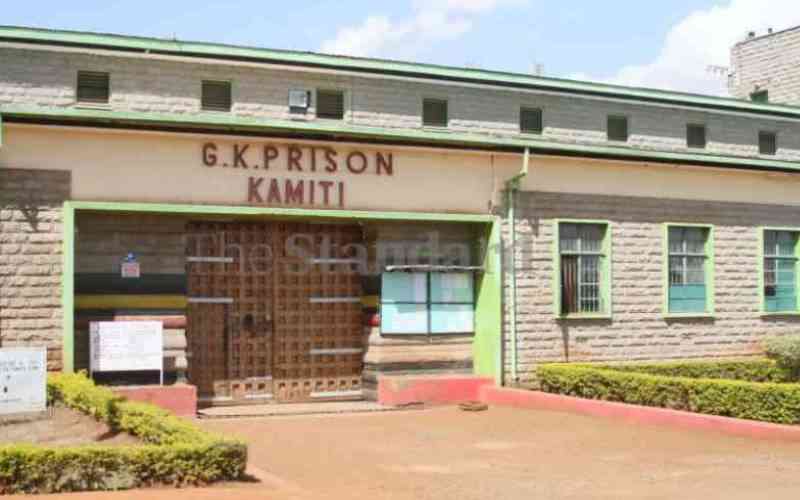
The Power of Mercy Bill (National Assembly Bill No. 56 of 2025) has now been read a second time in the National Assembly, which, among other issues, seeks to give the President the power to pardon.
The Bill was moved by Marsabit County MP Naomi Waqo, who said that it will operationalise Article 133 of the Constitution and specifically provide a legal framework for the four forms of mercy under Article 133(1)(a)–(d).
She said these include a free or conditional pardon for a person convicted of an offence, a respite, either indefinitely or for a specified period, from carrying out a punishment imposed on a person, a substitution of a less severe form of punishment for one imposed on a person and a remission of all or part of a punishment imposed on a person.
“I beg to move that the Power of Mercy Bill (National Assembly Bill No. 56 of 2025) be read a second time. The power of mercy under Article 133 of the Constitution lets the state balance strict criminal laws with grace, forgiveness and healing for reformed offenders,” she said.
She said the country has the Power of Mercy Act CAP 94, which was enacted in 2011 to operationalise Article 133 and while it has served the country over the years, experience in implementation has revealed instructional and operational gaps that require legislative reforms.
Waqo said the Bill is a step forward in updating the laws, creating transparent systems for presidential pardon and replacing old rules with a modern framework that respects human rights.
“This will help Kenyans so that presidential pardon can be in place. The objective of this Bill is to give full effect to Article 133 by establishing a structured statutory framework for the exercise of the Power of Mercy by the President,” she said.
She also said that the Bill sets out parameters for the appointment, tenure, powers and administrative functions of the advisory committee and the power of mercy.
It sets out the rules, qualifications and types of mercy like full pardons, delays or sentences to stop any unfair decision, in addition to replacing the old laws with modern systems that protect human rights and include victims.
The legislation was published in the Kenya Gazette in November last year, read for the first time in February 2026 and subsequently committed to the Committee on Justice and Legal Affairs (JLAC) for consideration.
The bill is structured into six comprehensive parts and schedules that outline the functional mechanism of Executive clemency, including establishing the foundational preliminary baseline, including the statutory interpretation and objectives of the Act, as well as details on the roadmap and structure of governance and the advisory committee on the power of mercy.
It creates a clear framework for hiring pardon officers and setting up localised case management committees within correctional facilities, which includes identifying eligible applicants, initial risk assessment and maintaining a clean record.
“This ensures that well-vetted, reformed offenders are recommended for presidential clemency. Many people in prison are waiting for this and if this is applied, many Kenyans will be relieved,” she said.
It also grants the Cabinet Secretary the powers to make governing regulations while safeguarding continuous transition through technical repeals, consequential amendments and saving provisions.
She also highlighted some of the issues raised during public participation; for instance, the National Intelligence Service (NIS) was concerned over the lack of a standardised procedural framework for actual assessment, noting that the risk profiles of offenders must be metric-based rather than subjective.
Stay informed. Subscribe to our newsletter
Kenya Prisons Service (KPS) and Commission of Administrative Justice (CAJ) pointed out an era where capital offences were mistakenly equated with life imprisonment, urging an annulment with standard penal code jurisprudence.
Other stakeholders, including the Law Society of Kenya (LSK), advocated for explicit inclusion of the two-thirds gender principle and vetting to protect the institutional integrity of the advisory committee.
Civil society groups raised issues of victims’ safety, demanding that serious offenders of gender-based violence and femicide be completely barred from seeking mercy.
Leader of Majority Party in the National Assembly Kimani Ichung’wah seconded the motion, saying that many people are languishing in prisons who do not deserve to be there.
“We are a country where even justice has become for sale, and I’m saying that knowing what goes on in this country. Some people have been jailed but never deserved to be in jail...But probably because they could not afford legal services or they were fighting with people who had more means than they did, they ended up in jail. But now they’ll have an opportunity under the Power of Mercy,” Ichung’wah said.
He said that people may be convicted but that should not take away the dignity of them being human beings, as it has happened to them over the years in some correctional facilities.
“People are put in very inhumane conditions and you have all seen that people who end up in jail for very flimsy reasons but end up in jail and because of the conditions they find there, end up becoming hardened criminals. We must have a system that is both restorative and rehabilitative,” Ichung’wah said.
“But we must also have professionals who can interrogate those convicts and know that they have gone through a corrective system and can be reintegrated back to society,” he added.
Kilgoris MP, Julius Sunkuli said that the biggest mercy that the country can have for convicts today is to improve prison conditions, noting that going to prison in Kenya is a real punishment.
“It is good that the Power of Mercy will be looked at in the way we have decided to do it in this Bill, but this Advisory Committee, we need to relook at the way we have structured it in this Bill so that we can make it more realistic and make it an Advisory Committee that is capable of properly advising the President,” Sunkuli noted.
Molo MP, Kuria Kimani, also joined in the debate, saying that this is not an open door for arbitrary releases but it will now be a structured, evidence-based system that balances mercy with justice, public safety, and the rights of victims.
“The benefits of this Bill are that, if it passes, it is going to reduce overcrowding and lower the cost of running prisons.




Subscribe to our newsletter and stay updated on the latest developments and special offers!





 join
join