×

The Standard e-Paper
Join Thousands Daily
 The Standard Group Plc is a
multi-media organization with investments in media platforms spanning newspaper
print operations, television, radio broadcasting, digital and online services. The
Standard Group is recognized as a leading multi-media house in Kenya with a key
influence in matters of national and international interest.
The Standard Group Plc is a
multi-media organization with investments in media platforms spanning newspaper
print operations, television, radio broadcasting, digital and online services. The
Standard Group is recognized as a leading multi-media house in Kenya with a key
influence in matters of national and international interest.

Audio By Vocalize
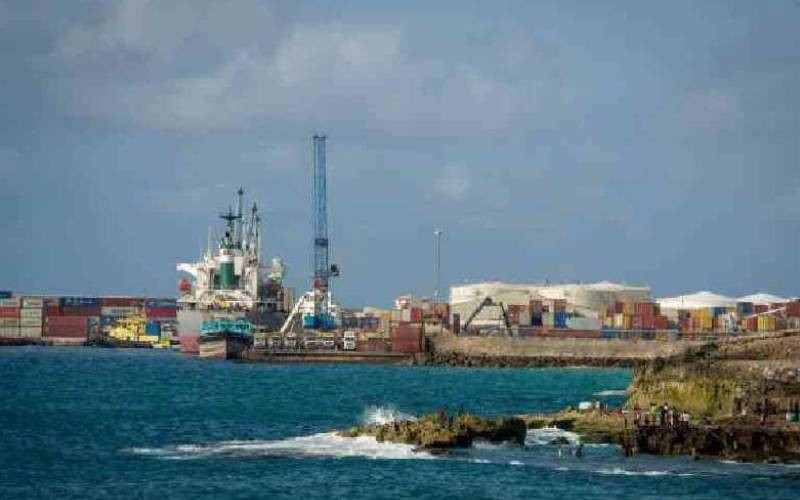
That release of the MV Sward near Garacadin, a volatile Somali area, last weekend should not be celebrated as a successful resolution but read as a balance-sheet entry in a growing criminal enterprise.
Reports indicate that after nearly five months in pirate hands, the St Kitts and Nevis-flagged cargo ship and its crew of Syrian and Indian nationals were freed following payment of an undisclosed ransom.
Andrew Mwangura, the former Secretary General of the Seafarers Union of Kenya (SUK) and an avid commentator on sea piracy issues off the Somali Coast, said that the resurgence of piracy was worrying.
He said reports indicate that the crew is unharmed, but the audacity of the pirates to disembark from the ship, climb into waiting vehicles, and melt into town has sparked fears in the shipping sector.
''On paper, the ordeal is over. In reality, the episode reveals how thoroughly Somali piracy has adapted, professionalised, and reinserted itself into the cost structure of global shipping,'' Mwangura said.
The facts are straightforward and damning. The vessel was seized on April 26, 2026, roughly six nautical miles off Garacad in Puntland’s Mudug region, while bound from Suez to the Port of Mombasa laden with fertiliser.
Witnesses say that armed men in skiffs boarded, took control, and redirected the vessel toward the Somali coast. Maritime security firms and the UK Maritime Trade Operations confirmed the hijacking within hours.
However, what followed was more consequential than a single seizure. The ship was converted into a mothership and from its decks, pirates launched further attacks that captured at least two Iranian fishing vessels and the Cameroon-flagged MV Lutuf.
Reports indicate that those ships were later released after their own ransoms — $2.5 million for the Lutuf and a much smaller sum for the fishing boats, according to Puntland security sources.
''This is not the chaotic piracy of 2008–2012. It is more selective, more networked, and more commercially rational. Pirates no longer need to hold every vessel indefinitely. They use one captive ship to generate others, extract payments, and then recycle the original asset. The presence of waiting vehicles on shore when the Sward’s captors came ashore suggests real-time coordination with land-based networks. That logistical sophistication is new, or at least newly visible. It also explains why four commercial vessels remained in pirate hands even as the Sward was released,'' the former SUK official told Shipping and Logistics in an interview.
He adds that the numbers confirm a genuine resurgence.
The International Maritime Organisation (IMO) recorded at least 15 attacks off Somalia and in the Gulf of Aden in 2026 through early September — the highest annual total since 2013.
After a long lull enforced by international naval presence, private armed guards, and improved best-management practices, the threat has returned.
The European Union Naval Force’s Operation Atalanta continues to patrol, and Japanese, Turkish, and other warships have intervened in specific incidents.
Yet the underlying conditions that once made piracy a rational economic choice for young men in coastal communities have not disappeared. Chronic insecurity in parts of Puntland and Galmudug, limited alternative livelihoods, and the demonstrated profitability of ransoms create a self-reinforcing cycle.
Stay informed. Subscribe to our newsletter
''Paying ransoms is the most toxic element of that cycle. Every successful payment advertises that the business model works. It funds better weapons, faster skiffs, and stronger local protection. It also erodes the deterrent effect of naval patrols. Shipowners and insurers face an impossible calculation: to refuse payment and risk prolonged captivity or violence against the crew, or pay and underwrite the next attack. Most choose the latter. The result is a quiet subsidy to organised crime, conducted through the global maritime insurance market," said Mwangura, who shot to fame in early 2000 negotiations to free crews detained by pirates
Critics of a harder line often argue that military solutions alone cannot fix Somalia’s governance failures.
''They are correct. Naval task forces can disrupt attacks and, in some cases, free ships, but they cannot create jobs in Garacad or resolve the clan rivalries that provide pirates with sanctuary. Yet the opposite error is equally dangerous: treating every release as a discrete humanitarian success while ignoring the cumulative incentive structure. The Sward’s story shows both dynamics at work. International pressure and monitoring eventually produced a negotiated end to the captivity. At the same time, the pirates walked away richer and more experienced, having already leveraged the vessel for additional scores," he said.
What should change? Mwangura says that first, greater transparency around ransom payments and the networks that facilitate them would raise the political cost of the practice.
Second, coastal states in the region — particularly Puntland — need sustained capacity-building focused on maritime domain awareness and rapid interdiction, not merely occasional joint exercises.
Third, he says the shipping industry must resist the temptation to treat private armed security as a permanent substitute for addressing the threat at its source.
"Guards raise the cost of boarding; they do not eliminate the incentive to try," he said.
Finally, he said the international community should treat the return of mothership tactics as a doctrinal shift requiring updated rules of engagement and intelligence sharing, not simply a reversion to 2011-era patrol patterns.
"The crew of the Sward is free. That is unambiguously good news for the men who spent months as hostages. It is not good news for the next ship that will be targeted because the last payment proved the enterprise remains viable. Somali piracy never truly died; it waited.
"The release of the MV Sward demonstrates that the waiting is over and that the new version of the business is leaner, more adaptive, and still profitable. Until the incentives change, the next mothership is already being planned," said Mwangura.







Subscribe to our newsletter and stay updated on the latest developments and special offers!








 join
join