×

The Standard e-Paper
Fearless, Trusted News
 The Standard Group Plc is a
multi-media organization with investments in media platforms spanning newspaper
print operations, television, radio broadcasting, digital and online services. The
Standard Group is recognized as a leading multi-media house in Kenya with a key
influence in matters of national and international interest.

Audio By Vocalize
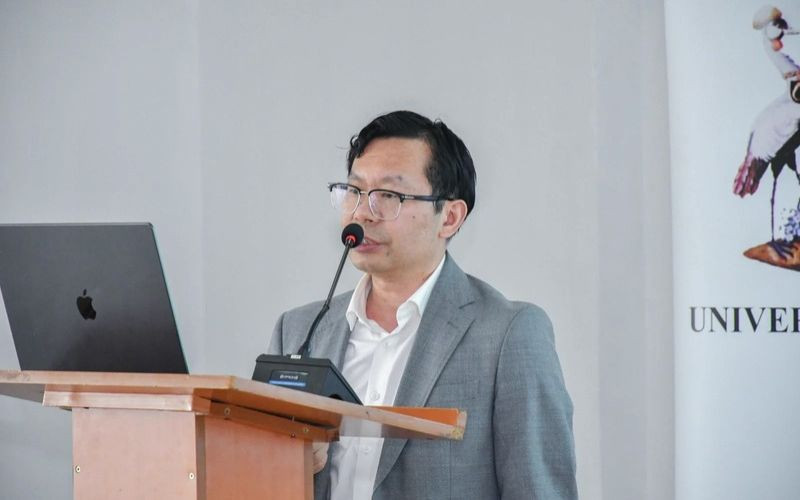
As Kenya deepens its economic engagement with China, artificial intelligence, digital governance and legal preparedness are emerging as new areas for cooperation, with experts calling for stronger institutional partnerships to address challenges posed by the rapidly evolving digital economy.
At the Inaugural Global Forum on Digital Intelligence, Rule of Law and Interdisciplinary Governance, Prof Congjing Ran of Wuhan University called for closer China-Africa collaboration in digital governance, data sovereignty and artificial intelligence.
“China and Africa should not simply be consumers of technologies developed elsewhere. We need partnerships that allow us to share knowledge, undertake joint research and shape a digital future that reflects our common interests,” he said.
Dr Ken Obura, Senior Lecturer and Chair of the Department of Financial and Commercial Law at the University of Nairobi, examined the legal, economic and human rights implications of transferring data across national borders.
He explored different regulatory approaches, including free data flows, conditional transfers and data sovereignty, arguing that countries must balance economic opportunities with individual rights and national interests.
“Data cannot be treated merely as an economic resource. Its movement across borders also raises questions about privacy, human rights and the extent to which countries should retain control over information,” Obura said.
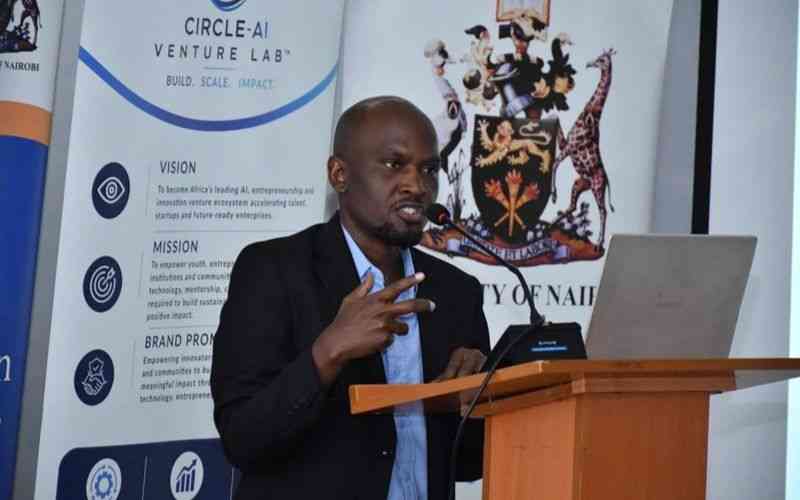
The question of ownership and accountability in artificial intelligence also featured in the discussions, with Dr Mugambi Laibuta, Chairperson of the Data Privacy and Governance Society of Kenya, highlighting the legal implications of machine-generated content.
“When a machine generates content, we must ask who owns the output and who takes responsibility for it. Is it the developer, the user or someone whose data was used to produce it? These are questions the law can no longer ignore,” Laibuta said.
He emphasised the need for clear licensing agreements, data protection, transparency and human oversight.
Former Kenyan Ambassador to China Mary Muthoni Gichohi called for stronger partnerships between African and Chinese law schools to prepare legal professionals for increasingly complex commercial relations.
Gichohi, the Founding Partner of MGA Law Advocates LLP, proposed joint academic programmes, research networks, faculty exchanges and practical training in digital trade, investment law, artificial intelligence regulation and cross-border dispute resolution.
“Trade depends on trust, and law makes that trust work,” she said, stressing the importance of predictable legal frameworks in building investor confidence.
She also called for lawyers who are bilingual, bicultural and digitally fluent to bridge differences in legal systems and business cultures.
Meanwhile, University of Nairobi Chancellor Prof Patrick V. Verkooijen has called for an ambitious roadmap to advance the university's Artificial Intelligence programme, with clear targets for student enrolment, industry partnerships and resource mobilisation.
“Our ambition must be to build an AI programme that is relevant to the needs of our economy, with clear targets for student participation, industry engagement and the resources required to sustain innovation,” he said.
Stay informed. Subscribe to our newsletter
The discussions point to opportunities for Kenya-China cooperation beyond conventional trade and investment, particularly in research, skills development, digital governance and emerging technology regulation.
Subscribe to our newsletter and stay updated on the latest developments and special offers!


 Prefer the Standard on Google