×

The Standard e-Paper
Stay Informed, Even Offline
 The Standard Group Plc is a
multi-media organization with investments in media platforms spanning newspaper
print operations, television, radio broadcasting, digital and online services. The
Standard Group is recognized as a leading multi-media house in Kenya with a key
influence in matters of national and international interest.
The Standard Group Plc is a
multi-media organization with investments in media platforms spanning newspaper
print operations, television, radio broadcasting, digital and online services. The
Standard Group is recognized as a leading multi-media house in Kenya with a key
influence in matters of national and international interest.

Audio By Vocalize
The world is changing, and not quietly.
Global powers are competing for influence, wars are reshaping alliances, and countries that once dominated international affairs are finding their influence increasingly challenged. Meanwhile, emerging powers are demanding a seat at the table, while regions like Africa are often being asked to choose sides in contests they did not create.
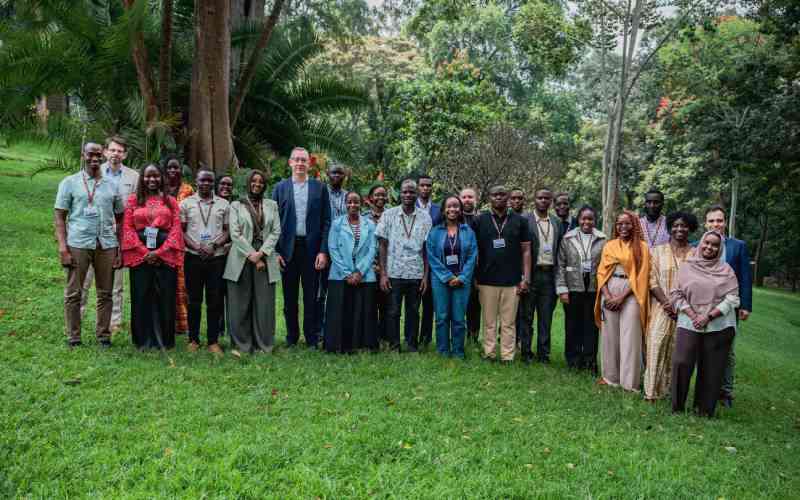
Against this backdrop, at least 21 participants gathered for the inaugural edition of the Friedrich Naumann Foundation (FNF) Nairobi Geopolitical Academy from May 6 to 9 to examine one of the defining questions of our time: What does a changing world order mean for Kenya and Africa?
Speaker after speaker suggested that the answer could determine whether the continent becomes a key player in shaping the future or remains on the sidelines.
"Africa is becoming an increasingly important force in shaping the future global order. Kenya in particular is emerging as a key hub for diplomacy and cooperation in Africa and the Global South,” FNF Kenya Director Ralf Erbel said in his opening remarks.
Academy co-facilitator Halima Ahmed reminded participants that the impact of geopolitics trickles down to everyone. "Geopolitics affects everyone. From rising fuel prices linked to the Israel-Iran war to migration and economic pressures, global events shape our daily lives,” she said.
Geopolitical strategist Velina Tchakarova set the tone for the discussions.
"We are in a very difficult situation due to the uncertainty brought on by global conflicts."
The rise of middle powers, China's growing influence, and the relative decline of Western dominance have accelerated the shift toward a multipolar world, where power is distributed among several major actors rather than concentrated in a few capitals.
"The question is not whether a new world order will emerge," Tchakarova told participants. "The real question is whether you (Africa) will be positioned within it, or left outside looking in."
Her sentiments resonated with a question posed by one of the participants. “Is Africa truly benefiting from growing interest by powers such as China, Russia, and the United States, or is it merely becoming a stage for competing global agendas?”
A World in Transition
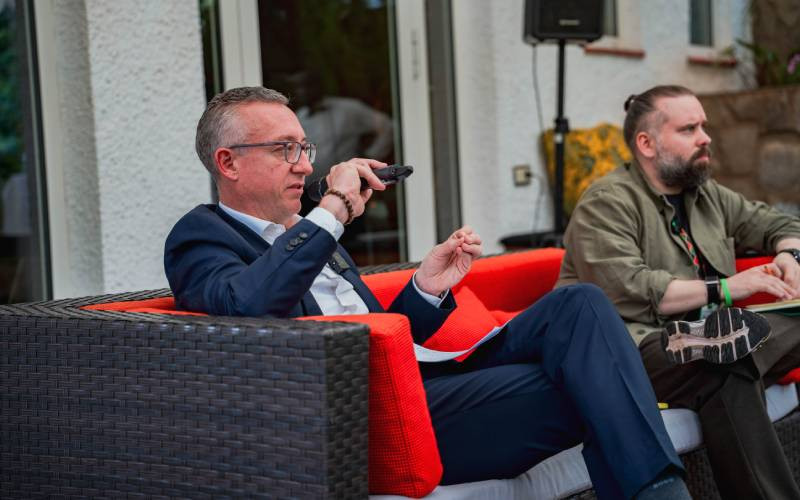
During a visit to the German Embassy, German Ambassador to Kenya Sebastian Groth described a world undergoing profound transformation.
He noted that Artificial intelligence, demographic shifts, economic pressures, and geopolitical rivalries are reshaping international relations. Meanwhile, conflicts in Ukraine, the Middle East, and Sudan continue to create uncertainty and disrupt global stability.
"The Ukraine war has totally shifted geopolitics," Ambassador Groth said.
Stay informed. Subscribe to our newsletter
The envoy further noted that concerns about regional security have returned to Europe in ways not seen before. Tensions between Israel and Iran have also threatened energy supplies, trade routes, and global markets.
Closer home, the war in Sudan continues to fuel one of the world's worst humanitarian crises. "We are now waking up in a world where the law of the jungle is reigning more than international law," said Amb Groth.
He argued that countries like Kenya must strengthen their institutions and develop strategies to navigate an increasingly competitive global environment.
"I don't agree that we should travel thousands of kilometres to look for fuel or fertiliser," he said, noting the need for stronger regional supply chains and greater self-reliance.
Diplomacy in the Age of Social Media
But it isn’t just conflicts redefining geopolitics. Geopolitical changes are also transforming diplomacy.
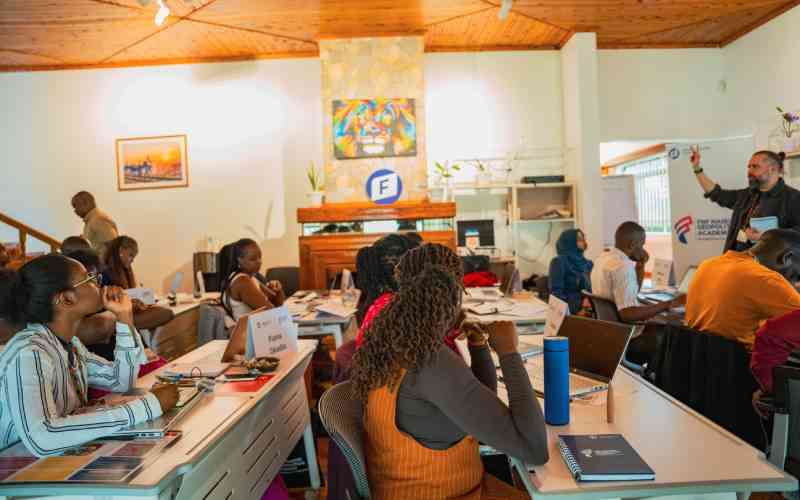
For decades, diplomacy was conducted largely behind closed doors. Today, social media and digital platforms are shaping public opinion in real time, forcing governments to engage more directly with citizens.
"The core function of diplomacy has changed a lot," Groth said. "We are moving from an era driven by aid to one shaped by trade. Our responsibility is to ensure that competing interests do not override the public interest."
The shift is especially relevant for Kenya as it seeks to strengthen trade and investment ties across Europe, Asia, and the Americas.
Ambassador Groth lauded Kenya's growing role in regional and continental affairs, saying, "I have a lot of admiration for Kenya because it is very integral in Africa's position regarding the East African Community, the African Union, and championing reforms at the United Nations Security Council.”
Kenya has increasingly positioned itself at the centre of discussions on regional health, peace and security, climate action, trade, and institutional reform across the continent.
Following the New Silk Road
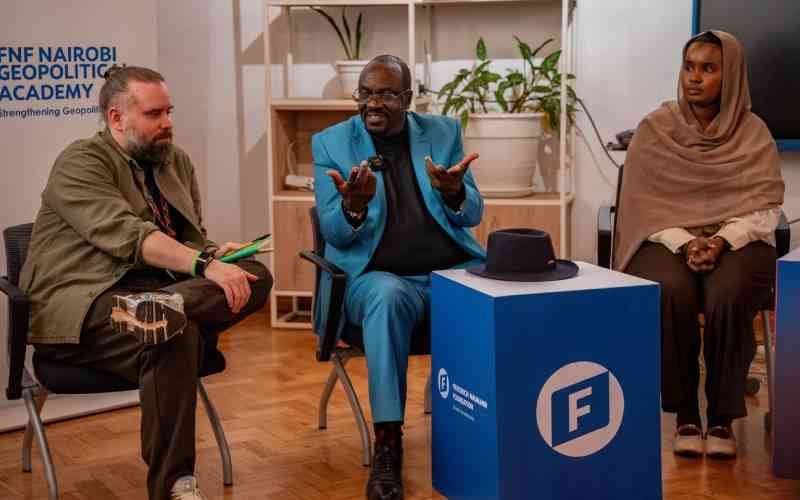
The climax of the third day of discussions was a fireside chat on China's global ambitions and Africa's place in the evolving international system, where Africa Policy Institute Chief Executive Prof Peter Kagwanja argued that the world is witnessing a historic transition.
"The transatlantic world order as we once knew it is fading," said Kagwanja.
"The dominance of the dollar is being challenged, and the era of unquestioned power is slowly coming to an end. The old is dying, and the new is yet to be born."
Across Africa, Chinese-funded roads, railways, ports, and energy projects have become visible symbols of that engagement. But Prof Kagwanja urged participants to look beyond infrastructure.
The bigger picture, he argued, is the emergence of a more contested international system where power is increasingly dispersed.
For African countries, this presents both risks and opportunities. The risk is becoming entangled in rivalries among major powers, while the opportunity lies in leveraging those competing interests to advance Africa's own priorities.
Throughout the four-day Academy, one theme emerged consistently: Kenya and Africa are no longer peripheral actors in global affairs.
While the discussions offered no easy answers, they highlighted a critical reality. As power shifts and a new world order takes shape, Kenya faces a choice; to react to events shaped elsewhere or to help shape the emerging order itself.



Subscribe to our newsletter and stay updated on the latest developments and special offers!






 join
join