The Standard Group Plc is a
multi-media organization with investments in media platforms spanning newspaper
print operations, television, radio broadcasting, digital and online services. The
Standard Group is recognized as a leading multi-media house in Kenya with a key
influence in matters of national and international interest.
The Nobel peace prize is one of the five annual international awards bestowed to individuals in a number of categories in recognition of their academic, cultural and or scientific advances.
Since the inception of the Nobel Peace Prize in 1901, there have been 12 Nobel Laureates from Africa selected by the Norwegian Nobel Committee, with the latest being Ethiopian Prime Minister H.E. Abiy Ahmed Ali. The 43-year-old was named this year's recipient of the coveted annual prize and was awarded October 11.
The prime minister of Ethiopia, was awarded the 100th Nobel Peace Prize in recognition for his work to end the decades of conflict between Ethiopia and neighbouring Eritrea.
Of the award Abiy said "I am so humbled and thrilled ... Thank you very much. It is a prize given to Africa, given to Ethiopia, and I can imagine how the rest of Africa's leaders will take it positively to work on peace building process in our continent."
The father of four daughters and a recently adopted son, had a clean score that warranted him the win of the award. In the criteria set out by Alfred Nobel in his will back in 1895, he specified that the peace prize should go to "the person who has done the most or best to advance fellowship among nations, the abolition or reduction of standing armies, and the establishment and promotion of peace congresses."
Here Africans who have won the globally coveted award.
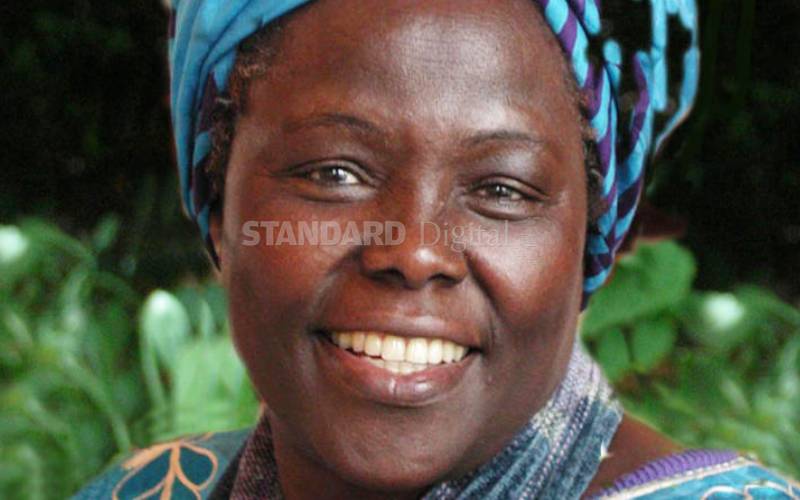
1.Wangari Maathai, Kenya, 2004
Professor Wangari Maathai was awarded the Nobel Peace Prize Award in 2004 for her contribution to sustainable development, democracy and peace.
She was an environmentalist and founder of the Green Belt Movement.
The Nobel committee acknowledged her efforts in standing up courageously against the former oppressive regime in Kenya. Her unique forms of action contributed to drawing attention to political oppression – nationally and internationally.
They termed her as an inspiration for many in the fight for democratic rights and especially encouragement to women. Born in 1940, Wangari Maathai was the first woman from Africa to be honoured with the Nobel Peace Prize.
Maathai was a pioneer from an early age and in many spheres. After winning a scholarship to study in the US, she returned to a newly independent Kenya, becoming the first woman in east and central Africa to obtain a PhD. Maathai was also the first woman professor the University of Nairobi, where she taught veterinary medicine.
Her work with voluntary groups alerted her to the struggles of women in rural Kenya, and it quickly became her life's cause. Noticing how the rapid environmental degradation was affecting women's lives, she encouraged them to plant trees to ensure future supplies of firewood and to protect water sources and crops.
Maathai served as an assistant minister in President Mwai Kibaki's government from 2003 to 2005, but her refusal to keep silent on some issues saw her politically sidelined, and she lost her seat after a single term. Her work schedule remained hectic however, and she wrote several books and travelled widely.
She died in September 25, 2011 at Nairobi Hospital having succumbed to cancer the age of 71.
2.Albert Luthuli, South Africa ,1960
Albert Luthuli was the first African and the first person from outside Europe and the Americas to be awarded the Nobel Peace Prize.
Luthuli was awarded the prestigious award in 1960 for his role in championing for non-violent resistance to racial discrimination in South Africa.
The Nobel Committee describes Luthuli as 'A man of noble bearing, charitable, intolerant of hatred, and adamant in his demands for equality and peace among all men." Luthuli was inspired by Mahatma Gandhi's philosophy of nonviolence, he became the spokesman for a campaign of civil disobedience directed against South Africa's policy of racial segregation, and spearheaded several demonstrations and strikes against the white minority government.
He was born in 1898 and was elected president of the African National Congress (ANC) in 1952. During his acceptance speech, Luthuli noted that the award was a recognition of sacrifice made by many of all races, particularly the African people, who had endured and suffered for long.
Luthuli died at the age of 69, in 1967 after a fatal accident near his home in Stanger, now known as KwaDukuza in KwaZulu-Natal, South Africa.
3.Anwar al-Sadat, Egypt, 1978
Anwar al-Sadat President of Egypt was awarded the Nobel Peace Prize together with Menachem Begin, Prime Minister of Israel.
The two were awarded in 1978 for their contribution to the two frame agreements on peace in the Middle East and on peace between Egypt and Israel. The peace treaty which were signed at Camp David, USA in September 17, 1978.
The third President of Egypt was born on December 25, 1918. He took power on October 15, 1970. During his presidency, he changed the political and economic landscape of Egypt.
One of his notable change was his efforts towards building comprehensive peace agreement with Israel and return of Sinai to Egypt which Israel had occupied since the Six-Day War of 1967.
In November 1977, Sadat became the first Arab leader to visit Israel officially when he met with Israeli Prime Minister Menachem Begin, and spoke before the assembly in Jerusalem about his views on how to achieve a comprehensive peace to the Arab–Israeli conflict, which included the full implementation of UN Resolutions that sought the establishment of a just and lasting peace in the Middle East.
Get Full Access for Ksh299/Week.
Fact‑first reporting that puts you at the heart of the newsroom. Subscribe for full access.

 The Standard Group Plc is a
multi-media organization with investments in media platforms spanning newspaper
print operations, television, radio broadcasting, digital and online services. The
Standard Group is recognized as a leading multi-media house in Kenya with a key
influence in matters of national and international interest.
The Standard Group Plc is a
multi-media organization with investments in media platforms spanning newspaper
print operations, television, radio broadcasting, digital and online services. The
Standard Group is recognized as a leading multi-media house in Kenya with a key
influence in matters of national and international interest.









 join
join