×

The Standard e-Paper
Kenya’s Boldest Voice
 The Standard Group Plc is a
multi-media organization with investments in media platforms spanning newspaper
print operations, television, radio broadcasting, digital and online services. The
Standard Group is recognized as a leading multi-media house in Kenya with a key
influence in matters of national and international interest.
The Standard Group Plc is a
multi-media organization with investments in media platforms spanning newspaper
print operations, television, radio broadcasting, digital and online services. The
Standard Group is recognized as a leading multi-media house in Kenya with a key
influence in matters of national and international interest.
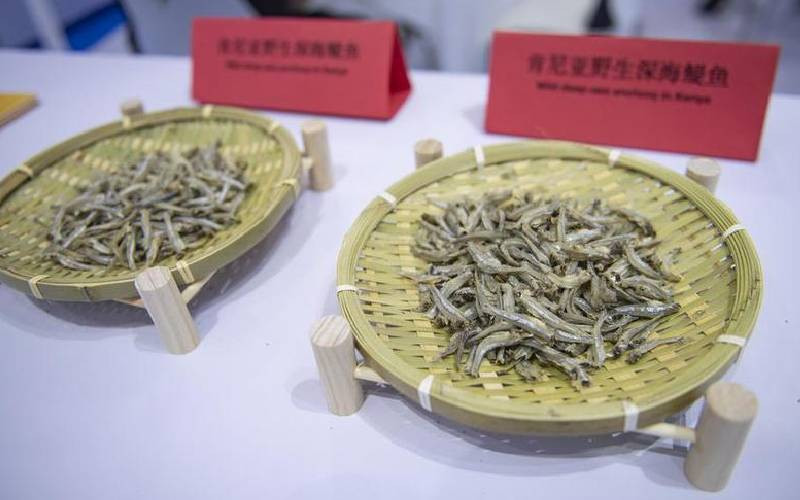
In a bustling supermarket in Changsha, capital of central China's Hunan Province, a woman surnamed Li was choosing snacks for her son and daughter.She picked up two boxes of dried deep-sea anchovies. "I would like to have my children eat healthily, so every time I buy food for them, I read the ingredients and nutrient list carefully," she told Xinhua. "In these deep-sea anchovies the protein content is very high, and they taste good."A box of the dried anchovies, with 10 packages inside, sells for 25 yuan (about 3.5 U.S. dollars). Li said she buys this product regularly.
The anchovies, from the eastern coastal area of Kenya, can be seen in many supermarkets in Changsha."Sales of our dried deep-sea anchovies have topped 1 billion yuan a year, for which we need to import tens of thousands of tonnes of the fish," said Zhou Jinsong, chairman of Jinzai Food Group Co., Ltd. In 2018, the company set up a factory in Kenya, where locally purchased fish were processed before delivering to China. The popularity of dried deep-sea anchovies exemplifies the thriving economic and trade exchanges between China and Africa. Pineapples from Benin, citrus from South Africa, dried chili pepper from Rwanda, coffee from Ethiopia, sesame from Tanzania and peanuts from Senegal have all landed on the dinner tables of ordinary Chinese. The latest arrival was mutton from Madagascar, the shipment of which was cleared at Changsha Customs, marking China's first mutton imports from Africa and an important breakthrough in the China-Africa meat trade. The 900 kg of mutton was shipped by air, with the entire delivery period taking approximately 36 hours.

Subscribe to our newsletter and stay updated on the latest developments and special offers!









 join
join