×
App Icon
The Standard e-Paper
Home To Bold Columnists
★★★★ - on Play Store
Download Now

We need a reality check, UN human rights chief warns

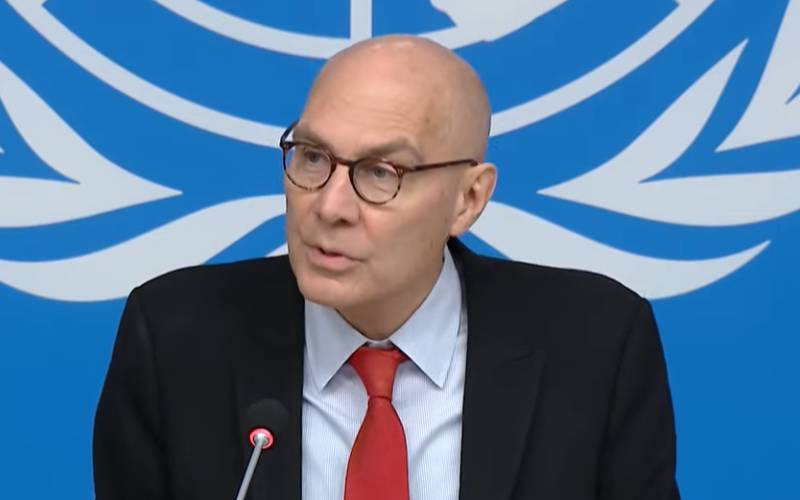
The United Nations (UN) High Commissioner for Human Rights Volker Turk. [Courtesy]

The United Nations (UN) High Commissioner for Human Rights Volker Turk has warned that the world needs a reality check as  human rights funding collapses while conflicts and abuses escalate.

Speaking during Human Rights Day, Turk described the current moment as one defined by "dangerous contradictions" where human rights work is increasingly undermined even as violations intensify.

"Human rights. Underfunded. Undermined. Under attack. And yet. Powerful. Undeterred. Mobilizing," Turk said.

The UN human rights office, the Office of the High Commissioner for Human Rights (OHCHR), is operating in survival mode after losing about 300 positions due to a $90 million funding shortfall, forcing cuts to critical operations in conflict zones at a time when needs are rising.


Essential work has been eliminated in Colombia, Democratic Republic of Congo (DRC), Myanmar, Tunisia and other countries. Critical reporting, fact-finding missions and special rapporteur country visits have been severely reduced.

 Reviews of state compliance with UN human rights treaties dropped from 145 last year to 103 this year.

"Funding for human rights has been slashed, while anti-rights movements are increasingly well-funded. Profits for the arms industry are soaring, while funding for humanitarian aid and grassroots civil society plummets," Turk said.

He noted that 2024 has been one of the most difficult years in recent memory, marked by severe resource shortages and rising geopolitical tensions.

"All this has extensive ripple effects on international and national efforts to protect human rights," Turk said.

The cuts come as global arms revenues hit a record $679 billion in 2024, driven by conflicts in Ukraine and Gaza and broader geopolitical tensions.

At the same time, anti-rights and anti-gender movements mobilized nearly $1.2 billion in Europe between 2019 and 2023, according to the European Parliamentary Forum for Sexual and Reproductive Rights.

Combined with disinformation and media capture, Turk said, these networks have become a "powerful cross-regional force."

The commissioner expressed deep concern over worsening crises in Sudan, Gaza and Ukraine.

In Ukraine, civilian casualties have risen 24 percent compared to last year due to intensified Russian attacks.

"I am extremely worried that we might see in Kordofan a repeat of the atrocities committed in al-Fashir," Turk said of Sudan's conflict.

In Gaza and eastern DRC, agreements have yet to translate into effective protection of civilians on the ground, he noted.

Despite the constraints, Turk said a growing global movement against injustice continues, especially among young people.

In Nepal, Serbia, Madagascar, Kenya, Bangladesh, Ecuador, Paraguay, the Philippines, Indonesia, Tanzania, Morocco, Peru and beyond, mostly young people have taken to the streets and to social media for their everyday essential rights.

He urged governments not to suppress these movements but to listen and embrace reforms.

"They are, in fact, the exact opposite of threats to national security," Turk noted.

The commissioner concluded by emphasizing the resilience of human rights defenders worldwide.

"There is never a shortage of human rights challenges. What is heartening is that there are so many of us, around the world, attached to the same universal human rights values," he added.