×

The Standard e-Paper
Smart Minds Choose Us
 The Standard Group Plc is a
multi-media organization with investments in media platforms spanning newspaper
print operations, television, radio broadcasting, digital and online services. The
Standard Group is recognized as a leading multi-media house in Kenya with a key
influence in matters of national and international interest.
The Standard Group Plc is a
multi-media organization with investments in media platforms spanning newspaper
print operations, television, radio broadcasting, digital and online services. The
Standard Group is recognized as a leading multi-media house in Kenya with a key
influence in matters of national and international interest.

Audio By Vocalize
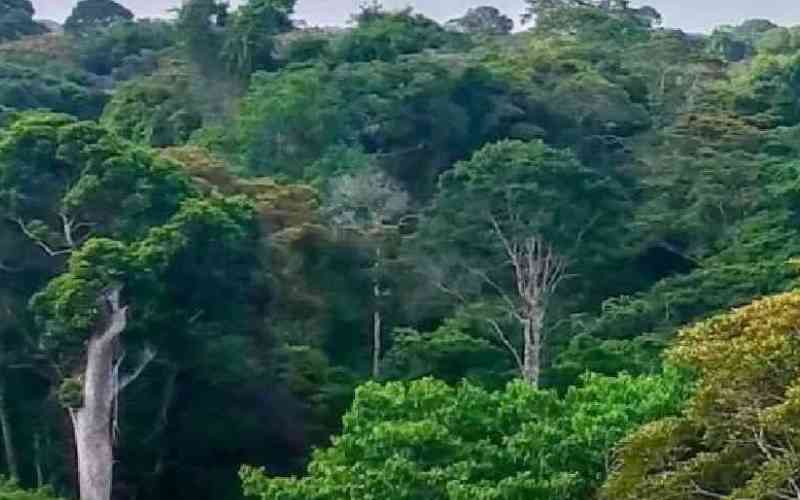
There is a particular kind of helplessness that comes when you stand at the edge of a forest and watch heavy machinery move in. The trees are still standing. Birds are still calling. Life continues around you. Yet a decision has been made that this living ecosystem must give way. For environmental defenders, that is when we turn to the courts.
We do so because the Constitution gives us hope. It recognises the right to a clean and healthy environment and gives citizens the right to seek judicial protection when that right is threatened. In many cases, the court becomes the last line of defence when administrative processes have failed, public concerns have been ignored, or irreversible damage is about to happen. But what happens when that last line of defence does not hold?
This is not a criticism of the Judiciary. It is a difficult question that we must confront as a country.
Environmental cases are different from ordinary disputes. If someone loses money, compensation may offer a remedy. But when a forest is cleared, a wildlife corridor is cut off, or an ecosystem is destroyed, money cannot simply bring it back. A mature forest cannot be recreated overnight. A damaged ecosystem cannot always be restored to what it was. That is why conservatory orders matter.
A conservatory order does not necessarily mean that a project has been stopped forever or that the applicant has won the case. It can simply preserve the situation while the court considers the evidence and determines the dispute. In environmental matters, that pause can be everything. It gives the court time to decide. More importantly, it gives nature time to survive.
Today, Kenya is facing growing pressure on its public forests and protected areas. From forests within Nairobi and across the country, to protected areas such as Nairobi National Park and their surrounding ecosystems, infrastructure and development proposals continue to test the limits of what we are willing to sacrifice in the name of progress. We cannot pretend that development is the enemy. Kenya needs roads, housing, transport, energy and jobs. But development cannot mean destroying the natural systems that sustain our lives.
A public forest is not vacant land. It is a water catchment, a carbon store, a home for biodiversity, a climate regulator and part of the ecological infrastructure of our cities and
communities. Nairobi National Park is not simply open space waiting for development. It is a protected ecosystem and one of the defining features of our capital.
The danger is that environmental destruction rarely happens all at once. It happens piece by piece. A few acres here. A road there. A facility somewhere else. Each project may appear small when considered on its own. But ecosystems experience the combined impact.
By the time a court delivers a final judgment, the forest may already have been cleared. The road may already have been built. The habitat may already be fragmented. We may win the legal argument after losing the ecosystem. That is the injustice we must avoid.
At the Green Belt Movement, we do not see the Judiciary as an obstacle to conservation. We see it as an essential ally. We need independent courts that can protect constitutional rights, scrutinise decisions and, where the law allows, prevent irreversible environmental harm before it happens. We also recognise our responsibility. Environmental organisations must bring credible evidence. Communities must participate responsibly. Lawyers must make strong legal arguments. Government agencies must respect environmental law and public participation. Developers must operate within the law.
The answer is not to stop development. It is to ensure that development does not destroy the very environment on which our future depends. Wangari Maathai taught us that trees are never just trees. They are connected to water, livelihoods, climate, dignity and life itself. That lesson remains as relevant today as it was when she planted her first tree.
So, this is an appeal to the Judiciary: when a forest or national park is under immediate threat, we ask that the courts consider not only what can be repaired after the damage, but what may never be recoverable once the damage is done. Kenya's forests and national parks cannot speak in court. Rivers cannot file petitions. Wildlife cannot give evidence. Future generations cannot appear before today's judges and ask us to return what we destroyed. We must speak for them.
Sometimes, justice may simply mean giving nature enough time to survive until the law has had its say. The question is not whether Kenya can afford to protect its forests. The question is whether we can afford not to.
Mr Mwangi is an Advocate of the High Court and the Advocacy Manager at The Green Belt Movement
Stay informed. Subscribe to our newsletter
Subscribe to our newsletter and stay updated on the latest developments and special offers!


 Prefer the Standard on Google





 join
join