×

The Standard e-Paper
Home To Bold Columnists
 The Standard Group Plc is a
multi-media organization with investments in media platforms spanning newspaper
print operations, television, radio broadcasting, digital and online services. The
Standard Group is recognized as a leading multi-media house in Kenya with a key
influence in matters of national and international interest.
The Standard Group Plc is a
multi-media organization with investments in media platforms spanning newspaper
print operations, television, radio broadcasting, digital and online services. The
Standard Group is recognized as a leading multi-media house in Kenya with a key
influence in matters of national and international interest.

Audio By Vocalize
It began, as many modern movements do, with a hashtag. Around 2015, women running the London Marathon bled openly through their athletic shorts, refusing to apologise for a biological reality society has long insisted be hidden.
The phrase 'free bleeding' soon entered public discourse, igniting fierce debate in Europe and North America. For some, it was a radical protest; for others, provocation.
Either way, it forced the world to talk about menstruation.
Nearly a decade later, free bleeding has resurfaced in global media, framed as activism and bodily autonomy. Closer to home in Turkana County, girls have been 'free bleeding' long before the term existed, not by choice, not by protest, and certainly not by empowerment.
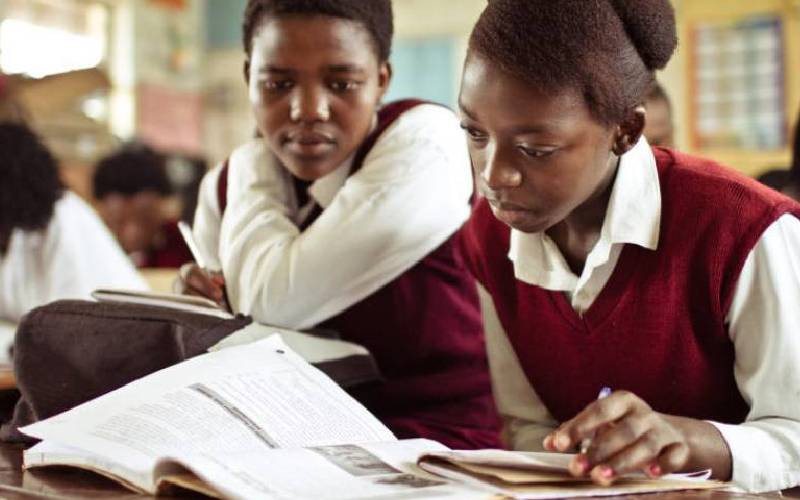
For girls in Turkana, menstruation often means absence. Absence from school, from play, from daily life. Without access to sanitary pads, menstruation becomes a monthly interruption that pushes girls further to the margins.
According to UNICEF, at least one in 10 African schoolgirls misses school during menstruation. In Kenya, government and civil society estimates suggest that more than one million girls miss between three and four school days every month due to lack of menstrual products, proper sanitation, or information.
In Turkana, the picture is even starker. Here, poverty, distance from markets, and entrenched stigma collide. Girls improvise with scraps of cloth, animal skins, or sit over shallow holes dug into the ground, waiting for the blood to pass.
Older women recall learning to endure, not manage. Their periods taught silence instead of care. This is not activism. It is survival shaped by neglect. The consequences extend far beyond missed lessons. Regular absenteeism chips away at academic performance and confidence, increasing the risk of dropout, early marriage, and teenage pregnancy.
UNESCO has long warned that menstrual challenges contribute significantly to girls failing to complete their education in low-income settings. Each missed school day reinforces a brutal cycle.
The harm is not only educational but psychological. Menstrual stigma in many communities means girls are often teased, shamed, or isolated when they menstruate. Periods become a source of fear and embarrassment rather than a normal biological process.
When a girl must choose between public humiliation and staying home, her dignity becomes collateral damage. At that point, menstruation ceases to be a health issue alone. It becomes a human rights concern.
Kenya has made progress. The Basic Education (Amendment) Act mandates the provision of sanitary towels to public schools, and the Menstrual Hygiene Management Policy offers a strong framework. Yet implementation remains inconsistent, underfunded, and uneven especially in marginalised counties. Too often, pads arrive late, in insufficient quantities, or not at all.
The government must treat menstrual health as essential public infrastructure, budgeted for annually and delivered reliably. Sanitary products should be as non-negotiable in schools as textbooks and desks. But pads alone are not enough. Water, sanitation facilities, menstrual health education, and community engagement must accompany distribution to ensure sustainability and dignity.
Civil society, faith leaders, and the private sector also have a role to play especially in challenging myths and taboos that keep menstruation cloaked in shame. Open conversations can dismantle generations of silence faster than policy documents alone.
As the world marks the 16 Days of Activism to End Gender-Based Violence under the theme 'UNiTE to End Digital Violence against All Women and Girls,' we must broaden our understanding of violence. Menstrual stigma, neglect, and exclusion may be quieter, but they are no less harmful. They deny girls agency over their bodies and futures.
Stay informed. Subscribe to our newsletter
Free bleeding may be a statement of defiance in one world. In another, it is the consequence of inequality. The question is not whether menstruation should be seen. It is whether society will finally take responsibility for ensuring that no girl's education, dignity, or potential is undermined by something as natural as her period.
Until that responsibility is met fully and fairly, the gap between these two worlds will persist. And for too many Kenyan girls, menstruation will remain not a moment, but a barrier.

Subscribe to our newsletter and stay updated on the latest developments and special offers!










 join
join