×

The Standard e-Paper
Fearless, Trusted News
 The Standard Group Plc is a
multi-media organization with investments in media platforms spanning newspaper
print operations, television, radio broadcasting, digital and online services. The
Standard Group is recognized as a leading multi-media house in Kenya with a key
influence in matters of national and international interest.
The Standard Group Plc is a
multi-media organization with investments in media platforms spanning newspaper
print operations, television, radio broadcasting, digital and online services. The
Standard Group is recognized as a leading multi-media house in Kenya with a key
influence in matters of national and international interest.
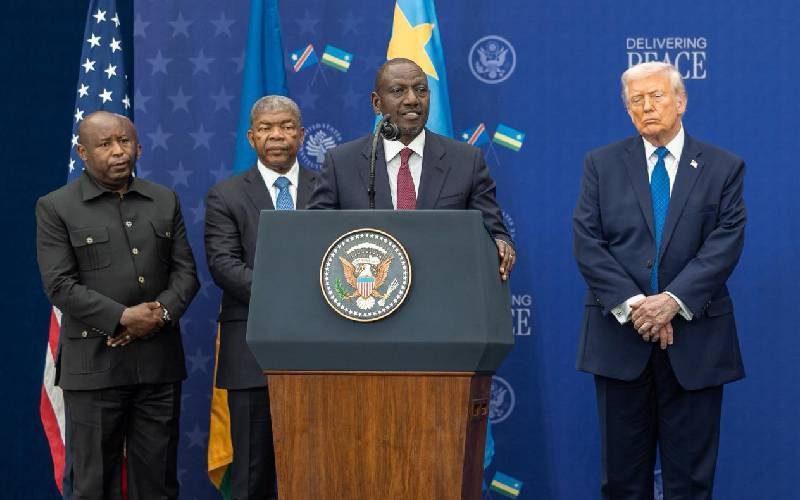
When President Donald Trump invited President William Ruto to Washington to bear witness to the detente between two Great Lakes neighbours, Rwanda and the Democratic Republic of Congo (DRC), marked by official signing of the Rwanda-DRC Peace agreement, the participation validated several incontrovertible premises and understandings.
First, it acknowledges that while Washington and Doha have recently played a significant role in nudging the two neighbouring countries to the negotiating table, any success would not have been possible without taking into account the heavy lifting by African actors. Among these regional actors, Kenya stands tall. Not only did the country deploy boots on the ground through the East African Community Regional Force (EACRF), it also invested heavily in mediation efforts to foster inter-Congolese dialogue between the DRC authorities and different armed groups including M23 within the aegis of the Nairobi process.
Subscribe to our newsletter and stay updated on the latest developments and special offers!

 Prefer the Standard on Google






 join
join