×

The Standard e-Paper
Home To Bold Columnists
 The Standard Group Plc is a
multi-media organization with investments in media platforms spanning newspaper
print operations, television, radio broadcasting, digital and online services. The
Standard Group is recognized as a leading multi-media house in Kenya with a key
influence in matters of national and international interest.
The Standard Group Plc is a
multi-media organization with investments in media platforms spanning newspaper
print operations, television, radio broadcasting, digital and online services. The
Standard Group is recognized as a leading multi-media house in Kenya with a key
influence in matters of national and international interest.
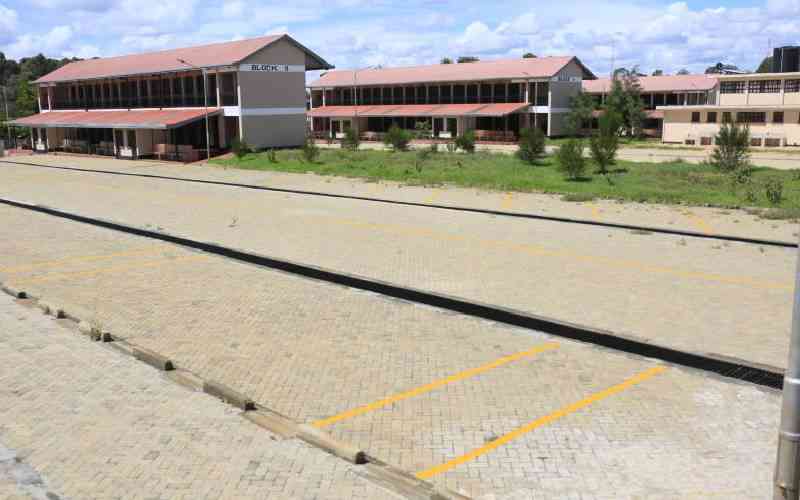
Nyeri town's Asian Quarters Bus Terminus, popularly known as Shakahola Stage, is one of the clearest examples of what urban planners describe as accidental planning. Established on a reclaimed dumpsite/cemetery, the facility has struggled for legitimacy since its completion nearly five years ago. Despite heavy investment, commuters, businesspeople and matatu saccos continue to resist its adoption, forcing the county government to seek court intervention and resort to coercive measures. A transport hub that was envisioned as a modern solution has instead become a textbook case of how infrastructure can fail when divorced from the realities of deliberate organic urban growth.
Ebenezer Howard, in his book, Garden cities of tomorrow, famously stated that "Town planning is not mere place-making, nor even work of embellishment. It is the organisation of the whole of life within a community." Nyeri town's experience with the Shakahola Stage is the opposite of this wisdom. Instead of responding to the socio-economic pulse of Nyeri and its daily commuters, the project imposed a structure on a community that neither demanded nor embraced it. The result is visible-empty bays, unutilised spaces, and frustrated operators who find the older, organically grown existing three termini more functional.
Subscribe to our newsletter and stay updated on the latest developments and special offers!


 Prefer the Standard on Google









 join
join