×
App Icon
The Standard e-Paper
Home To Bold Columnists
★★★★ - on Play Store
Download App

Why Ruto's Sh5 trillion infrastructure fund is facing trust crisis

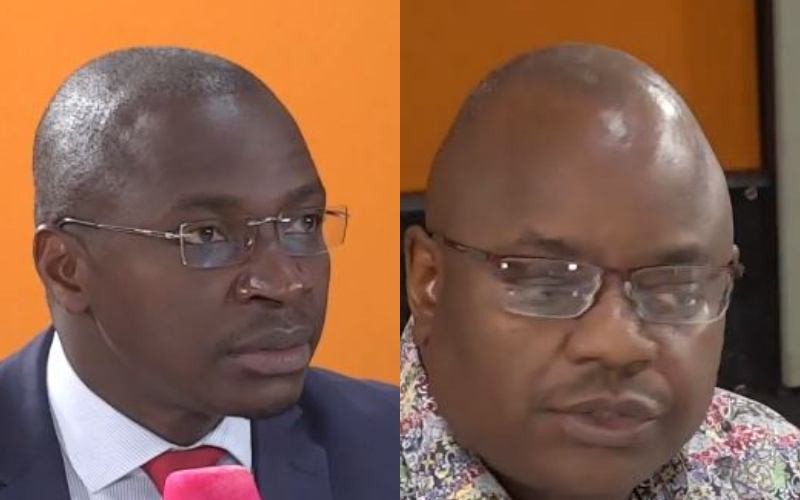
Progress Plus Alliance (PPA) party leader Maliba Arnold and Political Risk Analyst Dismas Mokua on Spice FM. [Screengrab]

President William Ruto's National Infrastructure Fund (NIF) has drawn renewed opposition from political leaders who question its governance structure and funding mechanisms.

Progress Plus Alliance (PPA) party leader Maliba Arnold accused the president of creating the fund to access resources beyond parliamentary oversight during a Wednesday interview on Spice FM.

"The National Infrastructure Fund has nothing to do with development, it is about power, elections, money and that money, the president wants money off the budget, off oversight and off radar completely," Arnold said.


The Cabinet approved the NIF on December 15, 2025 as a limited liability company to serve as the central engine for aligning the administration's financial resources with national development.

Political risk analyst Dismas Mokua acknowledged widespread public scepticism towards government initiatives but defended the fund's developmental rationale.

"The challenge we have in Kenya is trust deficit or crisis that when President Ruto says anything, the probability of people believing it is almost zero," Mokua observed.

Arnold said Kenyans' distrust stems from government actions rather than inherent suspicion.

"We Kenyans do not have trust deficit because it is our problem, it is our reaction to what the government is doing," Arnold noted.

The NIF aims to transform the country into a first world economy, funded through mobilisation of domestic resources, strategic monetisation of mature public assets and democratisation of ownership through capital markets and deployment of national savings.

The fund has received criticism from experts who have questioned the Cabinet's plan to create a limited liability company to house the Fund, with many insisting the government should focus on reducing inefficiencies.

Treasury Cabinet Secretary John Mbadi defended the Cabinet's proposal, denying claims that public money would be directed to a private entity.

"I have heard people say we are creating a private entity. This is not a private entity. This is going to be a limited liability company. Not all limited liability companies are private companies," Mbadi said.

Mbadi noted the holding company would be professionally managed in accordance with the Government-Owned Enterprises Act, which governs all parastatals.

Ruto announced plans to effect a Sh5 trillion development project using the fund within 10 years.

The NIF will be funded through a mix of national budget allocations, privatisation of state-owned assets, capital markets and public-private partnerships (PPPs).

The government aims to raise Sh347.5 billion from share sales in companies such as Safaricom, Kenya Pipeline Company (KPC) and East Africa Portland Cement Company (EAPCC).

KPC alone is expected to raise about Sh100 billion through privatisation.

Ruto said the fund is designed to leverage resources more effectively, with every shilling invested from privatisation proceeds expected to attract Sh10 from long-term investors, including pension funds, sovereign partners, private equity and development finance institutions.

The NIF will be overseen by a competitively appointed board of directors and a chief executive officer to ensure strong governance, transparency and commercial discipline.

The fund is expected to support priority sectors such as energy generation and transmission, transport infrastructure, irrigation and water systems, all considered essential for industrial growth, food security and job creation.